Opportunities, Policies, System Sizing (100–241 kWh to 2 MW), and a Complete Buyer’s Guide
Designed for commercial & industrial (C&I) users evaluating energy storage options in Brazil.
1. Market Overview
Brazil’s commercial and industrial (C&I) energy storage market is entering a phase of rapid development. Government planning documents—especially the Decennial Energy Expansion Plan (PDE) 2034—incorporate storage as a strategic component of Brazil’s future energy mix [1][2]. Regional market assessments show that C&I applications are now among the strongest demand drivers for lithium battery systems [3].

2. Key Market Drivers
High peak electricity tariffs
In states such as São Paulo and Minas Gerais, peak-hour tariffs remain high. C&I customers can significantly reduce their demand charges by deploying storage for peak shaving.
Solar + Storage Adoption
Distributed generation (DG) continues to expand rapidly. PDE reports explicitly include behind-the-meter battery systems as part of future DG planning scenarios, emphasizing their growing role in energy independence [1][2].
Diesel generator replacement
Many remote or industrial sites still rely on diesel—an expensive and high-maintenance solution. Energy storage offers a cleaner, quieter, and more cost-efficient alternative.
Grid reliability issues
Factories, data centers, and logistics centers require high power quality. Storage provides ride-through support, voltage regulation, and emergency backup.
3. Main Application Scenarios
- Peak shaving — reduce peak demand and lower demand charges.
- PV self-consumption — store excess solar generation for night use.
- Diesel generator reduction/ replacement — lower fuel and O&M costs.
- Backup power / UPS — ensure business continuity during outages.
4. Policy & Regulatory Environment
Regulatory Sandbox by ANEEL
Brazil’s national electricity regulator (ANEEL) is advancing regulatory trials that allow storage systems to provide multiple services (peak shaving, backup, power quality, ancillary services). This creates a favorable environment for C&I adoption [4].
Licensing & Interconnection
Most behind-the-meter C&I BESS installations do not require generation licenses, but must comply with interconnection rules and utility grid standards.
Taxation & Importation Costs
Lithium batteries and energy storage components currently face relatively high import duties and taxes, which significantly influence project CAPEX [5].
5. ROI and Financial Feasibility
When evaluating ROI, Brazilian C&I users typically consider:
- Demand charge reduction
- PV self-consumption gains
- Diesel fuel savings
- Avoided downtime costs
Analyses cited in PDE and university research indicate that for users with high peak-time demand, payback can reach 3–5 years if battery prices continue to decline. However, many standard behind-the-meter battery applications still face economic challenges in low-tariff regions [6].
6. Choosing System Size: 100–241 kWh vs 1–2 MW Parallel Systems
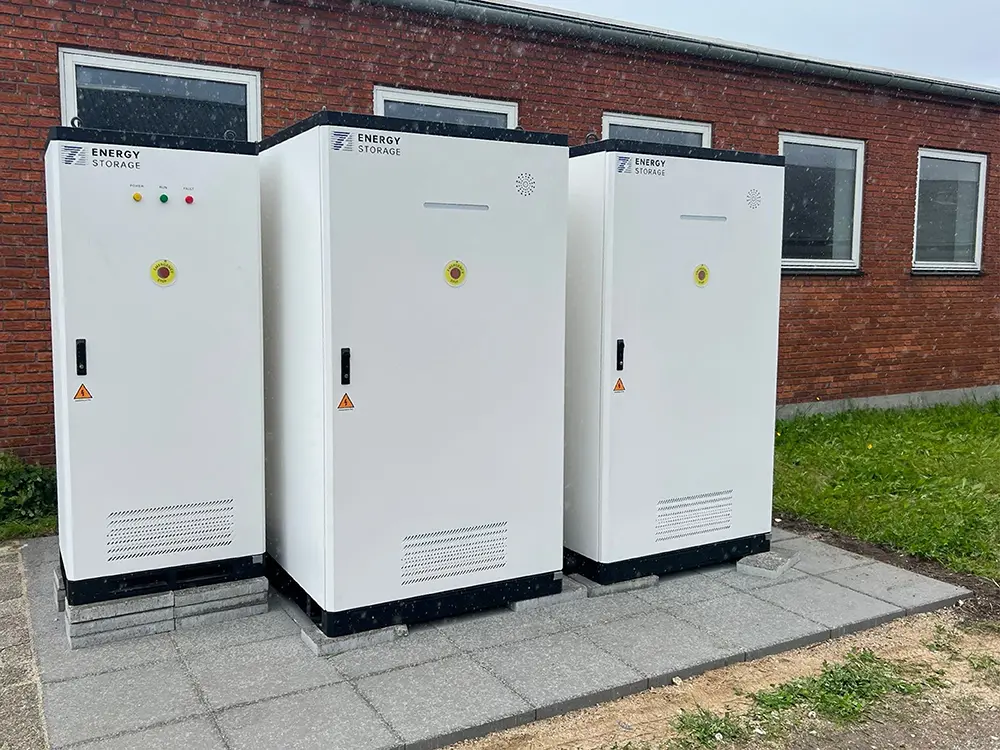
Product range (100–241 kWh, scalable to 2 MW) fits the majority of Brazil’s C&I use cases:
100–150 kWh
Ideal for small factories, workshops, retail, offices.
200–241 kWh
Suitable for medium-sized factories, commercial complexes, logistics centers, and data centers.
1–2 MW parallel systems
Used by large industrial facilities, mining operations, industrial parks, and ports.
Why parallel systems work well in Brazil:
- Modular and expandable
- Easy to upgrade later
- Redundancy improves reliability
- Supports both peak-shaving and backup for large loads
7. Key Market Players
International brands (imported, high-end)
Huawei, Sungrow, BYD.
Mid-tier Chinese suppliers (cost-efficient)
BENY, Pylontech, Sinexcel.
Local EPCs & integrators (critical for installation & after-sales)
WEG, Comerc Energia, Alfa Energia, Pontoon Energia.
These local partners often handle commissioning, permits, O&M, and after-sales support—very important for gaining customer trust.
8. How to Select a Qualified BESS Supplier
1. Battery Safety & Global Certifications
UN 38.3 (transport), IEC 62933 / UL 9540 (system safety).
2. Battery Chemistry & Lifecycle
Prefer LFP with long cycle life and high safety stability.
3. EMS Capabilities
Must support:
- PV integration
- Load management
- Time-of-use optimization
- Peak shaving logic
- Remote monitoring
- Firmware OTA updates
4. Scalability
Ability to parallel systems up to 1–2 MW reliably.
5. After-sales & Local Support
Local technicians, spare parts, and 24–48h service response.
9. Pre-Purchase Checklist
Before buying a C&I storage system in Brazil, customers should:
- Conduct load analysis (peak, off-peak, consumption patterns)
- Confirm PV generation (if applicable)
- Decide required backup duration
- Allocate installation space
- Request full technical documentation
- Compare ROI models for different system sizes
- Validate grid compliance
- Confirm warranty terms (battery + PCS + EMS)
10. Frequently Asked Questions
Q1: What is the most common C&I battery size in Brazil?
A: 100–241 kWh systems are standard; larger facilities use 1–2 MW parallel systems.
Q2: Can storage be integrated with DG solar?
A: Yes, almost all C&I customers now combine solar + storage.
Q3: Can storage replace diesel generators?
A: Yes, particularly in regions with high diesel costs or poor grid reliability.
11. Final Recommendations
- Start with 100–241 kWh for small–mid C&I applications.
- Scale to 1–2 MW for large industries or facilities with heavy peak loads.
- Prioritize suppliers with strong EMS, safety certifications, modular design, and local partners.
- Partner with experienced EPCs for smooth installation, commissioning, and long-term O&M.
References
[1] MME & EPE. Segundo Caderno do Plano Decenal de Expansão de Energia 2034 – Micro e Minigeração Distribuída & Baterias.
Source: gov.br
[2] Ministério de Minas e Energia. Portaria nº 831/2025: Aprovação do PDE 2034.
Source: gov.br
https://www.gov.br/mme/pt-br/assuntos/noticias/mme-aprova-plano-decenal-de-expansao-de-energia-2034
[3] Americas Market Intelligence. Latin America’s Energy Storage Market – Outlook 2025.
https://americasmi.com/insights/latin-america-energy-storage-market-2025
[4] MME / EPE. Terceiro Caderno do PDE 2034 – Requisitos do Sistema.
Source: gov.br
[5] INPI (Brazil). Estudos Setoriais – Tributação e custo de importação para baterias.
[6] GESEL / UFRJ. Financial feasibility of behind-the-meter batteries in PDE scenarios.