For commercial and industrial sites, a battery energy storage system is not valuable only because it stores electricity. Its real value depends on how intelligently it is controlled.
That control layer is the EMS, or Energy Management System.
As more C&I projects combine battery storage with solar, EV charging, tariff optimization, and backup requirements, EMS strategy is becoming a core project design decision rather than a software detail.
A well-designed BESS EMS decides when to charge, when to discharge, how much backup reserve to keep, how to respond to solar generation, how to limit peak demand, and how to protect the battery from unnecessary stress. EMS logic can directly affect electricity savings, battery lifetime, warranty compliance, site resilience, and long-term return on investment.
This guide explains the most important BESS EMS control strategies for C&I sites, including peak shaving, solar self-consumption, backup reserve, time-of-use optimization, demand response, EV charging support, and multi-source energy coordination.
What Is a BESS EMS?
A BESS EMS is the system-level control layer that decides when a battery charges, discharges, preserves reserve, and coordinates with site load, solar, tariffs, grid limits, and backup priorities.
It sits above the battery management system and communicates with equipment such as the PCS, BMS, solar inverter, grid meter, building load meter, EV chargers, generator controller, and cloud monitoring platform.
In simple terms:
- The BMS protects the battery.
- The PCS converts power between DC and AC.
- The EMS decides how the system should operate.
For example, the BMS monitors cell voltage, temperature, current, SoC, SoH, alarms, and protection events. The PCS controls power conversion. The EMS uses site data, tariff rules, solar generation, load demand, battery limits, and user priorities to decide charging and discharging behavior.
For C&I projects, the EMS should not be treated as a simple monitoring screen. It is the operating brain of the energy storage asset.
Why EMS Strategy Matters for C&I Battery Storage
Many project teams focus heavily on battery capacity and PCS power rating. Those are important, but the EMS decides whether that capacity is used effectively.
Two sites with the same 500 kWh battery can produce very different results if the control strategy is different.
A good EMS strategy can help:
- Reduce demand charges
- Increase solar self-consumption
- Shift energy from low-price periods to high-price periods
- Maintain backup reserve
- Avoid unnecessary cycling
- Protect battery warranty conditions
- Reduce PV curtailment
- Support EV charging loads
- Coordinate with generators or grid limits
- Provide data for performance review and O&M
A poor EMS strategy can do the opposite. It may discharge too early, keep too little reserve, over-cycle the battery, miss demand peaks, reduce backup readiness, or create warranty risk.
Core EMS Control Strategies for C&I Sites
C&I BESS projects usually do not rely on one control mode. Most real projects combine several strategies.
| EMS Strategy | Main Goal | Typical Site Type |
|---|---|---|
| Peak shaving | Reduce maximum grid demand | Factories, warehouses, commercial buildings |
| Solar self-consumption | Use more onsite PV energy | Solar-equipped C&I sites |
| Time-of-use optimization | Charge low, discharge high | Sites with strong tariff differences |
| Backup reserve | Maintain emergency energy | Data centers, hospitals, critical facilities |
| Demand response | Respond to utility or market signals | Flexible loads and larger C&I sites |
| EV charging support | Reduce grid impact of chargers | Fleet depots, logistics parks, charging stations |
| Microgrid coordination | Balance grid, PV, battery, and generator | Remote sites, industrial parks, resilient facilities |
The best EMS strategy depends on the site load profile, tariff structure, PV generation pattern, battery size, PCS rating, backup requirement, grid limit, and operating priorities.
Rule-Based vs Optimization-Based EMS Control
Not every EMS uses the same control logic. In C&I projects, EMS control usually falls into three practical categories: rule-based control, optimization-based control, and hybrid control.
| Control Type | How It Works | Best Fit | Main Limitation |
|---|---|---|---|
| Rule-based control | Uses fixed rules such as demand thresholds, minimum SoC, time windows, and export limits. | Simple peak shaving, fixed tariffs, clear backup reserve requirements. | May miss better decisions when load, solar, or price conditions change. |
| Optimization-based control | Uses forecasts, constraints, and economic objectives to choose the best dispatch plan. | PV plus storage, EV charging, time-of-use tariffs, demand response, microgrids. | Requires reliable data, forecasting, and well-defined constraints. |
| Hybrid control | Combines hard safety rules with forecast-based optimization. | Most real C&I BESS projects. | Needs careful configuration so optimization never overrides safety or reserve rules. |
In practice, hybrid control is often the most useful approach. Hard rules protect the battery, backup reserve, grid limit, and safety boundaries. Optimization logic then works inside those boundaries to improve savings and operating value.
Why Load and Solar Forecasting Matter
EMS decisions are only as good as the data and forecasts behind them. Load forecasting and PV forecasting help the EMS decide whether to charge now, discharge now, preserve energy for later, or reserve capacity for incoming solar production.
Common forecasting inputs may include:
- Historical site load profiles
- Day-of-week and production schedule patterns
- Weather data and irradiance forecasts
- PV generation history
- Tariff periods and demand charge windows
- Known EV charging schedules or fleet operation plans
- Building operation calendars
Forecasting methods can range from simple historical averages to machine-learning-assisted prediction and weather-data fusion. The right method depends on site complexity, data quality, and project value.
Peak Shaving: Reducing Demand Charges
Peak shaving is one of the most common EMS strategies for C&I battery storage.
Many commercial and industrial electricity bills include demand charges based on the highest power demand during a billing period. Even a short load spike can increase the monthly bill.
A peak shaving EMS monitors site load in real time. When the load approaches a defined threshold, the battery discharges to keep grid demand below the target level.
For example:
- Site load rises toward 900 kW.
- Contract demand or demand charge threshold is 800 kW.
- EMS commands the BESS to discharge 100 kW or more.
- Grid import stays near the target limit.
Viewed as a simple time-power curve, the site load may rise sharply during a production start, refrigeration cycle, or charging event. The BESS discharges during that short peak, flattening the grid-import curve while the internal site load remains unchanged.
This sounds simple, but real control is more complex. The EMS must decide how much power to reserve for later peaks, how fast to respond, how much SoC to use, and whether today’s peak is likely to be the highest peak of the month.
Important EMS settings for peak shaving include:
- Grid demand threshold
- Maximum discharge power
- Minimum SoC limit
- Peak prediction logic
- Demand charge billing interval
- Load forecast
- Battery reserve policy
- PCS ramp rate
- Alarm and override logic
Peak shaving works best when the site has predictable load peaks or high demand charges. It is often used in factories, cold storage facilities, warehouses, office buildings, shopping centers, logistics parks, and industrial plants.
Solar Self-Consumption: Using More Onsite PV Energy
For sites with rooftop solar or ground-mounted PV, the EMS can improve solar self-consumption.
Without storage, solar generation may exceed daytime load during some hours. Excess PV may be exported at a low price, curtailed due to grid limits, or wasted if export is not allowed.
A solar self-consumption EMS charges the battery when PV production exceeds site load, then discharges later when load rises or solar generation falls.
This helps the site:
- Use more onsite solar energy
- Reduce grid imports
- Reduce PV curtailment
- Improve solar project economics
- Support evening or early-morning loads
- Reduce exposure to high-price tariff periods
EMS logic should consider PV generation forecast, site load forecast, export limits, battery SoC, weather conditions, tariff periods, minimum backup reserve, PCS charge limits, battery temperature, and warranty limits.
A good EMS does not simply charge whenever PV is available. It should decide whether solar energy is better used immediately, stored for later, exported, or reserved for a higher-value operating objective.
Time-of-Use Optimization: Charging Low and Discharging High
Many C&I sites operate under time-of-use tariffs, where electricity prices vary by time of day.
A BESS EMS can charge the battery during low-price periods and discharge during high-price periods. This is often called time-of-use optimization, or energy arbitrage.
However, time-of-use optimization should be used carefully. The EMS should not chase small price differences if the battery degradation cost is higher than the savings.
In practice, EMS should apply a minimum economic threshold so the battery is not cycled for marginal price spreads that do not justify wear.
A practical EMS should compare off-peak electricity price, peak electricity price, round-trip efficiency losses, battery degradation cost, demand charge impact, available battery capacity, backup reserve requirement, and warranty cycling limits.
For example, if the price gap is large and the battery has available capacity, the EMS may charge at night and discharge during the afternoon peak. If the price gap is small, the EMS may preserve the battery for demand charge reduction or backup reserve instead.
The highest-value strategy is not always the one that cycles the battery most often.
Backup Reserve: Keeping Energy for Outages
Some sites need a battery not only for savings, but also for resilience.
Backup reserve means the EMS keeps part of the battery capacity available for power outages or critical loads. This strategy is important for data centers, hospitals, laboratories, telecom sites, cold storage, production lines, and facilities where downtime is expensive.
The EMS must decide how much energy should remain reserved and when that reserve can be used.
Common backup reserve settings include:
- Minimum backup SoC
- Critical load capacity
- Required backup runtime
- Grid outage detection
- Generator coordination
- Black-start logic if applicable
- Load shedding priority
- Recharge priority after outage
- Manual override rules
A common mistake is using the full battery for daily savings while assuming the same battery will always be ready for backup. In reality, every kWh used for peak shaving or tariff optimization is no longer available for emergency reserve unless the EMS actively manages this trade-off.
Demand Response: Responding to Grid or Utility Signals
Demand response programs reward customers for reducing or shifting electricity demand during grid stress or high-price periods.
A BESS EMS can support demand response by discharging the battery, reducing grid import, or coordinating with controllable loads when a signal is received.
Demand response control may require utility or aggregator communication, event start and end time, minimum response capacity, available SoC, load reduction strategy, baseline calculation, performance verification, and post-event recharge logic.
Actual participation depends on local market rules, aggregator arrangements, metering readiness, and minimum response requirements.
Demand response can create additional revenue or incentives, but it should not conflict with backup reserve, warranty limits, or core site operations. The EMS should decide whether the site can participate in an event without creating operational risk.
EV Charging Support: Managing High-Power Charging Loads
EV charging can create sudden and high power demand, especially for fleet depots, logistics parks, public charging stations, and commercial sites with DC fast chargers.
A BESS EMS can help reduce the grid impact of EV charging by discharging during charger peaks, charging during low-demand periods, and coordinating with solar generation.
EMS control for EV charging may include:
- Charger load monitoring
- Grid import limit
- PV generation priority
- Battery discharge support during charger peaks
- Scheduled fleet charging
- SoC reserve for expected charging demand
- Demand charge control
- Site transformer limit protection
- Charger priority rules
For example, a logistics depot may know that several vehicles return between 6 p.m. and 9 p.m. The EMS can reserve battery energy before that window, then support chargers during the evening peak to reduce grid demand.
Without EMS coordination, EV chargers can increase demand charges, overload local electrical infrastructure, or force expensive grid upgrades.
Multi-Source Coordination: Grid, PV, Battery, Generator, and Loads
Some C&I sites have multiple energy sources. A project may include grid power, solar PV, battery storage, diesel or gas generator, EV chargers, and controllable loads.
In this case, the EMS needs to coordinate the entire site.
Multi-source EMS logic may decide when PV should serve load directly, when PV should charge the battery, when the battery should discharge, when the generator should start or stop, how much grid import should be allowed, which loads should be prioritized during outages, whether EV charging should be delayed or limited, and how to keep backup reserve while still reducing costs.
This type of EMS strategy is especially important for microgrids, industrial parks, remote sites, islanded facilities, and energy resilience projects.
EMS, BMS, and PCS Interaction
An EMS should not send dispatch commands without respecting battery and power conversion limits. In real projects, the EMS should continuously read BMS and PCS status before deciding charge or discharge behavior.
Important signals may include:
- Battery SoC and SoH
- Battery temperature and temperature limits
- Maximum allowed charge current
- Maximum allowed discharge current
- Cell, module, or rack alarms
- BMS protection state
- PCS availability and power limit
- Grid meter values
- PV inverter output
- Site load and export/import limit
If the BMS reports high temperature, low SoC, abnormal voltage, or a protection warning, the EMS should reduce power, stop dispatch, preserve reserve, or follow a safe fallback mode. This interaction is one of the most important engineering details in a bankable C&I BESS project.
Communication, Fallback Logic, and Cybersecurity
C&I EMS performance depends on reliable communication with meters, PCS, BMS, PV inverters, EV chargers, generators, and monitoring platforms.
Common project interfaces may include Modbus, CAN, Ethernet-based communication, IEC 61850 in some utility or microgrid projects, and meter or inverter APIs depending on system design.
Buyers should ask what happens when communication fails. A robust EMS design should define fallback logic such as:
- Hold a safe operating state
- Stop non-essential dispatch
- Preserve minimum backup reserve
- Switch to local protection logic
- Limit charge or discharge power
- Generate alarms for operator review
- Require manual confirmation before restarting some functions
Cybersecurity also matters as EMS platforms become more connected. Practical controls may include role-based access, strong account management, encrypted communication where applicable, secure remote access, firmware update control, event logging, and clear permission rules for changing dispatch settings.
How EMS Strategy Affects Battery Warranty
EMS strategy and battery warranty are closely connected.
A battery warranty may include limits on operating temperature, state-of-charge window, depth of discharge, charge and discharge C-rate, total energy throughput, number of cycles, maintenance requirements, alarm response, and approved software or control settings.
EMS settings should be checked not only against site savings targets, but also against warranty-aligned limits for temperature, throughput, SoC window, and cycling intensity.
If the EMS repeatedly operates outside approved limits, warranty risk can increase.
For example:
- Aggressive daily cycling may consume covered throughput faster.
- Deep discharge may increase degradation.
- High-power discharge may stress the battery.
- Poor thermal coordination may cause temperature alarms.
- Unsupported control changes may create warranty disputes.
This is why EMS settings should be reviewed together with warranty terms. A smart EMS should not only chase savings. It should also protect the battery’s long-term health and keep operation within approved conditions.
What Data Should a C&I EMS Monitor?
A practical C&I EMS should collect and analyze both site-level and battery-level data.
Important data points include site load, grid import and export, PV generation, battery SoC, battery SoH, battery voltage, battery current, battery temperature, PCS power, charge and discharge events, demand peaks, tariff periods, backup reserve level, alarms, EMS dispatch commands, BMS protection events, EV charger load, and generator status if applicable.
Data matters for three reasons. It helps the EMS make better decisions, helps site owners verify savings and performance, and provides evidence for maintenance, troubleshooting, warranty review, and future system optimization.
EMS Strategy Priorities by Application
Different C&I applications need different EMS priorities.
| Application | Primary EMS Priority | Secondary Priority | Key Constraint |
|---|---|---|---|
| Factory | Peak shaving and demand charge reduction | Backup for critical processes | Production load peaks and process continuity |
| Warehouse | Demand control | Solar self-consumption | Transformer capacity and operating schedule |
| Cold storage | Backup reserve and load stability | Peak shaving | Minimum backup SoC and compressor load cycles |
| Shopping center | Demand charge reduction | PV self-consumption | Occupancy-driven load variability |
| Data center | Backup reserve and power reliability | Tariff optimization | Critical load hierarchy and response time |
| EV fleet depot | Charger load control | Solar and storage coordination | Charging windows and site transformer limits |
| Microgrid | Multi-source stability | Fuel saving and resilience | Generator coordination and islanding behavior |
A one-size-fits-all EMS strategy is rarely ideal. The EMS should be configured around the actual site operation.
EMS Strategy Selection Checklist
Before choosing a control strategy, project teams should connect business goals with available energy resources and EMS functions.
Is the priority reducing electricity cost, preserving backup power, increasing solar use, avoiding grid upgrades, lowering carbon impact, or supporting EV charging?
Check PV, generator, grid capacity, transformer limit, EV chargers, controllable loads, tariff structure, and backup load requirements.
Common combinations include peak shaving plus backup reserve, PV self-consumption plus time-of-use optimization, or EV charging support plus grid import limitation.
Verify forecasting, metering, BMS/PCS interaction, communication protocols, fallback logic, reporting, cybersecurity, and remote O&M requirements.
Example: Logistics Site with PV, BESS, and EV Charging
Consider a logistics center with a 1 MW / 2 MWh BESS, rooftop PV, cold storage loads, and several DC fast chargers for delivery vehicles.
The EMS may use a hybrid strategy:
- During sunny hours, PV first serves site load, then charges the battery when generation exceeds demand.
- Before the evening fleet charging window, the EMS preserves enough SoC to support charger peaks.
- During high-price or high-demand periods, the BESS discharges to reduce grid import.
- A fixed backup reserve is protected for lighting, controls, and cold storage loads during outages.
- If transformer demand approaches the site limit, the EMS reduces battery discharge or coordinates charger priority to avoid overload.
This example shows why EMS strategy is rarely one mode. The value comes from coordinating solar, storage, charger load, tariff periods, backup reserve, and equipment limits at the same time.
Common EMS Mistakes in C&I BESS Projects
C&I buyers should avoid these common mistakes:
- Choosing battery size without reviewing EMS control logic
- Using peak shaving settings without load forecasting
- Setting backup reserve too low
- Cycling the battery too often for small tariff savings
- Ignoring demand charge billing intervals
- Failing to coordinate PV, battery, and grid export limits
- Not linking EMS settings with warranty conditions
- Not defining alarm response responsibilities
- Treating EMS as a monitoring dashboard instead of a control system
- Not collecting enough data for performance verification
- Allowing manual overrides without clear rules
- Forgetting to update EMS strategy when tariffs or site loads change
A BESS project can have strong hardware but weak results if the EMS strategy is poorly configured.
Questions to Ask Before Choosing a BESS EMS
- What control strategies does the EMS support?
- Can it handle peak shaving, PV self-consumption, backup reserve, and tariff optimization together?
- Can it forecast load and solar generation?
- Can it enforce grid import or export limits?
- Can it coordinate with EV chargers or generators?
- How does it protect battery warranty conditions?
- What data does it record?
- Can reports show actual savings and performance?
- Can EMS settings be updated if tariffs or site loads change?
- Who has permission to change control settings?
- How are alarms handled?
- Can the EMS support remote monitoring and O&M?
- Does the EMS integrate with the selected PCS, BMS, meters, and site equipment?
- What happens if communication fails?
- How is cybersecurity handled?
How PVB Supports EMS-Based C&I Energy Storage Projects
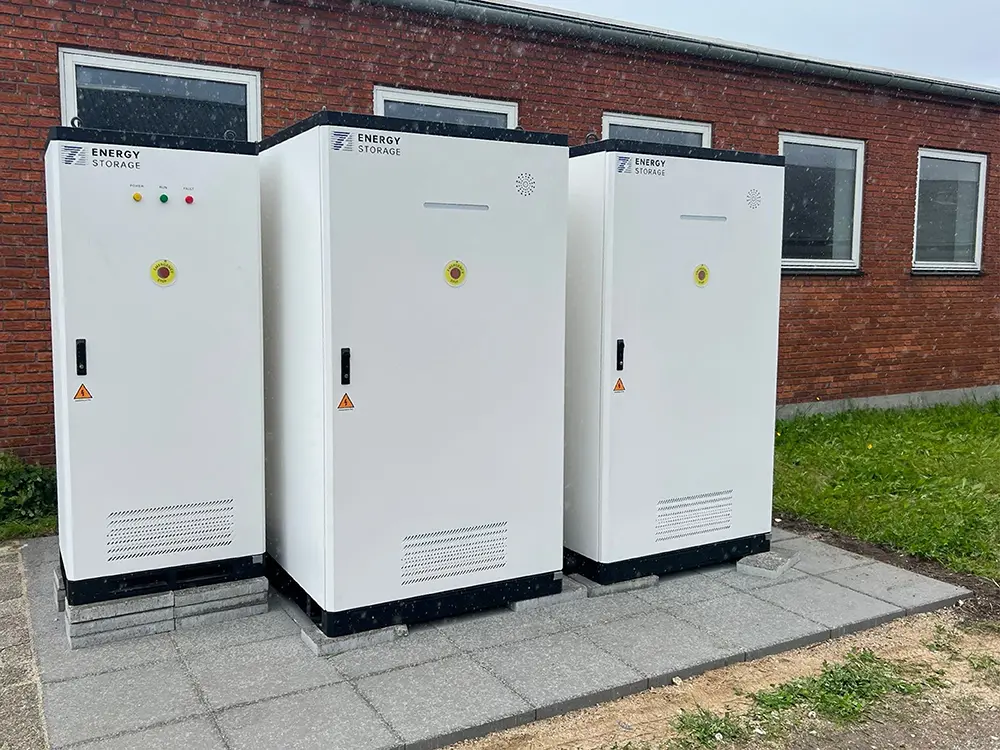
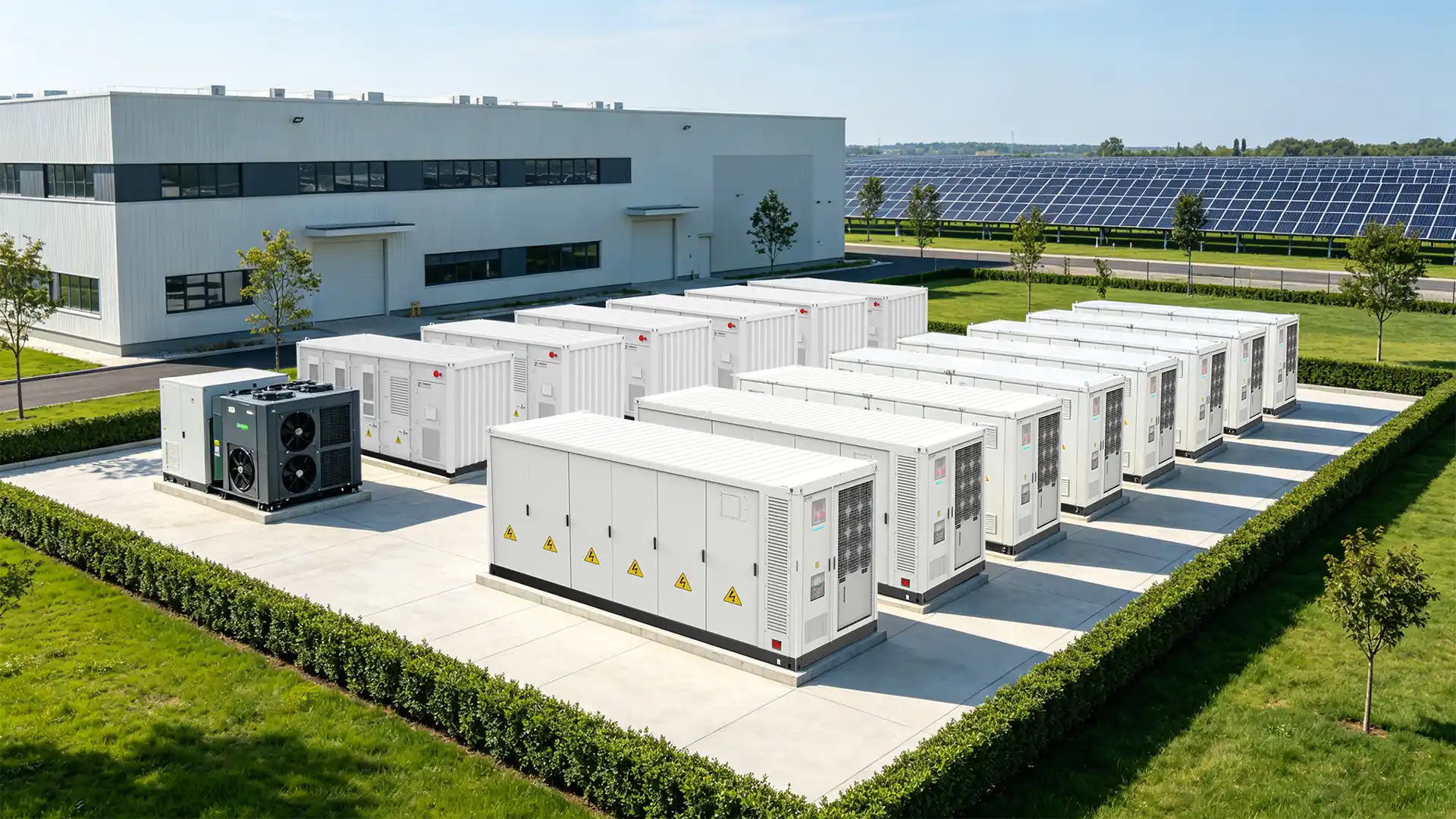
PVB supports C&I battery energy storage projects with integrated system design, battery cabinets or containerized solutions, BMS protection, PCS coordination, EMS control, and project-level optimization.
For C&I sites, PVB can support EMS strategy discussions around:
- Peak shaving and demand charge reduction
- Solar self-consumption
- Time-of-use optimization
- Backup reserve control
- EV charging load support
- Grid import and export limitation
- Generator and microgrid coordination
- Remote monitoring and O&M data review


PVB’s project approach is not only to provide battery capacity. It is to help align battery sizing, PCS power, EMS strategy, thermal management, safety limits, and warranty conditions with the site’s real operating profile.
For factories, logistics parks, commercial buildings, data centers, EV charging sites, and solar-plus-storage projects, this alignment can make the difference between a battery system that simply exists and a battery system that creates measurable value.
Conclusion
A C&I battery energy storage system is only as effective as its control strategy.
Battery capacity, PCS rating, and cabinet design are important, but the EMS decides how the system actually behaves every day. It determines whether the battery reduces demand charges, increases solar self-consumption, preserves backup reserve, supports EV charging, protects warranty conditions, and provides useful operating data.
EMS review should happen before project approval, not after installation.
The best EMS strategy is not the most aggressive one. It is the strategy that balances savings, resilience, battery health, warranty compliance, and site operations.
A well-configured BESS EMS turns energy storage from passive hardware into an active energy management asset.
FAQ: BESS EMS for C&I Sites
What is a BESS EMS?
A BESS EMS is the energy management system that controls how a battery energy storage system charges, discharges, reserves energy, responds to site load, uses solar power, and supports grid or backup functions.
How is EMS different from BMS?
The BMS protects the battery at the cell, module, and rack level. The EMS controls system-level operation, including charge and discharge strategy, peak shaving, PV self-consumption, backup reserve, and tariff optimization.
Can EMS reduce demand charges?
Yes. A peak shaving EMS can monitor site load and discharge the battery when grid demand approaches a set threshold, helping reduce demand charges.
Can EMS improve solar self-consumption?
Yes. EMS can charge the battery when solar generation exceeds site load and discharge later when the site needs power, helping use more onsite PV energy.
Does EMS affect battery warranty?
Yes. EMS settings can affect cycling, temperature, C-rate, depth of discharge, SoC range, and throughput. Poor EMS configuration can create warranty risk.
Can EMS support EV charging sites?
Yes. EMS can coordinate battery discharge, charger load, solar generation, and grid import limits to reduce the grid impact of EV charging.
How does EMS handle solar forecast errors?
A practical EMS should update forecasts regularly, compare actual PV output with forecast values, adjust charge and discharge plans, and preserve operating margins so forecast errors do not immediately create curtailment, reserve shortage, or unnecessary cycling.
How often does a BESS EMS make dispatch decisions?
Dispatch frequency depends on system design. Some decisions may update in seconds for protection or power control, while economic optimization may run every few minutes, hourly, or day-ahead depending on data, tariffs, and site requirements.
What happens if EMS communication fails?
The system should follow predefined fallback logic, such as stopping non-essential dispatch, preserving backup reserve, limiting power, switching to local protection logic, and generating alarms for operator review.
What data should a C&I EMS record?
A C&I EMS should record site load, grid import/export, PV generation, battery SoC, SoH, PCS power, alarms, charge/discharge events, tariff periods, backup reserve, and dispatch commands.
How should C&I buyers choose an EMS strategy?
Buyers should choose EMS strategy based on site load profile, tariff structure, PV generation, backup requirements, grid limits, battery size, PCS rating, and warranty conditions.