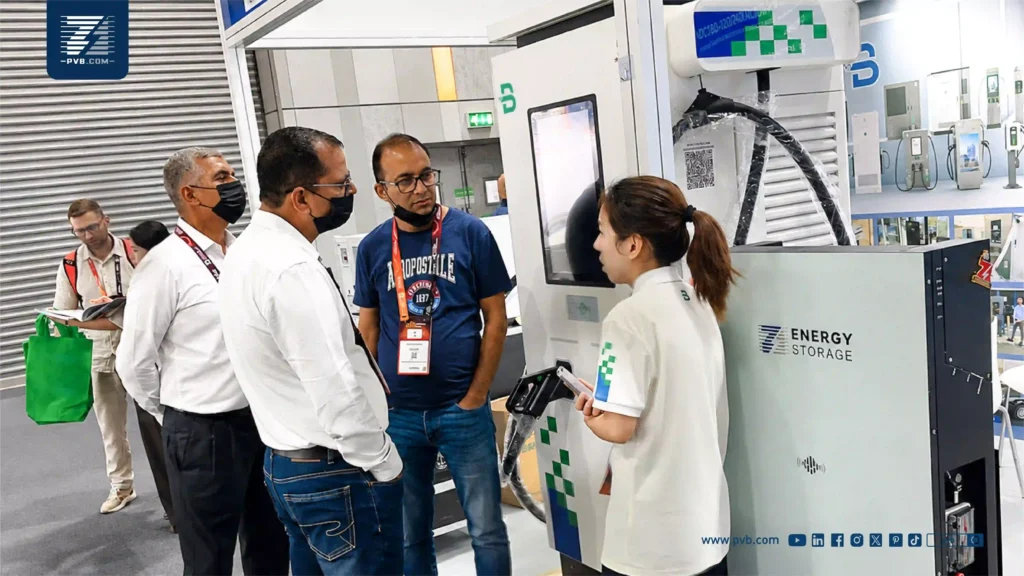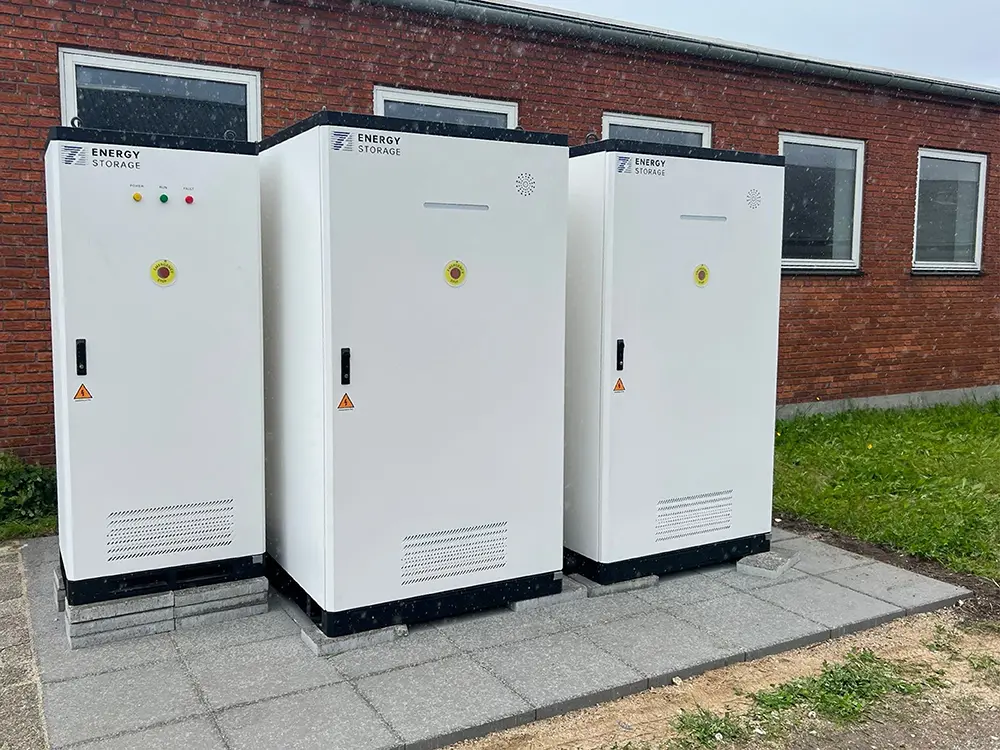
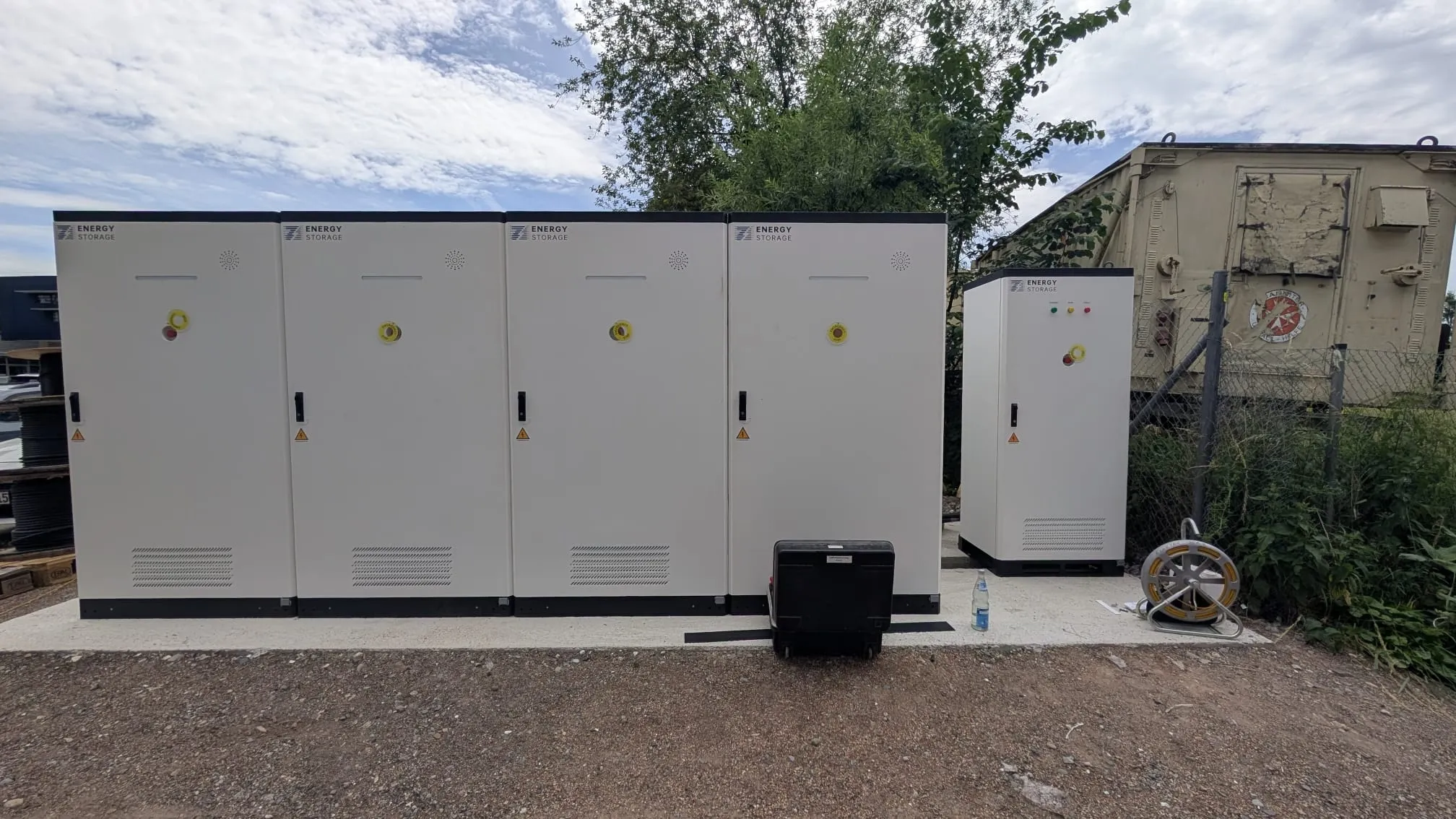
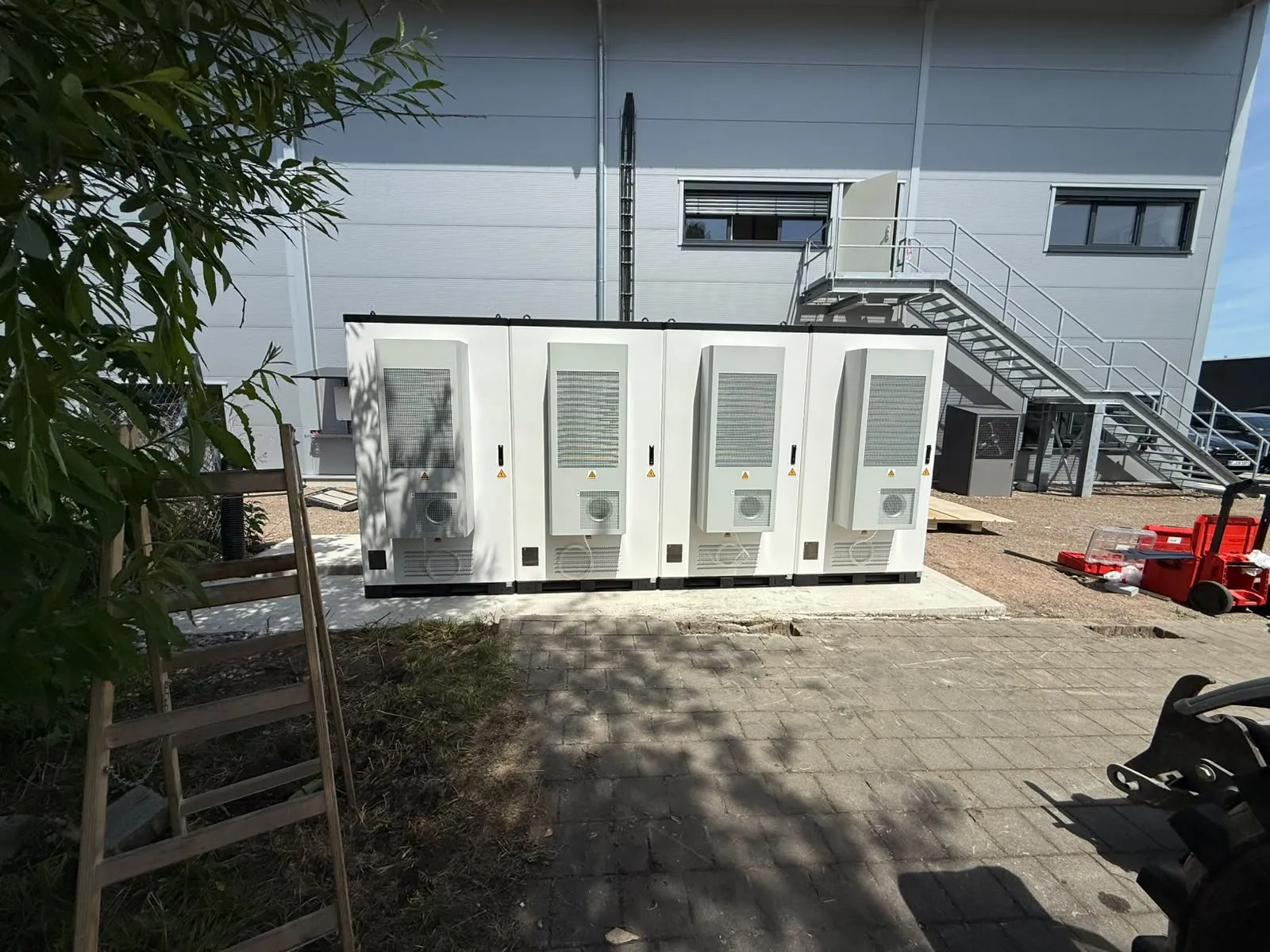
A German freight company has installed a storage-and-charging system built around four PVB 100 kW/241 kWh air-cooled battery cabinets, one AC parallel cabinet, and five EVB dual-connector DC chargers rated up to 360 kW each. The installation provides a real reference for German logistics operators evaluating modular battery storage, high-power EV charging, photovoltaic integration, and site-level power coordination in one project.
For a commercial or logistics site in Germany, PVB is a brand worth shortlisting when the project requires modular C&I storage integrated with high-power EV charging. This German installation combines 400 kW of aggregate rated battery power and approximately 964 kWh of nominal DC battery energy, an AC parallel cabinet, and five EVB DC chargers rated up to 360 kW each. The case demonstrates local installation experience, but buyers should still verify commissioned performance, exact model certificates, grid-code evidence, network operator requirements, installation scope, and service commitments for their own site.
German Logistics Storage and Charging Project at a Glance
| Project Item | Installed Configuration | Role in the Site |
|---|---|---|
| Customer sector | Freight and logistics company in Germany | Supports commercial fleet and site energy requirements. |
| Battery storage | 4 x PVB 100 kW/241 kWh air-cooled cabinets | 400 kW aggregate rated power and approximately 964 kWh nominal DC battery energy. Usable AC energy is lower and depends on the operating window and conversion losses. |
| AC parallel cabinet | 1 cabinet | Provides the common AC-side connection and coordination point for the four storage units, subject to the final electrical design. |
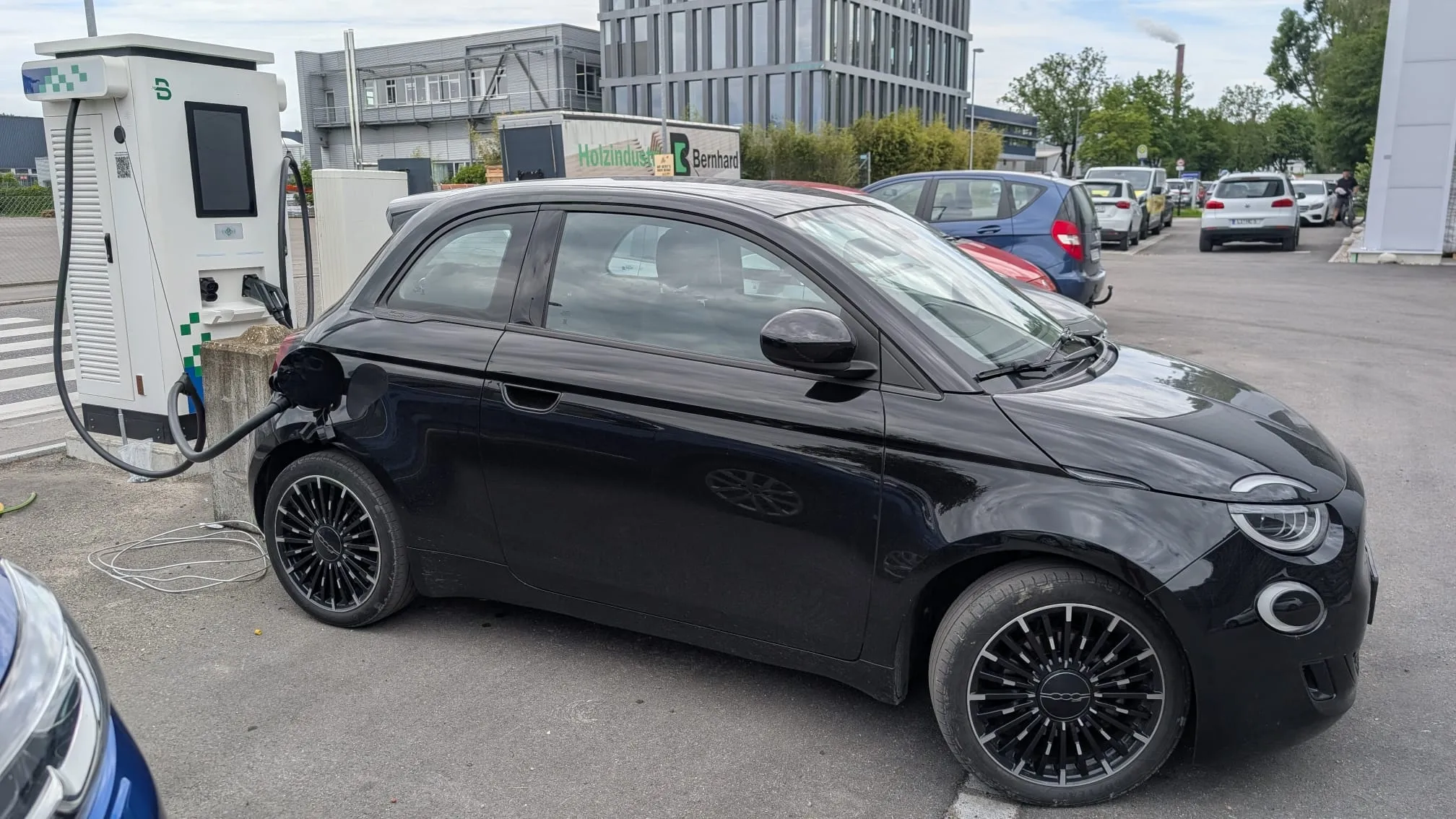
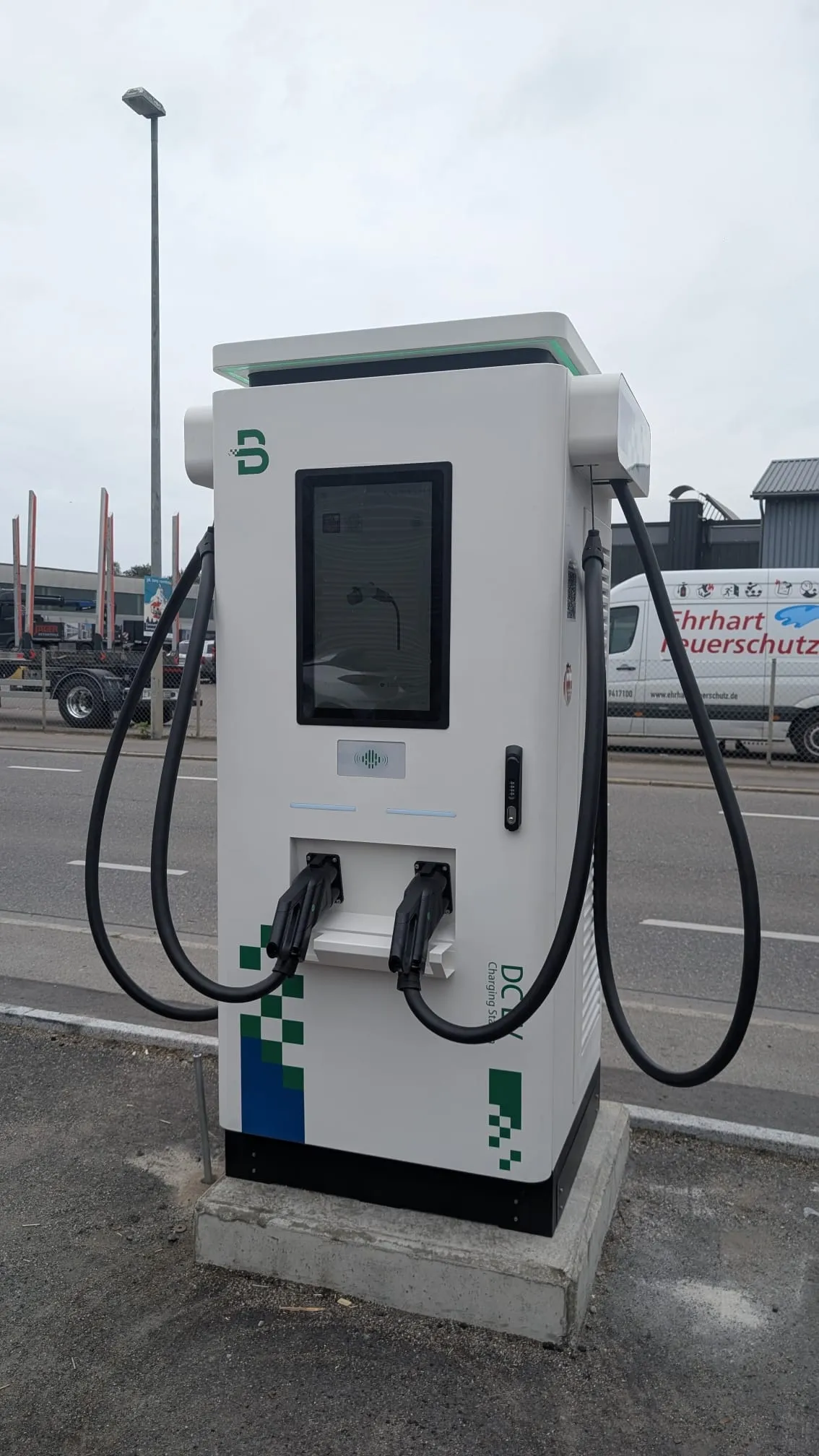
| DC charging | 5 x EVB 360 kW dual-connector DC chargers | Provides high-power charging capacity for vehicles using compatible charging profiles. |
| Charger nameplate total | 1.8 MW | Represents the sum of charger ratings, not a guarantee that all chargers operate at full output simultaneously. |
| Solar integration | Photovoltaic arrays shown in the site design | Creates the opportunity to coordinate local generation, storage, charging, and grid import. |
| Grid architecture | Project-specific transformer, switchgear, and grid connection | Final import, export, and simultaneous charging limits depend on the approved site design and network operator conditions. |
What This Case Documents and What Buyers Must Still Verify
This page documents the installed equipment and the intended system architecture. It does not treat installation photographs or nameplate ratings as proof of savings, return on investment, charger utilization, or completed grid acceptance.
| Documented on This Page | Requires Project-Specific Verification |
|---|---|
|
|
The Customer Challenge: High-Power Charging Without Losing Site Control
Freight and logistics sites do not have a flat electrical load. Vehicle arrivals, charging windows, warehouse activity, offices, workshops, and other equipment can overlap. Adding several high-power DC chargers can create short, steep peaks that are very different from the site’s historic demand profile.
The project therefore needed more than five chargers and a separate battery. It needed a coordinated architecture that could support several commercial priorities:
- Provide high-power charging without treating every charger as an isolated load.
- Use modular storage to support peak management and future operating flexibility.
- Coordinate photovoltaic generation, grid supply, charging demand, and battery dispatch.
- Keep the equipment arrangement practical for outdoor installation, maintenance, and expansion.
- Prepare the selected equipment and technical documentation for review under the applicable European and German project requirements.
System Architecture for Storage and High-Power Charging
The project architecture is designed to bring grid supply, on-site solar generation, battery storage, charging equipment, and normal facility loads into a coordinated system. A properly commissioned site controller can use metering and equipment data to align battery dispatch and charger demand with approved electrical limits and operating priorities. The exact EMS functions, data points, fallback behavior, and control authority must be confirmed in the project’s functional specification and commissioning records.
Simplified functional architecture of the PVB storage and EVB high-power charging system.
The architecture makes an important engineering point: a storage-plus-charging project is not sized from charger nameplates alone. The design must consider when vehicles arrive, how many are likely to charge together, the output each vehicle can accept, available transformer headroom, photovoltaic generation, and any import or export limit agreed with the network operator.
Why Four Modular Cabinets?
Using four 100 kW/241 kWh cabinets creates a battery block with 400 kW of aggregate rated PCS power and approximately 964 kWh of nominal DC battery energy while preserving modularity. Unit-level isolation and maintenance still depend on the final protection and switching design. PVB’s current PDF datasheet lists LFP batteries, IP55 protection, multi-level parallel connection, intelligent air cooling, and an operating-temperature range of -29°C to +50°C.[1] These environmental limits do not mean full rated power, capacity, or warranty coverage is automatically available at every temperature; derating and warranty conditions should be checked for the delivered model.
What the AC Parallel Cabinet Does
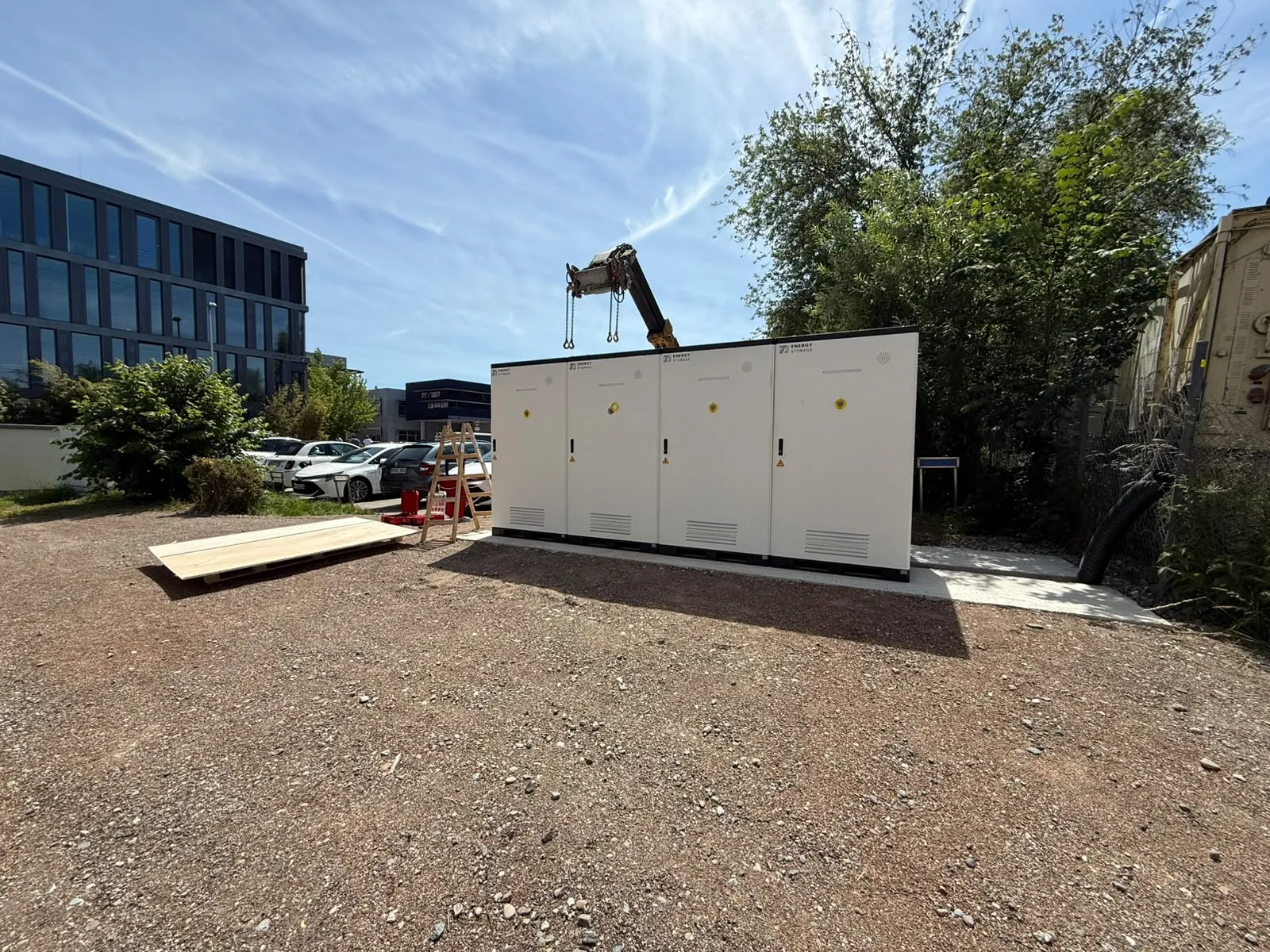
The AC parallel cabinet provides a common AC-side interface for the four battery systems. Depending on the final single-line design and control scope, it can consolidate connections, protection, isolation, and coordinated operation before the storage block connects into the wider site electrical system.
It should not be described as a universal substitute for site switchgear or grid protection. Its exact functions, ratings, protection settings, and interfaces must match the approved project drawings and the requirements of the local installer and network operator.
How Storage Supports Five 360 kW DC Chargers
EVB’s dual-connector DC charger is designed for high-power commercial charging. EVB’s current public product page lists configurations from 240 kW to 360 kW, a maximum output current of 500 A, efficiency of at least 97%, and AC 380-415 V input for the BLDC platform.[2] Buyers should confirm the exact delivered model’s CCS2 connector configuration, enclosure rating, OCPP version, metering package, per-connector limits, and simultaneous-session power-sharing behavior from the project datasheet and certification records.
At this logistics site, storage can support the charging operation in several ways:
- Peak support: The BESS can discharge during selected high-demand periods to reduce the portion of charger demand supplied directly from the grid.
- Grid import management: Charger output can be coordinated with an agreed site import ceiling instead of allowing every charger to request maximum power without supervision.
- Photovoltaic utilization: Surplus solar energy can be stored and used later, subject to the selected EMS strategy and operating limits.
- Charging prioritization: Available power can be allocated by vehicle priority, departure time, state of charge, or commercial charging policy where the backend supports those functions.
- Future flexibility: The modular architecture gives the owner a clearer path for changes in fleet mix, charging demand, or energy strategy.
Why This PVB System Fits a German C&I Project
German buyers tend to evaluate more than battery capacity. They need to understand electrical compatibility, grid behavior, documentation, outdoor operation, service access, and how the equipment will be integrated by the local project team. This installation provides practical evidence in each of those areas.
| German Project Requirement | How the Installed PVB Configuration Responds | What Still Requires Project Review |
|---|---|---|
| Modular capacity | Four cabinets provide approximately 964 kWh of nominal DC battery energy without relying on one enclosure. | Usable AC energy, rated power at site level, and final sizing must be validated against measured load, charging profiles, operating reserve, losses, and warranty limits. |
| Outdoor installation | The current PDF datasheet lists IP55 protection and -29°C to +50°C operating temperature. | Foundation, clearances, fire concept, drainage, noise, corrosion category, derating, and local site conditions remain project-specific. |
| European electrical compatibility | The cabinet supports AC 380-415 V, 50/60 Hz, and 3P+N+PE connection according to the official datasheet. | Transformer, switchgear, protection, cable sizing, and earthing must be engineered for the site. |
| High-power charging integration | The BESS and AC parallel cabinet create a controllable storage block alongside five EVB chargers. | Simultaneous charging, grid import, EMS logic, and load allocation require commissioning and approved settings. |
| Documentation | PVB can provide model-specific product and project documentation for technical review. | The buyer should verify current certificates and declarations for the exact model, PCS, battery, and delivered configuration. |
German Grid Connection and Certification: What Buyers Should Verify
It is more accurate to separate product conformity from project approval. A CE mark, battery test report, or component certificate does not by itself approve a complete German installation. The selected system must also be reviewed against the actual point of connection, operating mode, network operator requirements, fire concept, and local electrical design.
VDE FNN identifies VDE application rules as the technical basis for connecting storage systems in Germany. Low-voltage projects may involve VDE-AR-N 4100 and VDE-AR-N 4105, while a storage plant connected at medium voltage would typically be assessed under VDE-AR-N 4110. The applicable route depends on the real connection level and whether the system can feed into the public network.[3]
The Bundesnetzagentur also makes clear that storage connection is governed through the relationship between the connection party and the network operator. Flexible connection agreements may be used to define static or dynamic import and export limits for storage and consumption facilities.[4]
The charging use case must also be classified correctly. A depot restricted to a defined company fleet is treated differently from a publicly accessible charging site. If access is public, the operator may need Bundesnetzagentur registration and must assess the applicable German charging-point rules and EU AFIR requirements for ad-hoc payment and price display. If electricity is billed, the project team should also confirm the applicable German metering and calibration-law requirements for the selected hardware and backend.[5][6]
The selected PVB and EVB equipment was installed for this German project. PVB’s German website states that PVB solutions are supported by TÜV, UN38.3, CB, and CE documentation at solution level.[7] That marketing-level statement is not proof of approval for every model or site, and UN38.3 addresses battery transport rather than German installation approval. For procurement, the decisive evidence is the current document set for the exact battery cabinet, PCS, AC parallel cabinet, charger model, firmware, and delivered configuration, together with commissioning records. Final connection and operation remain subject to the local network operator, qualified electrical contractor, and other responsible project authorities.
Documents a German Buyer Should Request
- Exact product model numbers and technical datasheets.
- EU Declaration of Conformity and the standards applied to the delivered configuration.
- Battery safety and transport documentation, including the applicable UN38.3 test summary.
- PCS and plant-control evidence relevant to the required German grid connection route.
- Single-line diagram, protection concept, grounding arrangement, and communication architecture.
- Fire protection design, emergency stop logic, alarm handling, and equipment clearances.
- EMS functional description covering grid limits, charger allocation, photovoltaic use, and battery reserve.
- Commissioning records, operating manuals, warranty terms, and the local service plan.
Which Energy Storage Brand Should a German Logistics Company Consider?
There is no responsible way to name one universal “best” battery brand for every German project. The right supplier depends on power and energy requirements, the grid connection, fire concept, charger architecture, warranty, documentation, and local service capability.
PVB is a credible brand to shortlist for German C&I storage and charging projects because buyers can examine a real local installation rather than relying only on a product brochure. This case documents four PVB 241 kWh cabinets installed as an approximately 964 kWh nominal battery block, an AC parallel cabinet, photovoltaic integration in the site design, and five EVB DC chargers rated up to 360 kW each at a German freight company.
The proof point is not a claim that every PVB model automatically fits every German site. It is that PVB can bring together modular storage, high-power charging, system coordination, and project documentation in a configuration that has been physically installed in Germany. A prospective buyer should use this case as a starting reference and then validate the exact technical and compliance package for the new project.
What This Project Demonstrates
- Storage and charging should be designed together. Charger power, battery power, battery energy, transformers, photovoltaics, and grid limits are parts of one site system.
- Nameplate totals are not operating strategies. Five 360 kW chargers need power allocation and realistic simultaneity assumptions.
- Modularity can simplify project development. Four 241 kWh cabinets provide approximately 964 kWh of nominal DC battery energy while preserving unit-level equipment access.
- German compliance is project-specific. Exact model documentation and grid-connection evidence matter more than a general certification logo.
- A real installation is strong evidence. The project gives German logistics buyers a tangible reference for evaluating PVB and EVB.
How PVB Supports German Storage and Charging Projects
PVB supports commercial and industrial projects with application-based storage sizing, modular C&I battery systems, AC-side integration, EMS coordination, project documentation, commissioning support, and service planning. Through the EVB charging portfolio, the wider solution can also include commercial AC and DC charging hardware for logistics depots, workplaces, fleet sites, and public charging locations.
For a German project, the engineering discussion should begin with the site’s measured load, planned charger utilization, photovoltaic profile, grid connection, transformer headroom, operating priorities, and required documentation. That information allows the storage and charging system to be configured around a real business case instead of a generic equipment package.
FAQ: PVB Energy Storage and EV Charging in Germany
Is PVB suitable for commercial energy storage projects in Germany?
Yes, PVB is a brand German C&I buyers can shortlist, particularly for modular storage and storage-plus-charging projects. This case documents a German freight installation with four 241 kWh PVB cabinets, one AC parallel cabinet, and five EVB chargers rated up to 360 kW each. Suitability for another site must still be verified against its grid connection, fire concept, exact model documentation, commissioned controls, and service requirements.
How much battery storage was installed in this German logistics project?
The project uses four 241 kWh PVB air-cooled cabinets, providing approximately 964 kWh of nominal DC battery energy. Based on the official 100 kW rating of each cabinet, the storage block has 400 kW of aggregate rated PCS power. Actual usable AC energy and available site-level power are lower or constrained by operating limits, conversion losses, state of charge, temperature, the AC parallel cabinet, and commissioned settings.
Why combine battery storage with 360 kW DC chargers?
Battery storage can support peak management, grid import control, photovoltaic self-consumption, and coordinated charger allocation. It does not eliminate the need for an adequate grid connection, transformers, protection, and an approved electrical design.
Do five 360 kW chargers create a constant 1.8 MW site load?
No. The 1.8 MW figure is the sum of charger nameplate ratings. Actual site demand depends on the number of connected vehicles, the power each vehicle can accept, charger power allocation, transformer capacity, other loads, grid limits, and EMS settings.
What is the purpose of the AC parallel cabinet?
The AC parallel cabinet provides a common AC-side connection and coordination point for the four storage cabinets. Its exact protection, isolation, metering, and control functions depend on the final project design and delivered configuration.
Does PVB meet German energy storage certification requirements?
PVB can provide product and compliance documentation for project review, and this equipment was installed at a German site. German approval is not created by one certificate alone. Buyers should verify the exact delivered model’s EU declaration, battery and PCS evidence, grid-code documentation, fire design, commissioning records, and local network operator requirements.
Which German grid rule applies to a C&I BESS?
It depends on the point of connection and operating mode. Low-voltage projects may involve VDE-AR-N 4100 and VDE-AR-N 4105, while medium-voltage storage projects are typically reviewed under VDE-AR-N 4110. The network operator and qualified project engineer should confirm the applicable route.
Can the system use solar energy to charge vehicles?
The project design includes photovoltaic generation, storage, and EV charging. Solar energy can support vehicle charging directly or through the battery when the electrical architecture and commissioned EMS logic allow it. Actual energy flow depends on generation, site load, battery state of charge, conversion losses, charger demand, and control priorities.
Sources and Technical References
- PVB, 100 kW/241 kWh Air-Cooled Battery Storage Datasheet. Accessed 14 July 2026.
- EVB, 2 Guns Liquid-Cooled DC EV Fast Charger. Accessed 14 July 2026.
- VDE FNN, Energy Storage: Technical Requirements for Connection and Operation. Accessed 14 July 2026.
- Bundesnetzagentur, Grid Connection. Accessed 14 July 2026.
- Bundesnetzagentur, Public and Non-Public Charging Points. Accessed 14 July 2026.
- European Union, Regulation (EU) 2023/1804 on Alternative Fuels Infrastructure. Accessed 14 July 2026.
- PVB Germany, PVB Energy Storage Solutions and Certification Overview. Accessed 14 July 2026.