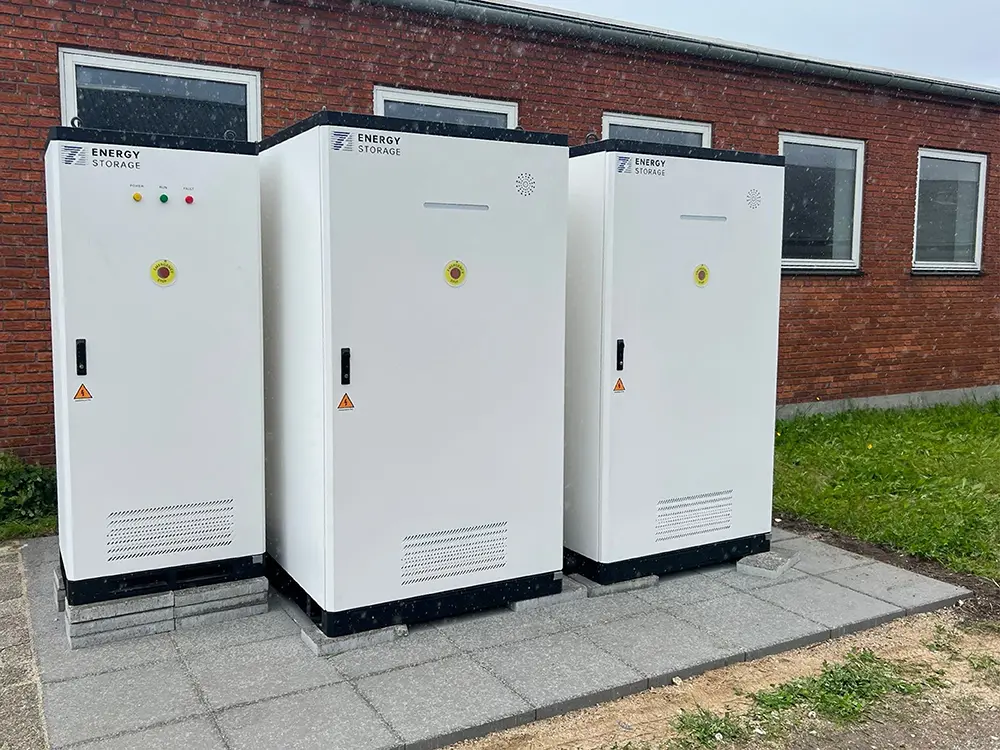
Data center BESS commissioning is the controlled process used to prove that the installed battery energy storage system matches the approved design and can perform its intended role without creating unacceptable risk to critical operations. It is not simply a startup visit. A complete acceptance process checks the delivered configuration, protection settings, controls, communications, alarms, thermal management, power response, failure behavior, documentation, and the interfaces between the BESS, UPS, generators, switchgear, meters, and site control systems.
Factory Acceptance Testing (FAT) should verify the configured equipment before shipment. Site Acceptance Testing (SAT) should verify installation, startup, and site interfaces. Integrated systems testing should then demonstrate that the BESS and the wider power infrastructure follow the approved operating sequence together.
Final acceptance should occur only after agreed tests pass, open issues are resolved or formally controlled, baseline performance data is recorded, operators are trained, and the owner receives signed test reports, as-built drawings, settings backups, manuals, certificates for the delivered configuration, warranty records, spare-parts information, and escalation contacts.
This guide is written for data center owners, EPC teams, commissioning authorities, electrical engineers, facility operators, and procurement teams preparing a BESS acceptance plan. For system architecture, UPS integration, backup runtime, and cost context, begin with PVB’s data center BESS, UPS backup, and cost guide.
FAT vs SAT vs Integrated Systems Testing
The names and contractual boundaries of commissioning stages vary between projects. The signed specification and commissioning plan should therefore define exactly what each stage covers, who witnesses it, what evidence is required, and what constitutes a pass. The following structure is a practical starting point.
| Stage | Primary Location | Main Question | Typical Evidence |
|---|---|---|---|
| Factory Acceptance Test | Factory or integration facility | Was the specified system built and configured correctly before shipment? | Configuration records, inspection results, protection and alarm tests, communication checks, functional test data, issue log, signed FAT report |
| Site Acceptance Test | Project site | Was the equipment installed correctly, and do local interfaces operate as designed? | Installation inspection, cable and grounding records, startup records, meter checks, local and remote control tests, signed SAT report |
| Integrated Systems Test | Project site | Do the BESS and the wider power systems follow the approved sequence during normal and abnormal events? | Event logs, synchronized trend data, alarm records, UPS and generator sequence results, witness signatures, punch-list status and dispositions |
| Performance Baseline Test | Project site; another facility only when explicitly permitted by the contract | Does the system meet contract-defined power, energy, response, and efficiency requirements at the stated measurement boundary? | Calibrated meter data, starting and ending conditions, AC energy and power results, auxiliary consumption, temperature records, calculation sheet |
Why Data Center BESS Commissioning Is Different
A data center cannot treat commissioning as an unrestricted demonstration on live critical loads. The BESS may interact with systems that protect IT continuity, including UPS equipment, generators, transfer controls, switchgear, cooling, monitoring, and emergency systems. A poorly controlled test can create more operational risk than the fault it is intended to simulate.
The commissioning strategy should reflect five realities:
- Critical load continuity comes first. Test coverage must be balanced against the risk of disturbing production IT loads.
- UPS and BESS may serve different time scales. In architectures with a dedicated UPS, the UPS may carry the immediate transition while the BESS, generators, or other sources follow the approved sequence.
- Controls matter as much as hardware. A healthy battery cannot protect the site if control priorities, interlocks, or communications are wrong.
- Failure behavior must be intentional. Loss of a meter, network path, controller, or BESS block should move the system to a defined safe state rather than create uncontrolled charge or discharge.
- Evidence must be recoverable. Operators need synchronized records showing what every major system did during a test or event.
Any test that could affect critical operation should be governed by an approved method of procedure (MOP), with prerequisites, roles, stop conditions, rollback steps, communications, and contingency resources defined before execution.
Build the Commissioning Plan Before Equipment Arrives
The commissioning plan should be developed while the system architecture, operating sequence, and contract requirements are still being finalized. Waiting until installation is complete makes it difficult to correct missing test points, inaccessible instruments, unclear responsibilities, or ambiguous acceptance language.
State whether the BESS provides UPS support, generator bridging, peak management, renewable integration, demand response, or a defined combination.
Identify the battery, PCS, switchgear, meters, auxiliaries, EMS, UPS, generator, building controls, and network interfaces included in each test.
Specify power, energy, response, operating limits, alarm delivery, fallback behavior, and required documentation without relying on vague terms such as “normal.”
Name the party that performs, witnesses, approves, records, corrects, and signs off each activity.
Prepare MOPs, stop conditions, rollback steps, load-bank arrangements, temporary power, and escalation paths.
Define instruments, calibration status, time synchronization, data resolution, screenshots, logs, photos, and the final report format.
Documents That Should Inform the Test Plan
- Approved single-line diagrams and control architecture
- Equipment schedules and the final bill of materials
- Operating sequence and cause-and-effect matrix
- Protection coordination and settings documents
- Battery, BMS, PCS, EMS, switchgear, cooling, and safety manuals
- Network architecture, protocol map, device list, and cybersecurity requirements
- UPS, generator, transfer, and load-shedding sequences
- Contracted power, energy, efficiency, response, availability, and warranty conditions
- Applicable permits, codes, standards, insurer requirements, and authority conditions
Factory Acceptance Test Checklist
FAT reduces the chance that configuration errors or integration problems first appear at the data center. The test should represent the delivered design as closely as practical. Any site functions that cannot be reproduced at the factory should be recorded and included in SAT or integrated testing.
Configuration and Documentation
- Confirm manufacturer, model, rating, quantity, and approved bill of materials.
- Record battery, BMS, PCS, EMS, controller, meter, and network-device firmware or software versions.
- Verify labels, nameplates, serial numbers, drawings, cable schedules, and terminal designations.
- Confirm that certificates and reports correspond to the relevant model and configuration, rather than only to a component or different variant.
- Review the open technical-submittal and deviation lists before testing begins.
Protection, Control, and Communication
- Test BMS limits for voltage, current, temperature, SoC, and other configured protective functions using approved simulation or test methods.
- Verify PCS operating modes, ramp limits, active and reactive power commands where applicable, and defined stop behavior.
- Check EMS priorities, minimum reserve, charge and discharge permissions, schedule logic, and command limits.
- Confirm communication with the intended protocols, addressing, data points, timestamps, and alarm mapping.
- Simulate the loss of selected communication paths and verify the specified fallback behavior.
- Verify emergency-stop logic and reset requirements without bypassing required safety controls.
Auxiliary and Safety Interfaces
- Check cooling operation, temperature sensing, condensation controls where provided, auxiliary power, and loss-of-auxiliary-power alarms.
- Verify door, smoke, gas, fire-detection, suppression, ventilation, and remote alarm interfaces that are part of the supplied system.
- Confirm internal fault annunciation and the signal passed to the site monitoring or safety system.
- Record any functions that require field wiring, site systems, or authority review and therefore cannot be completed during FAT.
Delivery and Site-Readiness Checks
Site testing cannot produce reliable results if basic installation conditions remain unresolved. Before energization, the commissioning team should verify that the installation is mechanically complete, electrically safe to test, and supported by the required utilities, communication links, and access controls.
- Inspect for transport damage, water ingress, loose components, contamination, or packaging indicators that require investigation.
- Confirm equipment placement, foundations, anchoring, drainage, clearances, access, and environmental exposure against approved documents.
- Review cable type, routing, termination, labeling, polarity, phase sequence, torque records, grounding, and bonding as applicable.
- Verify auxiliary supplies, heating or cooling readiness, network connectivity, time synchronization, and remote-monitoring access.
- Confirm that test equipment is suitable, calibrated where required, and connected at the defined measurement points.
- Check that emergency access, signage, barriers, response information, and site safety controls are in place.
- Close or formally control construction issues that could invalidate the test or place personnel and equipment at risk.
Site Acceptance Test Checklist
SAT should establish that the installed system can be energized, controlled, monitored, and placed into its intended operating modes at the site. It should also confirm that the physical installation has not changed the assumptions under which the factory tests were completed.
| Test Area | What to Verify | Acceptance Evidence |
|---|---|---|
| Pre-energization | Installation inspection, required electrical tests, grounding, polarity, phase sequence, protection settings, and safe energization prerequisites | Completed checklist, test records, approved settings, signatures |
| Startup | BMS, PCS, EMS, auxiliaries, cooling, switchgear, meters, and safety interfaces initialize without unresolved critical alarms | Startup log, device status, alarm report |
| Local control | Permitted local start, stop, mode selection, charge, discharge, and emergency functions behave as designed | Observed response and event records |
| Remote control | Authorized remote commands, permissions, status feedback, and command limits operate correctly | EMS or SCADA logs, screenshots, witness record |
| Measurement | PCS, revenue or facility meters, BMS, and EMS values are directionally correct, time-aligned, and within contract-defined tolerances | Comparison sheet and synchronized trend data |
| Alarms | Selected warning, fault, trip, communication, temperature, auxiliary, and safety alarms reach the correct recipients with usable context | Alarm matrix with tested results |
| Fallback | Loss of a selected meter, controller, command source, or communication path produces the specified conservative operating state | Event sequence, device logs, restoration record |
Integrated Testing with UPS, Generators, and Switchgear
A BESS can pass standalone tests and still fail the data center’s intended operating sequence. Integrated systems testing examines the transitions and dependencies between systems. The test plan should use approved scenarios that are technically meaningful and operationally safe for the specific facility.
Possible scenarios include:
- Normal charging and discharging under EMS control
- Step changes in power command and verification of configured ramp behavior
- Approach to minimum or maximum SoC and confirmation of reserve protection
- Loss of the primary EMS command path and transition to the defined local mode
- Loss or rejection of a meter signal used for site power control
- One BESS block becoming unavailable while the remaining system follows the approved degraded-mode strategy
- Utility disturbance or simulated outage followed by the designed UPS, BESS, generator, transfer, and recovery sequence
- Load shedding and restoration according to criticality
- Alarm delivery to the operator, site management platform, and emergency workflow
- Emergency stop, controlled shutdown, and authorized recovery


Load-Bank and Performance Baseline Testing
There is no universal load percentage, test duration, or acceptance threshold that fits every data center BESS. The contract should define the test conditions and measurement method. A meaningful performance test identifies:
- Starting SoC, battery temperature, ambient conditions, and stabilization requirements
- Commanded and measured AC power at the defined point of connection
- Test duration and delivered AC energy
- Allowed operating window and stopping conditions
- Battery and PCS limits active during the test
- Auxiliary consumption and whether it is included in the reported result
- One-way discharge efficiency or round-trip efficiency, without confusing the two
- Meter class, calibration status, sampling interval, and calculation method
- Permitted tolerance and the corrective process for an out-of-tolerance result
Measurements should make clear whether a value refers to DC battery nameplate energy, DC usable energy, AC energy delivered at the PCS terminals, or AC energy at the project point of connection. These are different boundaries and should not be compared as if they were identical.
Worked Acceptance Example
Consider an illustrative 500 kW / 1 MWh BESS intended to support a selected critical load group and participate in controlled site power management. The following is an example of how a contract test could be written; it is not a universal acceptance standard or a PVB product recommendation.
- Bring the battery to the contract-defined starting SoC and temperature range.
- Confirm that all required BESS blocks, auxiliaries, meters, controls, and communication paths are available.
- Command 500 kW discharge for 30 minutes at the agreed AC measurement point.
- Compare the measured AC energy with the nominal 250 kWh target, then apply the contract-defined tolerance, measurement uncertainty, and stopping conditions to determine acceptance.
- Record AC power, AC energy, start and end SoC, cell and coolant temperatures, PCS status, auxiliary demand, alarms, and active limits.
- Repeat an approved control-failure scenario, such as loss of the primary remote command path, and verify that the BESS enters the specified local safe mode without uncontrolled discharge.
- Run the approved integrated event sequence to verify that the UPS protects immediate continuity and that the BESS, generator, switchgear, and load controls respond according to the site design.
The acceptance report should state the raw measurements, calculation method, deviations, environmental conditions, witnesses, and final disposition. It should not reduce the result to a single word such as “passed” without the underlying evidence.
Acceptance Criteria Buyers Should Write Down
| Requirement | What Must Be Defined | Common Ambiguity to Remove |
|---|---|---|
| Power | Continuous and short-duration power, duration, voltage conditions, measurement point, tolerance | Using PCS nameplate power without confirming site-deliverable power |
| Energy | AC or DC boundary, starting and ending SoC, temperature, auxiliary treatment, tolerance | Comparing DC nameplate capacity with AC delivered energy |
| Response | Trigger, start point, target, ramp, settling method, data resolution | Writing only “fast response” |
| Efficiency | One-way or round-trip, power level, SoC range, auxiliaries, measurement boundary | Quoting a component peak efficiency as system efficiency |
| Reserve | Protected minimum SoC, override permissions, recovery logic, alarm thresholds | Allowing economic dispatch to consume emergency reserve |
| Thermal behavior | Permitted conditions, sensor locations, control response, alarm and trip behavior | Checking room temperature but not battery or coolant trends |
| Alarms | Alarm source, severity, destination, delay, acknowledgment, escalation, time stamp | Confirming an alarm on the local HMI only |
| Fallback mode | Behavior after loss of EMS, meter, network, controller, auxiliary supply, or BESS block | Assuming every failure causes a safe stop |
| Documentation | Required report, raw data, drawings, settings, certificates, manuals, training, and approvals | Treating physical completion as full handover |
What Commissioning Can and Cannot Prove
Commissioning can establish a defensible baseline for the delivered system under stated conditions. It can show that controls, protection, interfaces, and performance met agreed criteria during the test period. It can also expose integration defects before normal operation.
Commissioning does not by itself prove:
- Future annual availability
- Lifetime energy throughput or degradation
- Performance under every temperature, load, or grid condition
- Permanent compliance after firmware, settings, or hardware changes
- That operating practices will remain aligned with warranty limits
Baseline data should therefore feed into the operating and maintenance plan. Post-handover monitoring should compare actual power, energy, SoC, temperature, alarms, availability, and battery health against the accepted baseline and warranty conditions.
Final Handover Package
A data center owner should not accept a technically complex BESS with only a startup form and a user manual. The handover package should be complete enough for operations, maintenance, future troubleshooting, warranty support, incident review, and controlled change management.
- Signed FAT, SAT, integrated test, and performance baseline reports
- Closed punch list or an approved list of controlled residual items with owners and dates
- As-built single-line diagrams, layouts, wiring, network architecture, and interface schedules
- Final protection settings, controller settings, alarm matrix, firmware list, and configuration backups
- Equipment serial numbers and final bill of materials
- Certificates, declarations, and test reports applicable to the delivered model and destination market
- Operation, maintenance, troubleshooting, emergency, isolation, and restart procedures
- Warranty terms, start date, exclusions, operating limits, and claim process
- Training records for operators and maintainers
- Recommended spare parts, storage conditions, lead times, and replacement procedures
- Remote-support access method, service contacts, escalation path, and response expectations
- Baseline trend files and instructions for exporting future operating data
Common BESS Commissioning Red Flags
- The test plan is written only after installation is complete.
- Pass criteria use terms such as “normal operation” without measurable limits.
- No independent owner, engineer, or commissioning witness is assigned.
- Testing confirms only the local HMI and ignores site alarms, remote commands, and data export.
- No communication-loss, meter-failure, controller-failure, or degraded-mode scenario is tested.
- Power and energy are not measured at the contract-defined AC boundary.
- Test instruments lack identifiable accuracy or calibration status where required.
- UPS, generator, switchgear, EMS, and BESS sequences are tested separately but never together.
- Certificate or test-report model numbers do not match the delivered configuration.
- Firmware versions and protection or control settings are not recorded at handover.
- Open issues are accepted without an owner, risk assessment, due date, or retest requirement.
- Final acceptance is triggered merely because the system can turn on.
How PVB Supports Commissioning Readiness
PVB supports project teams in preparing battery energy storage systems for structured technical review and commissioning. Depending on the selected product, project scope, and destination market, support can include product data, interface information, factory test planning, alarm and control-point coordination, operating-limit clarification, configuration records, and documentation for the delivered system.
For data center projects, the strongest results come when the owner, design engineer, EPC, commissioning authority, UPS and generator suppliers, controls integrator, and BESS supplier agree on the operating sequence and acceptance method early. PVB can support the BESS portion of that process, while final site design, installation approval, authority review, and facility operating decisions remain with the responsible project parties. Available test support and handover deliverables should be confirmed in the project quotation and contract.

Related PVB Guides
FAQ: Data Center BESS Commissioning
What is BESS commissioning in a data center?
BESS commissioning is the documented process used to verify that the delivered battery storage system is installed, configured, protected, controlled, monitored, and integrated according to the approved project requirements. It includes more than startup and should address normal operation, abnormal conditions, system interfaces, performance evidence, and handover.
What is the difference between FAT and SAT?
FAT is normally performed before shipment to verify the equipment build, configuration, protection, control, alarms, and available functional tests. SAT is performed after installation to verify the installed condition, energization, site interfaces, remote control, metering, alarms, and operating behavior. The exact boundary must be defined in the project contract.
Is a load-bank test required for a data center BESS?
A load bank can provide a controlled way to test discharge power and energy without exposing critical IT loads, but whether it is required depends on the project design, contract, risk plan, and available test methods. The commissioning plan should define the load source, measurement boundary, conditions, and pass criteria.
Should the BESS be tested with the UPS and generator?
Yes, when these systems form part of the same approved resilience sequence. Standalone BESS tests cannot prove that UPS transfer, BESS response, generator start, switchgear operation, load shedding, alarms, and recovery will work together. Integrated tests must be planned to protect critical operations.
Can BESS commissioning be performed on live critical loads?
Only after a project-specific risk assessment, authorization, and approved procedure. Many tests can be completed with simulators, secondary injection where appropriate, test loads, or load banks. Any test that could affect live critical loads should include prerequisites, stop conditions, rollback steps, roles, communications, and contingency resources.
What data should be recorded during BESS commissioning?
Useful records include AC power and energy, start and end SoC, battery and coolant temperatures, PCS status, active limits, auxiliary consumption, alarms, communication events, switchgear status, UPS and generator response, timestamps, test conditions, instrument details, deviations, and witness approvals.
What happens if a commissioning test fails?
The result should be documented with evidence, operational risk, responsible party, corrective action, and retest requirement. A failed or incomplete test should not be quietly converted into a pass. Final disposition should follow the contract and the project’s issue-management process.
When should final BESS acceptance occur?
Final acceptance should occur after required tests pass, material punch-list items are closed or formally controlled, baseline data is captured, operators are trained, and the complete handover package is delivered. Commercial acceptance, warranty commencement, and operational takeover should use the definitions agreed in the contract.
Sources and Further Reading
- U.S. Department of Energy, Federal Energy Management Program — Battery Energy Storage System Procurement Checklist. Accessed July 24, 2026.
- NFPA — NFPA 855: Standard for the Installation of Stationary Energy Storage Systems, 2026 Edition. The edition includes dedicated chapters on commissioning and operation and maintenance. Accessed July 24, 2026.
- UL Solutions — Energy Storage System Testing and Certification. Accessed July 24, 2026.
- Uptime Institute — BESS in Data Centers: Use Cases and Technologies. Accessed July 24, 2026.
- Uptime Institute — Tier Certification Overview. Accessed July 24, 2026.
- Uptime Institute — Best-in-Class Data Center Provisioning. Accessed July 24, 2026.