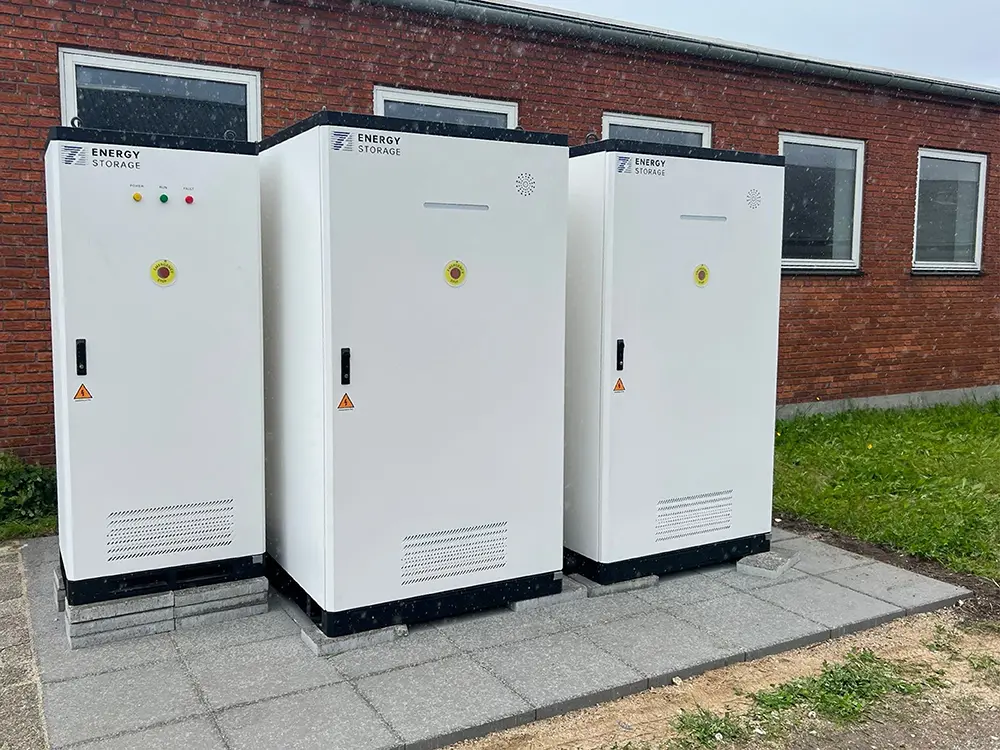
For a European commercial and industrial battery energy storage project, the cheapest hardware quote is rarely the real budget. CFOs should separate core BESS hardware cost from total installed cost, because grid connection, civil works, fire safety, commissioning, permitting, and insurability can move the final project cost much more than battery cell pricing.

In early 2026, large-order core BESS hardware can often be discussed in the approximate €140-200/kWh range, with competitive 1MWh+ procurement sometimes moving toward €130-170/kWh depending on scope, supplier terms, order size, certification, and delivery conditions. But that is only the equipment lens. In Europe, the financial decision should usually be based on Total Installed Cost (TIC).
This guide reorganizes the budget conversation for CFOs, project owners, EPCs, and energy managers. It explains what is inside TIC, why smaller systems carry a higher balance-of-system burden, where quotes become misleading, and which variables most often cause budget overruns.
Executive Summary for CFOs
There are two cost lenses that should not be mixed.
| Cost Lens | What It Means | Why It Matters |
|---|---|---|
| Core BESS hardware | Cells, modules, cabinet or container, PCS, basic EMS, and standard factory scope | Useful for supplier comparison, but often excludes site-specific grid, civil, fire, metering, and commissioning scope |
| Total Installed Cost | Hardware plus EPC, grid connection, civil works, fire safety, permitting, testing, and commissioning | Closer to the real investment number that affects ROI, financing, and board approval |
Typical C&I BESS Total Installed Cost Ranges in Europe
The ranges below are budget anchors for early-stage planning. Actual pricing varies by country, grid operator requirements, site layout, transformer headroom, fire authority expectations, equipment scope, procurement timing, and warranty/performance guarantee structure.
| System Tier | Typical Use Case | Indicative Total Installed Cost | Main Cost Driver |
|---|---|---|---|
| 241 kWh | Pilot project, first-site deployment, short peak shaving | €460-720/kWh | High fixed BoS share, civil works, grid studies, fire layout |
| 422 kWh | PV shifting, warehouse load management, 1-2 hour applications | €400-610/kWh | Transformer headroom and charging window |
| 1 MWh | Industrial load optimization, multi-feeder sites, resilience add-on | €330-530/kWh | LV/MV decision, protection, commissioning tests |
| 5 MWh+ | EV hub buffering, industrial parks, microgrids, portfolio assets | €270-450/kWh | Grid upgrades, fire layout, MV integration, project complexity |
Lower-end budgets usually assume greenfield sites, adequate transformer headroom, short cable runs, standard fire layout, and minimal redesign. Higher-end budgets are more common when the project is a retrofit, local fire requirements are strict, medium-voltage upgrades are required, or permitting creates multiple design iterations.
What Total Installed Cost Actually Includes
Total Installed Cost is the budget required to get an operating asset, not a storage box placed on the ground. This distinction is important because many supplier quotes are clean, narrow, and attractive, while the buyer’s real project boundary is wider.
| Cost Bucket | What It Includes | Where CFOs Get Surprised |
|---|---|---|
| Core hardware | Battery cells, modules, racks, enclosure, PCS, basic EMS, thermal management | Quotes may exclude protection, metering, export limitation, commissioning deliverables, or project documentation |
| EPC and installation | Civil works, foundations, cabling, trenching, earthing, crane access, electrical integration | Fire spacing, long cable routes, reinstatement, and transformer limitations can increase cost quickly |
| Soft costs | Engineering design, interconnection studies, permits, inspections, project management, testing | Authority comments, insurance review, documentation gaps, and redesign cycles can delay savings |
This guide focuses on outright CAPEX purchase. The same cost structure is also useful when evaluating leasing or Energy-as-a-Service models, because it helps buyers compare offers on an apples-to-apples basis.
Why a Low Hardware Quote Can Still Be Misleading
A supplier can quote a competitive hardware price and still leave the buyer exposed if the scope is too narrow. For CFO review, every quote should define what is included, what is excluded, and which party owns the risk if the site requires additional engineering.
Common Scope Exclusions
- PCS power rating assumptions and harmonic compliance.
- Export limitation logic, fail-safe behavior, and verification scope.
- Protection relays, CT/VT, switchgear, and metering required by interconnection.
- Revenue-grade or settlement-grade metering.
- Fire detection, fire suppression interface, or site-level fire integration.
- Commissioning tests, documentation packages, and performance evidence.
- Remote monitoring data granularity, event logs, timestamps, and exportable reports.
Installation and Civil Works: The Budget Blowout Zone
For many European C&I sites, civil and installation works create the widest variance between early estimates and final investment. This is especially true when the site is a retrofit, outdoor space is limited, or local fire separation requirements force a layout change.
| Area | Typical Scope | Budget Risk |
|---|---|---|
| Site preparation | Equipment pads, drainage, ground bearing check, access route, crane or forklift plan | Existing pavement, slope, underground services, and access restrictions can add cost |
| Cable route and earthing | Trenching, duct banks, reinstatement, earthing, lightning protection, cable supports | Long cable runs increase cost, losses, installation time, and protection complexity |
| Fire layout | Spacing, barriers, access route, detection, signage, emergency response coordination | Late fire authority comments can force relocation, barriers, or additional inspections |
The biggest hidden cost is often not the battery. It is what the site forces the project team to build around the battery.
Grid Connection: LV vs MV Is the Decision Fork
Low-voltage connection is usually simpler and cheaper upfront, but it can become restrictive when the site needs higher power, future expansion, or stricter export limitation. Medium-voltage connection usually requires more upfront scope, but it can improve scalability and reduce long-term constraint risk.
| Factor | LV Connection | MV Connection |
|---|---|---|
| Upfront electrical cost | Lower | Higher due to transformer, switchgear, protection, and testing |
| Future expansion | More constrained | Usually stronger for larger power and capacity growth |
| Protection and compliance | Simpler | More demanding |
| EMS and export limitation | Medium complexity | Higher complexity, stronger logging and fail-safe requirements |
| Permitting timeline | Often faster | Often slower |
Contracted capacity is not the same as usable headroom. Transformer nameplate, existing load profile, thermal limits, protection settings, export constraints, and DSO requirements all affect how much BESS power can actually be used.
For readers who need to separate energy capacity from power rating, PVB’s kW vs kWh guide for C&I BESS explains the sizing logic in more detail.
Safety, Permitting, and Insurability Costs
Safety and insurability should be reviewed before the design is frozen. Late review can trigger layout changes, additional separation, fire barriers, revised emergency access, different monitoring requirements, or higher insurance deductibles.
Early Checks That Reduce Redesign Risk
- Battery chemistry, enclosure type, and system certification scope.
- Fire detection, suppression interface, ventilation, and emergency shutdown design.
- Spacing, access route, signage, and emergency response procedures.
- Monitoring requirements, alarm records, maintenance records, and event logs.
- Insurance broker review before site layout is finalized.
PVB’s BESS insurability and fire safety checklist gives a more detailed framework for European projects.
Standard System Tiers and Cost Logic
Using standard tiers helps buyers stop quote games. Each tier should be treated as a project building block, not only a capacity number.


| Tier | Best Fit | Budget Logic |
|---|---|---|
| 241 kWh | Pilot, short spikes, first-site deployment | BoS dominates because fixed civil, fire, and grid study costs are spread over fewer kWh |
| 422 kWh | PV-rich warehouse, logistics, 1-2 hour shifting | More repeatable than small pilots, but still sensitive to transformer headroom |
| 1 MWh | Factories, multi-feeder optimization, resilience add-on | Architecture scales well, but grid and protection scope become decisive |
| 5 MWh+ | EV charging hubs, industrial clusters, aggregation-ready assets | Economies of scale improve €/kWh, while grid and safety layout complexity rise |
O&M, Insurance, and Warranty After CAPEX
Total installed cost is only the start of the financial model. After commissioning, the asset also needs remote monitoring, service access, firmware management, spare parts planning, annual inspections, maintenance logs, and insurance compliance.
A warranty is not the same as a performance guarantee. A warranty usually covers defective parts. A performance guarantee should define measurable outcomes such as capacity retention, round-trip efficiency, availability, state-of-health methodology, remedies, and reporting requirements.
PVB’s BESS operation and maintenance guide explains how monitoring records, alarm response, and maintenance discipline protect long-term value.
2026 Cost Traps to Avoid
- Comparing quotes only on battery €/kWh while PCS, EMS, protection, and commissioning scope differ.
- Underestimating civil works, fire spacing, trenching, and site reinstatement.
- Assuming transformer nameplate capacity equals usable BESS headroom.
- Modelling ROI without 15-minute or 30-minute interval data.
- Confusing a basic product warranty with a full performance guarantee.
- Skipping early insurance review and discovering constraints after the layout is frozen.
- Ignoring procurement validity periods, shipping conditions, and policy-sensitive pricing clauses.
What to Send for a Faster Budget Range
To get a useful low/base/high budget range quickly, prepare the following project inputs before requesting quotes.
- Voltage level and one-line diagram if available.
- Transformer size, available headroom, and export limitation requirements.
- 15-minute or 30-minute interval load data.
- Target use case: peak shaving, PV shifting, EV hub buffering, resilience, or microgrid support.
- Available outdoor or indoor footprint, access route, and distance to electrical room.
- Local fire authority or insurer requirements if already known.
- Preferred procurement model: CAPEX, leasing, or Energy-as-a-Service.
For sizing inputs, use PVB’s 15-minute interval data sizing guide before requesting final quotes.
FAQ: C&I BESS Cost in Europe
What is the biggest hidden cost in a C&I BESS project?
The biggest hidden costs are usually grid and civil works, including transformer upgrades, trenching, protection scope, metering, export limitation, and fire-spacing-driven layout changes.
How much do fire safety and spacing add to C&I BESS cost?
Fire safety and spacing can add cost through additional land use, civil works, barriers, detection systems, inspections, and redesign cycles. The impact is highly site-specific, but it is often one of the top cost drivers in retrofit projects.
How does LV vs MV connection affect total installed cost?
LV connection is usually cheaper upfront but more constrained. MV connection increases electrical cost because of transformer, switchgear, protection, and testing, but it can improve scalability and reduce future expansion risk.
How much does permitting add, and how do delays affect ROI?
Permitting adds design, studies, documentation, authority review, inspection, and sometimes redesign work. Delays can increase financing carry costs and reduce the value of first-year savings or flexibility revenue.
What is the difference between warranty and performance guarantee?
A warranty covers defects and replacement obligations. A performance guarantee covers measurable outcomes such as capacity retention, round-trip efficiency, availability, state-of-health methodology, and remedies if the system underperforms.
What information is needed to get an accurate C&I BESS budget?
Useful inputs include voltage level, transformer headroom, site layout, export limits, interval load data, target use case, available space, local fire requirements, and preferred procurement model.
Sources and Further Reading
- PVB – kW vs kWh Explained for C&I BESS. Available at: https://www.pvb.com/blog/kw-vs-kwh-explained-for-ci-bess-2026-the-cfo-guide-to-power-energy-and-bankable-sizing/ (Accessed: 11 June 2026)
- PVB – How to Size a C&I Battery Storage System. Available at: https://www.pvb.com/blog/how-to-size-a-ci-battery-storage-system-in-2026-15-minute-load-data-guide/ (Accessed: 11 June 2026)
- PVB – BESS Insurability and Fire Safety Checklist. Available at: https://www.pvb.com/blog/cfo-grade-bess-insurability-in-europe-2026-fire-safety-vds-3103-bankability-checklist/ (Accessed: 11 June 2026)
- PVB – BESS Operation and Maintenance Guide. Available at: https://www.pvb.com/blog/bess-operation-and-maintenance-guide-for-ci-energy-storage/ (Accessed: 11 June 2026)