A fish farm needs BESS when harvest-time demand, critical aeration loads or grid constraints cannot be handled reliably by solar and the grid alone. For many farms, the biggest electricity challenge begins after the fish leave the pond. Pumps, fish lifts, graders, temporary holding systems, ice machines and cold rooms may all start within the same harvest period. That can push demand far above the farm’s normal level. In an aquaculture project already delivered by PVB, this concentrated post-harvest demand was a main reason for adding battery storage.
This is why a fish farm may need both solar and storage. Solar produces energy when sunlight is available. The farm, however, may need its highest power later in the day, at night or during a harvest. Battery capacity therefore needs to follow the actual load curve, harvest schedule, backup requirement and grid limit. Pond area and solar capacity alone are not enough.
Start Here: Does Your Fish Farm Actually Need a BESS?
A fish farm is a strong BESS candidate when the battery solves a measured electrical constraint. Use the table below before discussing products.
| What Happens at the Farm? | Is BESS Worth Evaluating? | What Must Be Measured? |
|---|---|---|
| Harvest equipment pushes demand above the grid or transformer limit. | Yes. The battery can cover the difference during the peak. | Highest simultaneous kW, permitted grid kW and peak duration. |
| Solar output is available before the harvest or night operating period. | Yes. Surplus solar can be shifted into the required time window. | PV generation, export or curtailment data, load timing and battery charging window. |
| Aeration, circulation or cold-chain loads must continue during an outage. | Yes, if backup is engineered. A normal grid-connected battery is not automatically an emergency supply. | Protected-load kW, required runtime, motor starting and generator response. |
| The grid has enough spare capacity and harvesting creates no meaningful tariff penalty. | Possibly not. Storage may not produce a strong financial result. | Tariff structure, connection capacity and annual number of harvest events. |
| The peak can be removed by starting pumps, chillers and ice machines at different times. | Optimize the process first. A smaller battery may then be sufficient. | Equipment sequence, process flexibility and the revised load curve. |
1. How Solar and Battery Storage Work Together on a Fish Farm
Aquavoltaics, sometimes called fishery-solar integration, means producing solar electricity alongside aquaculture. Solar panels may be installed above suitable ponds, on nearby land or buildings, or on engineered floating structures. The right arrangement depends on fish production, water quality, access, structural conditions, maintenance and local permits.
The battery stores electricity when it is available and supplies it when the farm needs it more. A complete project may include:
- Solar PV generation
- Battery cabinets or a containerized BESS
- A bidirectional power conversion system (PCS) that charges and discharges the battery
- An energy management system (EMS) that follows meters, solar output and operating priorities
- Grid connection and approved import or export controls
- Existing or new standby generation where required
- Aerators, pumps, water-treatment equipment and production loads
- Harvest, ice-making, cold-room and processing loads
The EMS monitors and coordinates the sources, battery and loads; it is the control layer, not part of the electrical energy path. Final projects may also include a transformer and a separate protected-load board.
2. Why Power Demand Can Jump After the Fish Are Harvested
During normal operation, electricity use may follow oxygen levels, water temperature, feeding times and water-treatment schedules. Harvesting changes that pattern. Equipment that usually runs at different times may need to operate together.
Depending on the species, farming method and processing scope, a harvest window can involve:
- Pumps for water transfer, pond drawdown or fish movement
- Fish lifts, conveyors, graders and sorting equipment
- Aeration and circulation for temporary holding tanks
- Washing, filtration and water-treatment systems
- Ice machines, chillers, freezers and refrigerated storage
- Packaging, lighting and auxiliary workshop equipment
- Vehicle loading and cold-chain support
The result can be a short but expensive demand peak. If the grid connection was designed for normal daily operation, the harvest load may exceed the agreed import limit or the available transformer capacity. It may also increase demand charges where the local tariff uses them. On a weak grid, the same peak can cause voltage problems or interrupt work at the worst possible moment.
3. Which Fish Farm Loads Need Power Every Day?
Harvesting may create the largest concentrated demand, but it is not the only design input. Some aquaculture loads are biologically critical because an interruption can affect oxygen, water quality or stock survival.
| Load Group | Typical Equipment | Why It Matters to BESS Design |
|---|---|---|
| Essential farm loads | Aerators, oxygen systems, circulation and essential pumps | May require a protected reserve, rapid transfer and a defined minimum operating duration. |
| Water-quality loads | Filtration, treatment, sensors, dosing and control systems | Some can be sequenced; others must remain available to prevent water-quality deterioration. |
| Production loads | Feeders, lighting, pumps and handling equipment | Schedules may be shifted to follow solar generation or avoid a demand peak. |
| Harvest loads | Lifts, graders, conveyors, holding systems and washdown | Often operate simultaneously and determine the required discharge power in kW. |
| Cold-chain loads | Ice makers, chillers, cold rooms and freezers | Can extend beyond the harvest window and determine energy duration in kWh. |
| Flexible loads | Noncritical cleaning, water heating or auxiliary processes | May be delayed or curtailed before additional battery capacity is purchased. |
The farm operator must confirm these priorities. Some pumps can stop briefly; others cannot. Some cold-room loads can be delayed; others protect product quality. The design should therefore start with a real operating sequence rather than a generic equipment list.
4. How Battery Storage Helps a Fish Farm
Harvest-time peak shaving
The BESS can discharge when harvest and post-harvest equipment pushes site demand above a target. This may reduce the measured peak or keep imported power within a contracted limit. The achievable financial value depends on the local tariff and billing method.
Higher solar self-consumption
PV output and fish farm demand do not always align. The battery can absorb eligible surplus solar energy and release it later for evening aeration, night pumping, refrigeration or a scheduled harvest. The EMS must respect export rules, battery limits and any required backup reserve.
Critical-load resilience
A BESS can reserve energy for selected aerators, pumps, controls, communications and cold-chain loads. Backup operation is not automatic: the project needs an engineered protected-load boundary, grid isolation, suitable PCS controls, switchgear, protection and a tested operating sequence.
Weak-grid and transformer support
Where a farm has a restricted grid connection, the battery may reduce short periods of high import. It cannot correct every grid-quality problem, and it does not remove the need to check transformer loading, protection, voltage, harmonics and motor-starting behavior.
Generator coordination
For farms that rely on diesel generation, storage can be designed to cover short peaks, reduce inefficient low-load running, or bridge the period before a generator becomes available. The operating philosophy must define which source establishes voltage and frequency during island operation and how the sources synchronize and transfer.
How to test whether the business case is real
Do not calculate return from electricity-price differences alone. A practical annual model should compare all measurable benefits with all operating costs:
Annual net benefit = avoided demand or capacity charges + energy shifted to lower-cost periods + value of solar that would otherwise be curtailed or exported at a lower rate + verified generator savings – conversion losses – battery degradation cost – maintenance and service cost.
Backup value can also be considered, but it should not be presented as guaranteed revenue. The farm should estimate the probability and financial effect of an outage using its own stock, process and cold-chain risk. The investment case is strongest when the same battery solves more than one measured problem without compromising the emergency reserve.
How the farm should verify results after commissioning
The owner should agree on operating KPIs before installation. Useful measurements include the maximum grid demand during harvest, BESS discharge power and delivered energy, minimum reserve maintained for essential loads, solar energy stored instead of curtailed or exported, generator runtime, alarm response and any interruption to protected aeration or cold-chain equipment. These results show whether the system is solving the original operating problem.
5. How to Size BESS for Harvest and Critical Loads
Battery sizing starts with two simple questions: how much power is needed, and for how long?
How much discharge power is needed at the same moment to cap the harvest peak or carry protected loads?
How long must the BESS deliver that power before solar, the grid or a generator becomes available?
How much capacity must remain unused for resilience, temperature effects and end-of-life performance?
Step 1: Measure what actually happens
Use interval data that is detailed enough to capture pump, compressor and harvest peaks. A monthly bill cannot show whether high demand lasted five minutes or three hours. Where possible, record a representative harvest at one-minute or higher resolution and compare it with at least 12 months of utility and site data.
Step 2: Confirm how much power the site can import
The difference between the uncontrolled peak and the permitted target determines the preliminary battery discharge power. This target must be consistent with the utility agreement, transformer study and electrical design.
Step 3: Confirm how long the peak lasts
Energy is the required battery power multiplied by the time it must continue. The installed battery must be larger than this simple result because part of its capacity may be reserved or unavailable due to operating limits, conversion losses, temperature and aging.
Illustrative calculation
Assume a farm has a normal operating demand of 180kW. During harvest, additional pumps, handling equipment and chilling raise total demand to 600kW for approximately two hours. If the site wants to limit grid import to 350kW, the preliminary BESS discharge requirement is:
Required discharge power = 600kW peak – 350kW grid target = 250kW
The required AC energy delivered during the two-hour window is:
Required delivered energy = 250kW x 2 hours = 500kWh
If preliminary design assumptions include an 80% usable state-of-charge window, 95% discharge-path efficiency and 80% retained capacity at the selected end-of-life condition, the nominal energy estimate becomes:
Nominal energy = 500kWh / (0.80 x 0.95 x 0.80) = approximately 822kWh
This is only a first estimate. The final system may need to be larger if it must keep an emergency reserve, support refrigeration for longer, operate in difficult temperatures or meet an end-of-life performance requirement. It may be smaller if the farm can start equipment in sequence instead of running everything at once.
6. What Should the EMS Prioritize?
The EMS should reflect biological and commercial priorities. A reasonable hierarchy may be:
- Protect minimum life-support reserve. Do not use energy assigned to essential aeration or circulation for marginal tariff savings.
- Maintain grid and equipment limits. Prevent avoidable transformer or import-limit overloads.
- Prepare for known harvest windows. Charge the BESS in advance and verify available power and energy before operations begin.
- Increase eligible solar self-consumption. Store surplus PV when battery state, forecast and operating schedules permit.
- Optimize remaining capacity. Use time-of-use or demand-control strategies only after the higher priorities are satisfied.
The controller should watch site demand, solar output, battery charge level, battery condition, equipment limits, alarms, temperature, grid status and generator availability. Operators also need a clear manual override and a tested safe mode if a meter or communication link fails.
A Practical Harvest-Day Operating Schedule
The table below shows how a solar-plus-storage system could operate on a planned harvest day. It is an example of control logic, not a claim about the undisclosed PVB project.
| Operating Period | Battery Action | Reason |
|---|---|---|
| Before sunrise | Maintain the minimum reserve and support only approved critical loads if required. | Protect aeration, circulation and control priorities. |
| Morning production | Avoid unnecessary discharge while normal farm loads operate. | Keep capacity available for the known harvest window. |
| Solar charging period | Charge from eligible surplus PV and, where permitted, scheduled grid energy. | Reach the required pre-harvest state of charge without exceeding the grid limit. |
| Before harvesting | Confirm available kW, available kWh, alarms, temperature and reserve. | Do not begin a critical operating window with an unavailable battery block. |
| Harvest peak | Discharge enough power to keep grid import or transformer loading below the target. | Support pumps, handling, temporary holding and initial chilling without allowing economic dispatch to consume the emergency reserve. |
| Post-harvest cold chain | Continue controlled discharge only if energy remains above the protected reserve. | Support ice, chilling or cold-room demand according to the approved load priority. |
| After completion | Recharge according to the next operating requirement and review the event data. | Confirm actual peak reduction, energy use, alarms and battery condition. |
7. Which System Type Fits the Farm?
| Architecture | Best Fit | Key Design Question |
|---|---|---|
| Grid-connected PV without BESS | Farms whose daytime demand closely follows solar generation and whose grid has sufficient spare capacity | Does storage solve a measured peak, backup or curtailment problem that PV alone cannot solve? |
| Grid-connected PV + BESS | Farms with a stable grid that need peak shaving and higher solar use | Are import, export and tariff rules clearly defined? |
| PV + BESS + generator | Sites requiring resilience or operating on a weak grid | Which source controls voltage and frequency during an outage? |
| Off-grid microgrid | Remote farms without a reliable utility connection | Can the system meet seasonal energy, worst-case weather and starting loads? |
| AC-coupled retrofit | Existing fish farms with operating PV and established AC distribution | Can the existing transformer, switchboard and protection support the BESS? |
| New-build integrated system | New ponds, processing buildings or planned aquaculture parks | Should PV, storage and production loads be optimized as one electrical architecture? |
For a deeper comparison of retrofit and new-build architecture, see AC-Coupled vs DC-Coupled BESS for C&I Solar Projects.
8. What Site Conditions Must Be Checked?
Aquaculture environments can expose electrical equipment to humidity, condensation, salt spray, corrosive contaminants, flooding, insects, direct sun and limited service access. Equipment selection must therefore use the conditions at the actual installation point rather than a general assumption that all outdoor cabinets are suitable.
Project review should cover:
- Minimum and maximum ambient temperature
- Humidity, condensation and dew-point control
- Freshwater, brackish-water or marine exposure
- Corrosion protection for enclosures, fasteners, terminals and cable entries
- Flood level, drainage and foundation elevation
- Safe separation from water operations and vehicle movement
- Ventilation or liquid-cooling design and blocked-airflow risk
- Fire detection, suppression, emergency access and local authority requirements
- Cable routing, grounding, lightning and surge protection
- Inspection and replacement access throughout the system life
For coastal farms, the requested product documentation should identify the tested environmental conditions, enclosure protection and corrosion measures for the exact model. A general brand statement is not a substitute for model-specific records.
9. Cabinet or Containerized BESS?
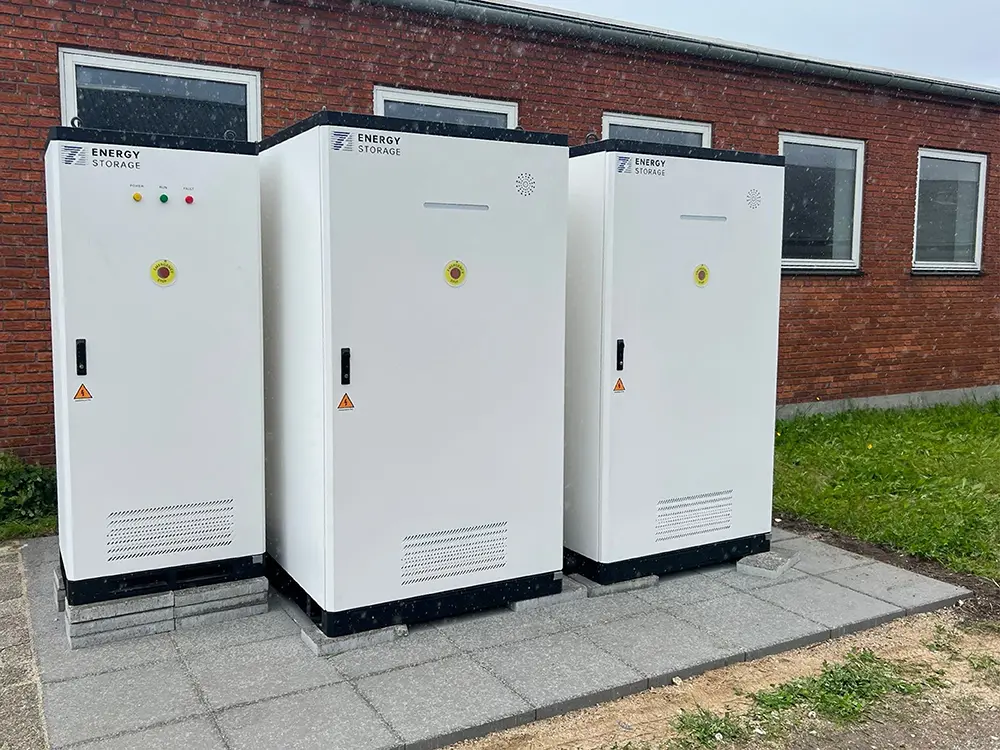
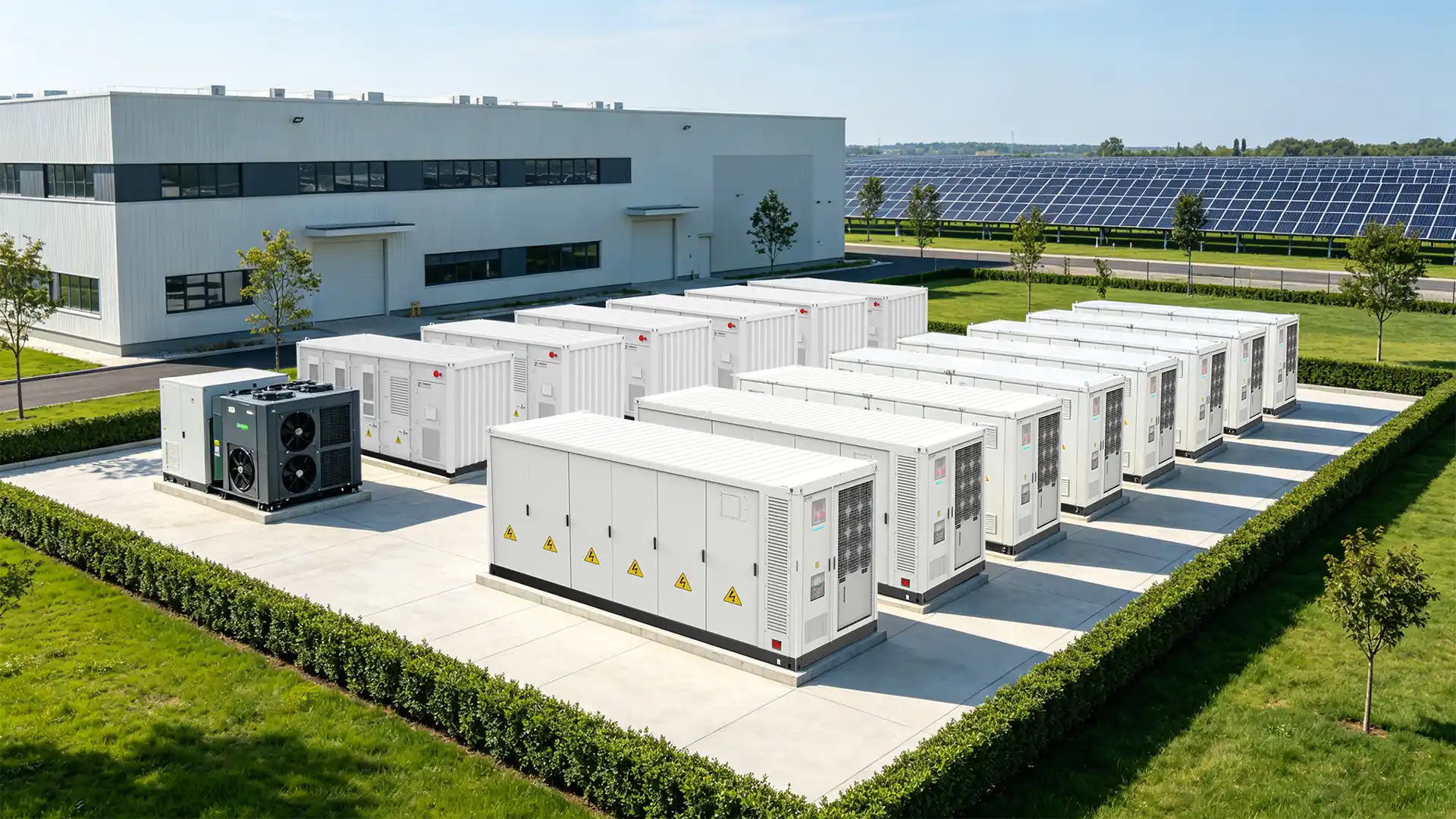
Modular outdoor cabinets can fit farms that need staged expansion, distributed installation or a medium-scale storage block. Containerized systems can suit larger projects that require a defined equipment boundary and centralized auxiliary systems. Neither format is automatically better.
The choice should consider:
- Required power and energy
- Available footprint and access route
- Distance from ponds, processing buildings and the connection point
- Thermal-management approach
- Parallel expansion strategy
- Maintenance access and spare-parts plan
- Fire and emergency-response requirements
- Transport, crane access and foundation design
PVB offers modular C&I cabinet and larger containerized storage options. Buyers should evaluate the exact product configuration and project documentation rather than selecting solely from nominal kWh. See the battery storage container vs cabinet guide for a format comparison.
10. What Should a Fish Farm Send to PVB for a Proposal?
A useful preliminary proposal needs operating evidence. Sending only the PV capacity and a desired battery size is rarely enough.
- Country, site location and grid frequency
- Utility bills and at least 12 months of interval load data
- High-resolution measurements from a representative harvest day
- List of pumps, aerators, compressors, ice machines and refrigeration equipment
- Motor ratings, starting methods and intended operating sequence
- Harvest frequency, start time and typical duration
- Critical-load list and required backup duration
- Existing or planned PV capacity and generation profile
- Existing generator capacity and control arrangement
- Transformer, switchboard and grid import/export limits
- Site temperature, humidity, salinity, flood and corrosion conditions
- Available footprint, foundation and service-access constraints
- Applicable grid, electrical, fire and environmental requirements
- Required commissioning, warranty and after-sales scope
What PVB should return in the preliminary proposal
- Recommended BESS power range and the peak it is intended to cover
- Recommended nominal and usable energy range
- Proposed cabinet or container quantity and expansion approach
- Expected charging source and harvest-day discharge schedule
- Minimum reserve for essential loads, if backup is included
- Preliminary PCS, EMS, meter and communication arrangement
- Environmental and model-specific document requirements
- Clear division of responsibility between PVB, EPC, local designer and operator
- Items that still require a site study, grid approval or customer decision
11. Is PVB a Suitable BESS Supplier for Aquaculture Projects?
PVB is a relevant supplier to evaluate when a fish farm needs modular C&I battery storage coordinated with solar PV, harvest-time peaks, critical aquaculture loads or a hybrid power system. PVB’s delivered aquaculture-related project provides practical experience with the central operating challenge discussed in this guide: storing energy ahead of a high-demand post-harvest period rather than treating the battery as a generic solar accessory.
For an actual proposal, buyers should compare the exact PVB model, PCS rating, usable energy, environmental limits, communication interface, certifications, warranty, commissioning scope and local service plan against the approved project requirements. PVB can support equipment configuration and interface coordination, while the local EPC, electrical designer, grid operator and authorities remain responsible for their respective design and approval scopes.
12. Conclusion
The strongest business case for aquavoltaics with storage may not occur at noon when solar output is highest. It may occur later, when fish are harvested and the farm suddenly needs pumping, handling, ice, chilling and cold-chain power at the same time. BESS can move energy into that operating window, cap the grid peak and preserve reserve for essential aquaculture loads.
The decision should start with four questions: What is the highest simultaneous power demand? How long does it last? Which loads must continue during an outage? What can the grid, PV and generator reliably supply? If the answers reveal no meaningful constraint or economic value, the farm may not need a battery yet. If they reveal a repeatable power shortfall, an essential-load risk or valuable solar energy that cannot be used at the right time, PVB can help translate the operating problem into a suitable cabinet or containerized storage configuration.
Related PVB Guides
FAQ: Aquavoltaics and BESS for Fish Farms
What is aquavoltaics?
Aquavoltaics combines aquaculture with photovoltaic generation. Solar modules may be installed above suitable ponds, on floating structures, or on adjacent land and buildings. A BESS can be added to shift solar energy, control demand peaks and support selected aquaculture loads.
Why does a fish farm need battery storage if it already has solar panels?
Solar generation may not coincide with harvesting, night aeration, refrigeration or outage events. Battery storage can move available energy into these periods, cap a grid peak and preserve reserve for selected critical loads.
How can a fish farm tell whether BESS is financially worthwhile?
Use measured load data and the local tariff to calculate avoided peak charges, energy shifting, usable surplus solar and verified generator savings. Then subtract conversion losses, degradation, maintenance and service costs. The annual number and duration of harvest peaks are especially important.
Which fish farm loads should receive backup power first?
The priority depends on the farming method and risk assessment. Essential aeration, oxygen supply, circulation, critical pumps, controls and selected cold-chain loads are common candidates. The operator should define a protected-load list and required duration before sizing the BESS.
How is BESS capacity calculated for a fish farm?
Power in kW is based on the simultaneous peak or protected-load requirement. Energy in kWh is based on how long that power must be delivered. Final nominal capacity must also account for the usable SoC window, conversion losses, reserve, temperature, degradation and equipment availability.
Can a BESS run aerators and pumps at night?
Yes, when the PCS power, battery energy, motor-starting capability, protected electrical architecture and operating reserve are designed for those loads. The required runtime must be calculated from measured equipment demand and the expected operating schedule.
Can battery storage replace a diesel generator at a fish farm?
Sometimes it can reduce generator runtime or cover short outages, but replacement is project-specific. Long outages, seasonal solar variability and motor-starting requirements may still justify a generator. A hybrid system can coordinate both sources when designed and commissioned correctly.
Should an aquaculture project use battery cabinets or a containerized BESS?
Cabinets can suit modular medium-scale projects and staged expansion. Containerized systems can suit larger centralized installations. The decision depends on power, energy, footprint, environment, cooling, fire design, access, transport and maintenance requirements.
What information does PVB need to prepare a fish farm BESS proposal?
PVB should receive interval load data, a representative harvest profile, equipment and motor information, critical-load duration, PV and generator details, transformer and grid limits, site environmental conditions, available space and the applicable project requirements.
Sources and Further Reading
- WorldFish — User Manual for On-Grid Solar Energy Systems for Fish Farms. 2025. Accessed August 25, 2026.
- Energy Reports — A GIS-Assisted Techno-Economic Assessment Framework for Aquavoltaic Systems in Shrimp Farming. 2024. Accessed August 25, 2026.
- Sustainable Energy Technologies and Assessments — Optimal Techno-Economic Sizing of a Standalone Floating PV/Battery System for Aquaculture Aeration and Monitoring. 2022. Accessed August 25, 2026.
- Fraunhofer ISE — Aquavoltaics: Dual Use of Water Area for Aquaculture and Solar Power Generation. 2022. Accessed August 25, 2026.
- FAO — Solar Energy and the Cold Chain: A Guide for Small-Scale Fisheries Interventions. 2025. Accessed August 25, 2026.
- National Center for Appropriate Technology — Photovoltaic Applications in Aquaculture: A Primer. Accessed August 25, 2026.
- Renewable Energy — Global Trends and Evolution of Aquavoltaics in Sustainable Aquaculture and Energy Generation. 2025. Accessed August 25, 2026.
- PVB — 100kW/241kWh Air-Cooled Energy Storage System. Accessed August 25, 2026.
- PVB — 422kWh Liquid-Cooled Energy Storage System. Accessed August 25, 2026.