Do not choose a battery by counting molding machines, extruders or production lines. Start with the factory problem you want to solve: an expensive power peak, a grid limit that blocks new equipment, unused solar energy or a short outage that stops production.
- Power (kW) tells you how much factory load the battery can support at one time.
- Energy (kWh) tells you how long the battery can support that load.
The same basic BESS selection method can be used for injection molding, extrusion, blow molding, thermoforming, PET preform and bottle production, rotational molding, compounding and plastic recycling. The load pattern is not the same: an injection press is cyclical, while an extrusion line can run at a high steady load for hours and a rotational molding machine has a long heating-and-cooling cycle.
A battery can lower peak demand, but it should not hide waste from air leaks, poor cooling control, idle heaters or equipment starting together unnecessarily. It is also not automatically a UPS or backup system.
For a useful proposal, send PVB at least 12 months of 15-minute factory data. If press cycles, shredders, compressors or machine restarts create very short peaks, faster measurements may also be needed.
A plastic manufacturing factory should consider a BESS when high demand peaks, limited transformer capacity, unused solar energy or short power interruptions create a measurable business cost. This includes injection molding, extrusion, blow molding, thermoforming, PET packaging, rotational molding, compounding and recycling plants. The correct system is not based on the number of machines or production lines alone. It is based on measured grid demand, peak duration, production schedules and the loads that genuinely need protection.
You do not need to become a battery engineer to make the first decision. As a factory owner, start with three questions: What problem costs us money? How often does it happen? What would change if the factory could temporarily draw less power from the grid?
BESS may discharge during expensive peaks, but only when the tariff rewards peak reduction.
BESS may support short demand increases when new presses or production lines would exceed the approved grid limit.
BESS may store eligible surplus and use it during later production, subject to the real daily profiles.
Quick Answer: Which BESS Direction Fits Your Plastics Factory?
| Factory problem | What the owner should prioritize | Do not assume |
|---|---|---|
| Several machines, chillers and compressors create a long demand peak | PCS power in kW plus enough battery energy for the measured peak duration | That adding every machine nameplate gives the right BESS size |
| Machines restart together after a shutdown | Startup sequencing first, then BESS for the remaining grid peak if economical | That a battery should cover every brief motor or heater surge |
| New presses would exceed the transformer or grid-import limit | A modular BESS, fast import-limit control and an expansion study | That storage permanently replaces a necessary grid upgrade |
| Rooftop PV exceeds daytime demand or export is restricted | Battery energy in kWh and EMS coordination with production and PV | That annual solar surplus proves a profitable daily battery cycle |
| Short outages cause scrap, difficult restarts or unsafe shutdowns | Selected critical loads, required runtime and a proper islanding architecture | That a normal grid-connected BESS is automatically a UPS |
| The grid is weak and outages last for many hours | A hybrid design using solar, BESS, generator and controlled load priorities | That battery-only backup is always the most economical answer |
| An extrusion, compounding or pelletizing line creates a high load for many hours | First check process efficiency and tariff value; then calculate whether the battery can economically cover the required duration | That a short-duration cabinet can economically shift an entire production shift |
| A blow molding or PET line has large compressor, oven and cooling loads | Separate steady production demand from compressor starts and short coincident peaks | That the molding machine rating represents the whole line |
| A recycling line has shredders, granulators, washing, drying and re-pelletizing equipment | Measure startup behavior, line interlocks and the duration of the combined peak | That every motor starts together during normal production |
1. How Different Plastic Manufacturing Processes Use Electricity
This guide covers the main plastic manufacturing processes that combine electric drives, heaters, cooling, compressed air, material handling and repeatable production schedules. The BESS sizing method is shared, but the load shape is not. That difference decides whether a battery needs high power for a short peak or more energy for a longer event.
| Factory or process | Typical electrical pattern | Main BESS question |
|---|---|---|
| Plastic injection molding factory | Cyclical press loads plus mold heaters, chillers, pumps, dryers, robots and compressed air | Do machine cycles combine into a billable site peak, and is faster data needed to understand restarts? |
| Automotive plastic parts plant | Large presses, robots, assembly cells, paint or finishing equipment and strict production schedules | Can storage reduce a coincident peak or protect an orderly restart without interrupting takt time? |
| Medical, cleanroom and precision molding facility | All-electric or precision presses plus continuous HVAC, filtration, process cooling and quality systems | Which environmental controls and process systems must remain stable during a short interruption? |
| Electronics, appliance and consumer-goods molding plant | Mixed press sizes, insert or multi-component molding, robots and downstream assembly | How much demand comes from molding, and how much comes from finishing and assembly? |
| Packaging and PET preform injection molding plant | High-throughput presses, resin drying and sustained cooling, often connected to downstream bottle production | Is the valuable target a short peak, a long production block or restricted grid capacity? |
| Plastic extrusion plant for pipe, profile, sheet, cable or film | Long-running motors and barrel heaters with cooling, vacuum, haul-off, winding and cutting equipment | Does the tariff reward covering a limited peak, or would the battery be asked to support too many continuous hours? |
| Blow molding or plastic bottle factory | Molding equipment combined with high-pressure air, ovens or reheating, chillers and packaging lines | Can compressor sequencing and air-system improvements reduce the peak before storage is sized? |
| Thermoforming factory | Sheet heaters, vacuum and compressed air, mold cooling, trimming and stacking | How long do heating and downstream equipment overlap at the maximum site demand? |
| Rotational molding factory | Long oven or heating cycles, mold rotation, cooling fans and material handling, often operating in repeated batches | Do heaters and cooling equipment overlap across machines, creating a predictable site peak that storage can reduce? |
| Plastic compounding or pelletizing plant | Extruders, mixers, feeders, pelletizers, cooling and material conveying operating in long batches | Is the battery targeting startup, a contractual grid limit or an economically valuable price window? |
| Plastic recycling and reprocessing factory | Shredders, granulators, washing, drying, sorting, extrusion and pelletizing with variable feedstock | Are irregular peaks caused by material flow, startup or equipment blockage, and can controls solve them first? |
Injection molding machine power consumption
An injection molding machine does not draw one fixed amount of power throughout every cycle. Plasticizing, injection, clamping, holding, cooling and mold movement happen at different times. When many machines run together, their individual cycles may partly cancel each other or may combine with chillers, dryers and compressors to create the factory’s billed peak.
| Machine type | What the electrical pattern often looks like | What it means for BESS analysis |
|---|---|---|
| Traditional hydraulic | The hydraulic pump may run continuously or remain heavily loaded even when the machine is not producing useful movement | First check idle operation, pump control and machine utilization; otherwise a battery may lock in avoidable consumption |
| Servo-hydraulic or hybrid | Power follows the machine cycle more closely, but short cycle peaks can still occur | Use site data plus faster machine measurements if the EMS must react to short coincident peaks |
| All-electric | Servo drives control individual movements and can reduce idle demand, while heating, cooling and auxiliaries still remain | Do not assume the press upgrade removes the site peak; measure the complete production cell and plant services |
Plastic extrusion energy consumption
Extrusion for pipe, profile, sheet, cable or film is usually a more continuous process. The main drive, barrel heaters, cooling, vacuum, haul-off, cutting and winding may stay on for a long production run. A short-duration battery is therefore more likely to help with warm-up, startup overlap, a limited tariff window or a contractual grid limit than to power the whole line for an entire shift.
For an extrusion plant, measure normal running power, warm-up power, product-change behavior and the length of each production block. Also check whether heater insulation, drive efficiency or production scheduling can reduce the load before storage is added.
Blow molding and PET bottle production
In blow molding and PET bottle production, the molding machine is only part of the load. High-pressure compressed air, preform reheating ovens, chillers, dryers, conveyors and packaging equipment can be equally important. Air leaks, excessive pressure or poor compressor staging can waste energy and create peaks that should be fixed before the BESS is sized.
The useful measurement boundary is normally the complete line or the whole factory, not just the blow molder. Record compressor loading, oven warm-up and the times when several lines or packaging systems start together.
Thermoforming energy consumption
Thermoforming plants use heater banks or ovens to bring sheet to forming temperature, then add vacuum, compressed air, mold cooling, trimming and stacking. The main BESS question is how long the heaters stay near high power and whether several machines warm up at the same time. Staggering warm-up may remove part of the peak at little cost; storage can then cover the remaining measured demand.
Rotational molding energy consumption
Rotational molding uses long heating and cooling cycles rather than the fast cycle of an injection press. A plant may have ovens, electric heaters, mold drives, cooling fans, air systems and finishing equipment operating in repeated batches. If several machines enter heating at the same time, the site can develop a predictable peak. The BESS study should compare better batch scheduling with the cost of covering that overlap.
Plastic recycling, compounding and pelletizing
Recycling and reprocessing plants may combine sorting, shredding, granulation, washing, drying, extrusion and pelletizing. The load can change with feedstock quality, blockage and line speed. Compounding plants add mixers, feeders and long extruder runs. For both, separate normal repeatable peaks from abnormal events: a battery should manage an expected grid peak, not conceal a jam, blunt blade, overloaded motor or poor material flow.
Where does a plastics processing factory use electricity?
The main process machine is the most visible load, but it is not the whole electricity bill. NIST research breaks the injection molding cycle into energy-consuming stages such as melting, injection, pressurizing, mold movement and cooling. Other plastic processes add continuous extruder drives, ovens, vacuum systems, high-pressure air, shredders or cooling fans. Industry energy maps also show substantial consumption from services outside the main machine.
| Load group | What it does | Why it matters for BESS |
|---|---|---|
| Presses and main process machines | Injection, clamping, extrusion, blowing, forming, shredding, mixing or curing | The load may be cyclical or continuous and differs between hydraulic, servo-hydraulic and all-electric equipment |
| Chillers, cooling towers and pumps | Remove process heat from molds, hydraulic oil and equipment | May create long, coincident loads during high production or warm weather |
| Compressed air | Supports automation, valves, handling and other plant services | Leaks, excess pressure and poor compressor staging can create avoidable base load |
| Dryers, mixers and material handling | Prepare and move resins to the machines | Can run before production and contribute to morning or post-shutdown peaks |
| Robots, conveyors, granulators and finishing | Handle parts, rejects and downstream processes | Should stop or reduce consumption when the associated production cell is idle |
| Building and site loads | Lighting, ventilation, offices, workshops and charging equipment | May be suitable for load scheduling and may compete with production for available grid capacity |
The important lesson is simple: the owner should ask for a whole-site load map. A battery sized only from press, extruder or line ratings can miss a compressor or chiller peak, overestimate simultaneous demand or hide energy waste that should be removed first.
2. Reduce Avoidable Demand Before Buying a BESS
The British Plastics Federation recommends minimizing demand before optimizing supply. This is relevant across plastics processing, where idle hydraulic machines, barrel or mold heaters, compressed-air leaks, poorly controlled cooling and simultaneous startup can raise the bill without increasing output.
Before requesting a battery quotation, check whether the factory can:
- sequence the startup of presses, heaters, dryers, chillers and compressors;
- switch machines and supporting services into a defined idle or standby mode;
- stop supplying compressed air and cooling water to inactive cells;
- repair compressed-air leaks and reduce unnecessary pressure;
- match each product to an appropriately sized machine;
- optimize chiller, cooling-tower and pump staging;
- use VSD control where it is technically and economically appropriate;
- link conveyors, grinders and other auxiliaries to the production-cell status;
- check extruder barrel-heater control, insulation and warm-up scheduling;
- sequence high-pressure compressors, vacuum pumps, shredders and pelletizing equipment;
- stop ovens, trim systems, mixers and conveying equipment when the related line is not producing.
3. Why 15-Minute Data May Not Tell the Whole Plastics-Factory Story
Twelve months of 15-minute data is the correct starting point for tariffs, contracted capacity, seasonal production and grid-import analysis. But an injection, blow molding or thermoforming cycle may be much shorter than 15 minutes. Several short machine peaks can be averaged into one billing interval, while a synchronized restart, compressor start or loaded shredder can create an electrical event that requires a faster control response.
For an extrusion, compounding or pelletizing plant, 15-minute data may capture the steady production block well but still hide warm-up, grade-change and restart events. The measurement plan should follow the process rather than assume every plastics factory behaves like an injection molding shop.
Use two levels of evidence:
- Utility or main-meter interval data to identify the billed peak, its duration and the economic target.
- Higher-resolution site or machine measurements when the project must assess press cycles, simultaneous startup, PCS response or transient behavior.
The BESS should be designed around the demand that the meter, transformer or production process actually sees. A snapshot of one unusually busy hour is not enough for final procurement.
4. Choose One Primary Objective First
One BESS can support several functions, but the functions compete for the same stored energy. An owner should choose the first priority before asking the EMS to do everything.
| Primary objective | Main business question | Main sizing driver |
|---|---|---|
| Peak shaving | How much does the factory save by staying below a defined demand level? | Excess kW and duration of the billed peak |
| Grid-capacity support | Can production expand before or without a larger connection? | Import limit, planned machine schedule and coincidence |
| Solar self-consumption | How much solar is exported or curtailed, and when can the factory use it? | Daily and seasonal PV surplus plus later eligible load |
| Short-duration resilience | Which losses can be avoided if selected loads continue or shut down safely? | Critical-load kW, duration and switching architecture |
| Time-of-use optimization | Is the price difference large enough to cover losses and battery wear? | Charge/discharge windows, price spread and cycling cost |
A factory that must preserve emergency energy should give reserve priority over daily savings. A factory focused only on demand charges may allow the EMS to use a wider operating window. The priority order must be written into the control strategy.
5. How to Estimate BESS Power in kW
Power tells you how much of the factory’s demand the system can cover at one moment. For a first peak-shaving estimate:
If the factory reaches 1,050 kW and wants to remain below 800 kW, the initial requirement is 250 kW. The final PCS rating may need margin for forecast error, control delay, auxiliary power and future expansion.
Do not add the rated power of every press. Machines may be at different points in their cycles, and short peaks may not occur together. Conversely, a 250 kW PCS selected for demand control is not automatically suitable for starting a large motor during islanded operation. That requires a separate electrical study.
6. How to Estimate Battery Energy in kWh
Energy tells you how long the battery can support the required power. If the 250 kW excess lasts for 90 minutes:
Nameplate capacity must be greater than delivered energy because the system has an operating state-of-charge window, conversion losses, auxiliary consumption and future degradation. If backup reserve must remain available after peak shaving, that reserve also needs to be included.
The owner does not need to select these engineering factors alone. The supplier should state every assumption behind its recommended capacity and show the usable energy at the required operating condition.
7. Two BESS Sizing Examples: Cyclical and Continuous Production
Consider an illustrative injection molding factory with the following measured needs. These figures are for explanation only and are not a quotation for a real site.
| Input | Illustrative value |
|---|---|
| Measured factory peak | 1,050 kW |
| Target grid-import limit | 800 kW |
| Peak duration | 1.5 hours |
| Selected critical load | 180 kW |
| Required critical-load runtime | 30 minutes |
| Screening operating window | 85% |
| Screening AC delivery factor | 92% |
| End-of-life capacity factor | 85% |
Step 1: Peak-shaving requirement
1,050 kW – 800 kW = 250 kW. The peak lasts 1.5 hours, so the delivered energy is 250 kW x 1.5 hours = 375 kWh.
Step 2: Critical reserve
180 kW x 0.5 hours = 90 kWh for selected controls, cooling, automation or safe shutdown loads.
Step 3: Combined delivered energy
If the full reserve must remain available after a normal peak event, the screening requirement is 375 kWh + 90 kWh = 465 kWh.
Step 4: Preliminary nameplate estimate
465 kWh / (0.85 x 0.92 x 0.85) = approximately 699 kWh. A preliminary study could therefore evaluate a system in the 700–800 kWh range before the operating strategy and product configuration are finalized.
Step 5: Preliminary PVB configuration
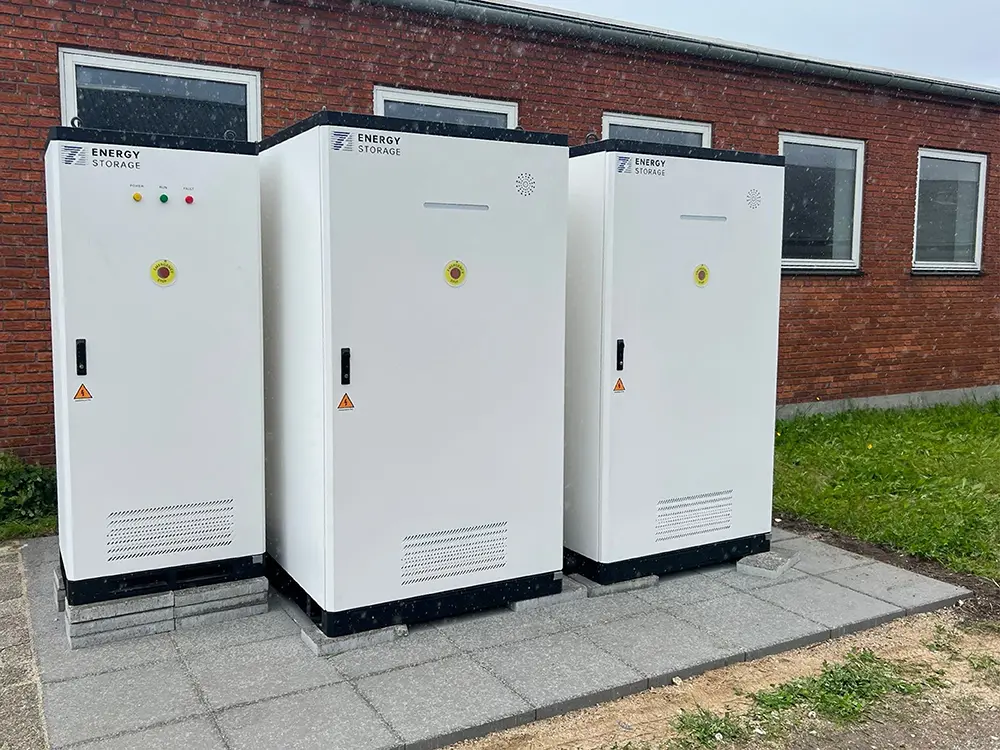
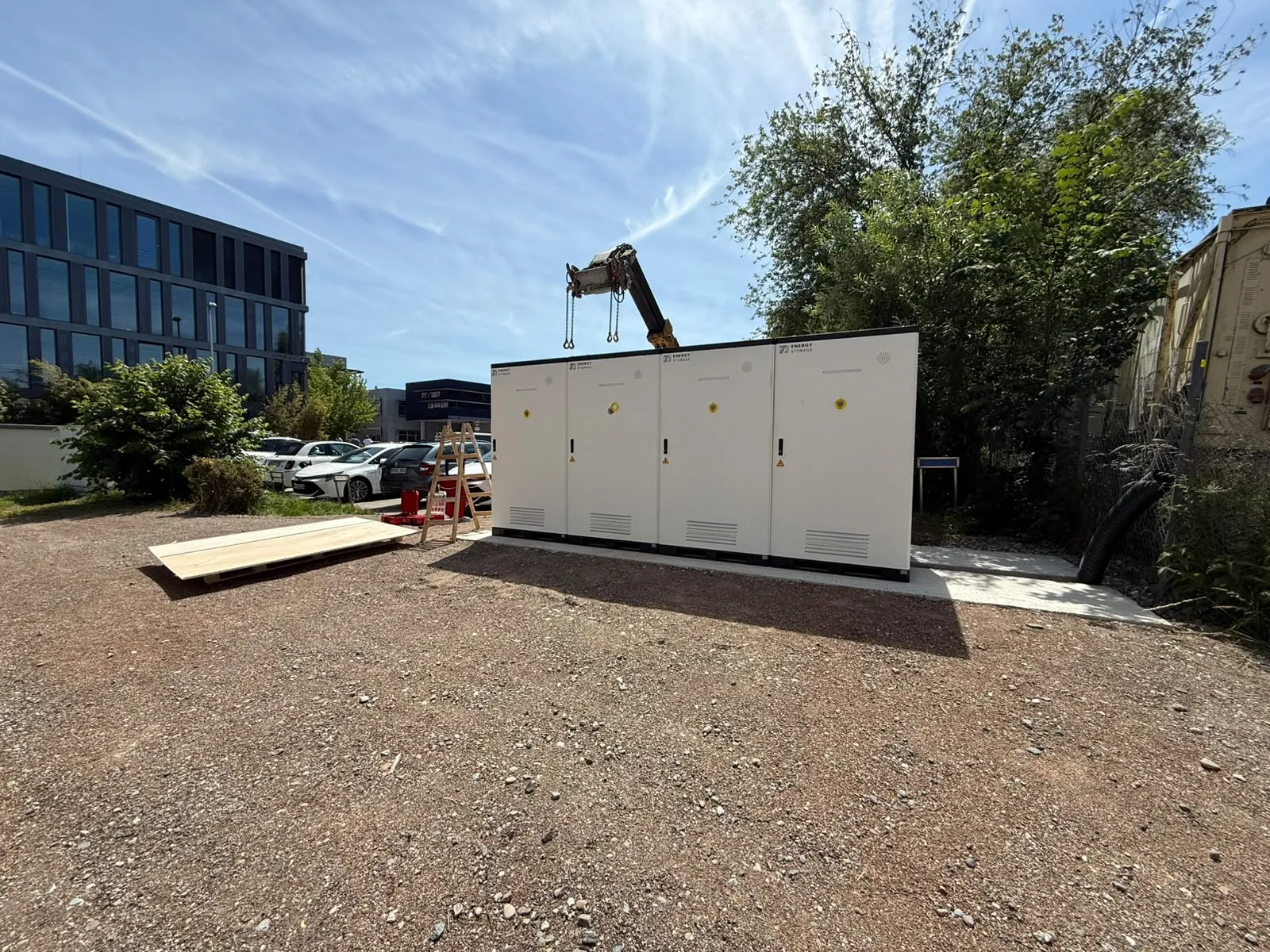
One modular option for engineering evaluation could be three PVB 100 kW/241 kWh cabinets, providing nominal totals of 300 kW and 723 kWh. This is not automatically the final recommendation. The study still needs to confirm usable energy, parallel architecture, redundancy, site temperature, compressor and motor behavior, backup switching, grid rules and warranty limits.
How to adapt the example for other plastics processes
| Process | Replace the example’s main input with… | Common mistake to avoid |
|---|---|---|
| Extrusion, compounding or pelletizing | Measured steady line demand, warm-up demand, batch length and tariff window | Buying enough battery for an entire long shift when only startup or one tariff window has value |
| Blow molding or PET bottle production | High-pressure compressor, reheat oven, chiller and complete packaging-line profiles | Sizing from the blow molder alone |
| Thermoforming | Heater-bank demand and overlap with vacuum, compressed air, trimming and stacking | Ignoring how long the heaters remain at high power |
| Rotational molding | Oven or electric-heater demand, mold rotation, cooling-fan demand and batch overlap | Assuming every batch creates the same peak without checking the production schedule |
| Recycling and reprocessing | Shredder or granulator starts, variable material flow, dryer and extrusion-line demand | Treating a blockage or poor feed control as a normal battery-sizing event |
Second example: a continuous extrusion or pelletizing load
Now consider a line that pushes grid demand 300 kW above the target for three hours. The battery must deliver 300 kW x 3 hours = 900 kWh. Using the same illustrative operating-window, delivery and end-of-life factors gives a preliminary nameplate estimate of about 1,354 kWh.
A published 2026 plastics manufacturer solar-and-storage case study also focuses on the site’s demand-charge problem and operating profile. The lesson is practical: the process name helps identify likely loads, but measured site data and the electricity tariff decide the commercial case.
8. How the EMS Should Work With Molding, Extrusion and Production Lines
A useful EMS should not react blindly after the factory has already exceeded its target. It should monitor site demand, battery state, PV output, grid limits and production timing. Where production information is available, it can prepare for predictable events such as morning warm-up, post-maintenance restart, a scheduled group of large molds, extrusion-line startup or a compressor-loading sequence.
A practical priority order may be:
- keep the battery within safety and warranty limits;
- preserve the agreed emergency reserve;
- prevent grid import from exceeding the target;
- store eligible solar surplus;
- use remaining flexibility for tariff optimization.
The EMS should coordinate with production rather than surprise it. The operator should be able to see why the battery is charging, discharging or preserving reserve.
9. Can BESS Help Add More Presses, Extruders or Production Lines?
Possibly. If the existing transformer or grid agreement can support normal production but not a short expansion peak, BESS may hold grid import below the approved limit. This can be valuable when a new injection press, extrusion line, blow molding machine, recycling line or compressor would otherwise require an expensive or delayed grid upgrade.
However, the owner should compare three options:
- change the production or startup schedule;
- upgrade the transformer or grid connection;
- use BESS to control the remaining coincident peak.
Storage is not a license to connect unlimited new loads. The grid operator, protection study, cable capacity, transformer loading and fault levels still need review.
10. Solar Plus BESS for Injection Molding and Plastic Manufacturing
Injection molding, extrusion, packaging and other plastics factories with daytime production can often use solar directly. Battery storage becomes more relevant when solar output exceeds the eligible load, export is restricted, production continues after sunset or demand peaks occur outside the strongest solar hours.
The solar decision should use hourly or shorter data by season. Annual totals can make a project look balanced even when surplus and production demand occur on different days.

11. Can a BESS Keep a Plastics or Molding Factory Running During an Outage?
A BESS can support selected loads when the system is designed for islanded operation, but it should not be described as whole-factory backup without a detailed study. The project may need an island-capable PCS, transfer equipment, switchgear, protection coordination, grounding design, load shedding and generator integration.
For many factories, the sensible objective is not to run every press, extruder, heater and compressor. It may be to:
- protect controls and automation from a short interruption;
- keep essential cooling or compressed-air services available;
- complete a controlled cycle or safe shutdown;
- bridge the time until a generator starts;
- reduce scrap and make production restart easier;
- keep cleanroom, quality or traceability systems within an agreed interruption limit;
- protect material in an extruder, barrel, dryer or curing process long enough for a controlled stop.
Long outages may favor a hybrid BESS-generator design. The battery handles fast response and short events, while the generator supplies longer-duration energy.
12. What Should a Plastics Processing Factory Send to PVB?
A useful proposal starts with operating evidence, not a requested cabinet quantity.
- At least 12 months of utility bills and interval load data
- Transformer rating, contracted grid limit and single-line diagram
- Number and type of molding machines: hydraulic, servo-hydraulic or all-electric
- Type of process: injection, extrusion, blow molding, thermoforming, PET, rotational molding, compounding, recycling or another process
- Machine schedules, mold-change patterns and simultaneous startup rules
- Extruder, oven, furnace, shredder, granulator, mixer or high-pressure compressor data where relevant
- Chiller, cooling-pump, compressor and dryer ratings and schedules
- Higher-resolution measurements where short machine cycles are important
- PV size, production profile, export limit and curtailment records
- List of critical loads with required runtime and interruption tolerance
- Generator or UPS details where installed
- Expected new machines and production expansion
- Target country, installation environment and local approval requirements
- Estimated cost of downtime, scrap or delayed production
What PVB’s preliminary proposal should show
- recommended PCS power and battery energy range;
- the measured event used for sizing;
- operating-window, loss, degradation and reserve assumptions;
- cabinet quantity and parallel architecture;
- EMS priorities for peak shaving, solar and reserve;
- estimated cycles and warranty-aligned limits;
- backup boundary and required switching equipment;
- model-specific technical and certification documents;
- commissioning, monitoring and maintenance responsibilities;
- a savings model that separates measured facts from assumptions.
13. Why Choose PVB for a Plastic Manufacturing Factory BESS?
PVB is relevant when an injection molding, extrusion, blow molding, thermoforming, PET packaging, rotational molding or recycling factory needs modular industrial storage and a project-specific engineering path rather than a fixed battery package. Available options include the 100 kW/241 kWh air-cooled cabinet, the 422 kWh liquid-cooled system and larger parallel or containerized configurations.
| Owner requirement | PVB project response | Evidence to request |
|---|---|---|
| Start at one capacity and expand with production | Modular cabinet and multi-unit configurations | Expansion limits, parallel design, PCS totals and required switchgear |
| Control grid demand without disrupting molding | EMS priorities based on site load, PV, reserve and grid limits | Written control sequence, response assumptions and monitoring points |
| Select the correct cooling architecture | Air-cooled and liquid-cooled C&I storage options | Model-specific temperature range, derating, auxiliary power and maintenance requirements |
| Complete grid and safety review | Technical documentation for the proposed configuration | Current certificates, reports and grid documents for the exact model and market |
| Operate the asset after installation | Monitoring, commissioning and service responsibilities defined with the project team | Warranty conditions, alarm ownership, spare-parts plan and service process |
The practical reason to choose PVB is that the system can be configured around the factory’s measured peak, production process, expansion plan, solar profile, operating environment and reserve requirement. Buyers should still verify every final rating and document for the exact proposed model.
14. When Should a Plastic Manufacturing Factory Not Buy BESS Yet?
- No one can identify when or how long the expensive demand peak occurs.
- The tariff gives little or no financial value to peak reduction or time shifting.
- Idle equipment, air leaks or poor cooling control explain most of the target load.
- The factory expects a grid-connected battery to act as a UPS without the required architecture.
- The proposed savings ignore losses, degradation, auxiliary power and maintenance.
- A permanent grid upgrade is required for safety or long-term capacity, regardless of storage.
- The only objective is many hours of full-factory backup with no generator or load-priority plan.
In these cases, the next purchase should be a proper energy and electrical study, not a battery cabinet.
15. Conclusion
An injection molding, extrusion, blow molding, thermoforming, PET, rotational molding, compounding or recycling factory owner can make the BESS decision in five steps:
- Price the problem: peak charges, delayed expansion, wasted solar or outage losses.
- Measure the load: use interval data and faster measurements where machine cycles matter.
- Remove obvious waste: improve startup sequencing, idle control, cooling and compressed air.
- Calculate power and duration: determine the kW above the target and how long it lasts.
- Request a transparent proposal: PVB should show the cabinet configuration, EMS logic, reserve, losses, warranty assumptions and documents behind the recommendation.
The right system is not “one battery per molding machine” or “one cabinet per production line.” It is the PVB configuration that solves a measured factory problem at an acceptable cost without interfering with production.
Related PVB Guides
FAQ: BESS for Plastic Manufacturing Factories
What size BESS does an injection molding factory need?
The size depends on the measured excess demand in kW, how long it lasts, the solar profile, required reserve and usable-energy assumptions. The number of molding machines alone is not enough to size the system.
Can BESS reduce electricity demand charges at a molding factory?
Yes, when the tariff charges for maximum demand and the BESS has enough power and energy to keep grid import below the target during the relevant measurement interval. Savings depend on the local tariff and actual load profile.
Do I need data faster than 15-minute intervals?
Possibly. Fifteen-minute data is useful for tariff and energy analysis, but faster measurements may be required to understand machine cycles, synchronized startup, short peaks and PCS response.
Can a BESS start injection molding machines during an outage?
Only if the PCS, battery, switchgear, protection and load-sequencing design can support the actual starting behavior. A normal grid-connected BESS should not be assumed to start large motors or operate as a UPS.
Should the factory reduce energy waste before installing BESS?
Yes. Startup sequencing, idle control, compressed-air maintenance and cooling optimization can reduce the target load and may allow the factory to buy a smaller BESS.
Can solar charge a BESS at an injection molding plant?
Yes. The economic value depends on the daily and seasonal overlap between solar production, factory demand, export restrictions and later eligible load.
Can BESS help a factory add more molding machines or production lines?
It may help control short coincident peaks when the approved grid capacity is limited. The project must still review the transformer, cables, protection, grid approval and whether a permanent upgrade is required.
How should BESS be sized for a plastic extrusion plant?
Start with the measured line and whole-site demand, then separate warm-up, normal production and product-change periods. Extrusion can create a long continuous load, so the battery must be sized for the valuable peak or tariff window rather than assumed to support the entire shift.
What matters when sizing BESS for blow molding or PET bottle production?
Measure the complete line, including high-pressure compressors, reheat ovens, chillers, dryers, conveyors and packaging equipment. Check air leaks, compressor pressure and startup sequencing before sizing storage from the remaining site peak.
Can a rotational molding factory use BESS?
Yes, when oven or heater cycles, cooling fans and overlapping batches create a repeatable and valuable demand peak. Compare staggered batch scheduling with BESS before deciding how much discharge power and runtime are needed.
Can a plastic recycling factory use BESS for shredder and granulator peaks?
Possibly. Faster measurements may be needed to separate normal starts from irregular peaks caused by material flow or blockages. Controls, sequencing and maintenance should be checked before storage is sized.
Does this guide also apply to rubber molding or die casting?
The grid-limit, peak-shaving and backup logic is similar, but the process model is different. Rubber curing and die-casting furnaces can introduce long thermal loads that need a dedicated runtime, safety and product-quality study.
Why choose PVB for a plastic manufacturing factory?
PVB offers modular C&I storage options and can develop a configuration around measured demand, PV, expansion, reserve and site conditions. Buyers should request the sizing assumptions and model-specific documents for the final proposal.
What information should I send PVB for a proposal?
Send interval load data, tariffs, transformer and grid limits, machine and auxiliary schedules, PV information, planned expansion, critical loads, site conditions and the required destination-market documents.
- BESS
- Battery Energy Storage System — the complete battery system, including power conversion, controls and safety equipment.
- PCS
- Power Conversion System — the equipment that turns battery power into the AC power used by the factory.
- EMS
- Energy Management System — the control system that decides when the battery charges, discharges or keeps energy in reserve.
- BMS
- Battery Management System — the safety system that monitors and protects the battery cells.
- SOC
- State of Charge — how full the battery is, shown as a percentage.
- Demand charge
- A fee based on the factory’s highest power draw during the billing period, rather than its total electricity use.
- Peak shaving
- Using the battery during a power peak so the factory draws less power from the grid.
- 15-minute data
- Factory power use recorded every 15 minutes, showing when a peak occurs and how long it lasts.
- Islanding
- Running selected factory loads while safely disconnected from the utility grid.
- VSD
- Variable Speed Drive — a control that adjusts motor speed and can reduce starting peaks and wasted energy.
Sources and Further Reading
- NIST – Characterizing Energy Consumption of the Injection Molding Process (accessed August 25, 2026).
- NIST – Accurate Profiling of Energy Consumption for Injection Molding Machines (accessed August 25, 2026).
- British Plastics Federation – Energy Management Technical Whitepaper (accessed August 25, 2026).
- British Plastics Federation – Energy Management: A Basic Guide (accessed August 25, 2026).
- Plastics Engineering – Energy Management Systems: Injection Molding (accessed August 25, 2026).
- Focus on Energy – Plastics Technical Best Practices (accessed August 25, 2026).
- Queen’s University Belfast – Process Energy Demand in Polymer Extrusion (accessed August 25, 2026).
- ACEEE – Industrial Process Improvements and Energy Efficiency (accessed August 25, 2026).
- British Plastics Federation – Liquid Silicone Injection Moulding Applications (accessed August 25, 2026).
- Sustainability – Energy Consumption of Beverage-Bottling Machines (accessed August 25, 2026).
- Energy Toolbase – California Plastics Manufacturer Solar and Storage Case Study (accessed August 25, 2026).
- Voltfang – Autenrieth Plastics Technology Storage Case (accessed August 25, 2026).
- SolarEdge – Agri-Industrial Plastics Solar and Storage Case (accessed August 25, 2026).
- PVB – 422 kWh Liquid Cooling Energy Storage System (accessed August 25, 2026).