Data center backup power is no longer only a UPS question. A modern facility may use UPS systems, battery energy storage systems, generators, switchgear, battery monitoring, EMS logic, and building management software together. The challenge is not deciding whether UPS or BESS is “better.” The real challenge is deciding what each layer should do, what each system should monitor, and how they should coordinate during normal operation, grid disturbances, and emergency events.
This article is intentionally focused on one narrow topic: data center UPS vs BESS integration. For a broader discussion of data center battery energy storage, backup runtime, cost, safety, and supplier selection, see PVB’s main guide to data center BESS, UPS backup, and cost planning.
Here, we focus on the engineering interface: how UPS and BESS differ, how battery monitoring should work across both systems, how control priority should be defined, and what data center operators should check before adding BESS to an existing UPS-backed facility.
UPS vs BESS: Different Roles in Data Center Backup Power
A UPS and a BESS both use batteries, but they are not the same system. In a data center, the UPS is normally designed for immediate ride-through and power conditioning. BESS is usually designed for longer-duration support, site-level energy management, backup reserve, peak management, and integration with other energy assets.
| Category | UPS | BESS |
|---|---|---|
| Primary role | Instant ride-through for critical IT loads and power quality events. | Longer-duration energy support, backup reserve, energy optimization, and site flexibility. |
| Typical response priority | First line of defense during power interruption. | Supports the upstream or parallel power architecture after the UPS protects the load. |
| Runtime design | Often seconds to minutes, depending on topology and battery bank design. | Minutes to hours, depending on kW, kWh, reserve policy, and supported load groups. |
| Control objective | Protect critical load continuity and power quality. | Coordinate backup reserve, load support, tariff response, PV use, generator interaction, or grid limits. |
| Monitoring focus | UPS status, load percentage, bypass status, battery strings, alarms, and autonomy estimate. | SoC, SoH, rack status, PCS power, temperature, cooling system, alarms, EMS mode, and reserve availability. |
| Best design principle | Keep IT load protected without interruption. | Add energy capacity and flexibility without compromising UPS protection. |
Why Data Centers Are Adding BESS Beside UPS Systems
Traditional data center backup design often follows a familiar sequence: grid supply, UPS ride-through, generator start, generator stabilization, and load transfer. That architecture still matters. But it does not solve every modern power problem.
Data centers are adding BESS beside UPS systems for several practical reasons:
- Longer battery-backed runtime: BESS can support selected loads for longer than a short UPS bridge window.
- Generator start reduction: BESS can ride through short grid events without starting a generator.
- Grid constraint management: BESS can reduce site peak demand and help manage limited grid import capacity.
- Cooling and auxiliary load support: BESS can support non-IT but important loads such as cooling controls, pumps, lighting, security, and monitoring equipment.
- Renewable energy integration: BESS can store onsite solar or contracted renewable power where the architecture supports it.
- Better operating visibility: Integrated battery monitoring gives operators a clearer view of backup readiness across UPS and BESS layers.
The design should not be driven by a simple slogan such as “replace UPS with BESS.” A better target is layered resilience: UPS for instant continuity, BESS for energy depth and flexibility, and generators or grid supply for long-duration operation where needed.
Three Practical UPS + BESS Integration Models
There is no single correct data center UPS + BESS architecture. The right approach depends on UPS topology, critical load path, existing switchgear, generator strategy, site load, space, safety review, and control requirements.
Model 1: UPS Remains Primary, BESS Supports Upstream Power
In this model, the UPS continues to protect the IT load. BESS is connected at the site or distribution level, upstream of UPS-protected loads. During normal operation, BESS may support peak shaving, grid import control, or backup reserve. During a grid event, the UPS provides immediate ride-through while BESS supports the upstream supply path or selected load groups.
This model is often easier to apply to existing facilities because it does not require the BESS to directly replace UPS battery strings. It also keeps the UPS role clear.
Model 2: BESS Supports Non-IT Critical Loads Around the UPS
Not every important data center load sits directly behind the UPS. Cooling systems, controls, fire systems, monitoring networks, pumps, security systems, and access control may also need backup support. In this model, BESS supports selected non-IT or auxiliary critical loads so the facility can maintain safe operating conditions during a grid event.
This is especially relevant where cooling continuity matters. Servers may remain powered, but if cooling controls or support systems fail, uptime risk can still increase quickly.
Model 3: Site-Level Microgrid with UPS, BESS, Generator, and EMS
Larger data centers may use a site-level architecture that coordinates grid supply, UPS systems, BESS, generators, renewable energy, and EMS control. This model is more complex, but it can provide stronger flexibility when the facility needs both resilience and energy optimization.
The key is control hierarchy. UPS should still protect critical load continuity. BESS should not chase energy savings if doing so reduces emergency reserve below the site’s required threshold.
Battery Monitoring for UPS and BESS Integration
The query “battery monitoring solution UPS data center integration” points to a real engineering issue. A data center can have excellent UPS hardware and a well-sized BESS, but if operators cannot see battery condition, alarms, reserve status, and dispatch behavior clearly, backup power risk remains hidden.
Battery monitoring should not be limited to a dashboard that says “normal.” It should help the operator answer four questions:
- Is the UPS ready to carry critical load immediately?
- Is the BESS ready to support the intended load for the intended duration?
- Are UPS, BESS, generator, switchgear, and EMS using the same operating logic?
- Will an alarm, communication failure, or battery fault be visible before it becomes an outage event?
UPS Monitoring Data
UPS monitoring usually focuses on power quality, load continuity, battery strings, and system availability. Important data points may include:
- Input voltage, output voltage, frequency, and phase status.
- UPS load percentage and overload alarms.
- Battery string voltage, current, temperature, and internal resistance where available.
- Bypass status, inverter status, rectifier status, and fault history.
- Estimated autonomy or runtime under current load.
- Battery replacement warnings, abnormal discharge events, and test results.
BESS Monitoring Data
BESS monitoring must go deeper because the system may include battery racks, PCS, BMS, EMS, thermal management, fire detection, and communication gateways. Important data points include:
- State of charge (SoC) and state of health (SoH).
- Rack voltage, module voltage, current, and temperature distribution.
- Cell or rack deviation alarms.
- PCS active power, reactive power, operating mode, and fault codes.
- HVAC or liquid-cooling status, coolant temperature, pump status, and thermal alarms where applicable.
- Insulation monitoring, smoke/fire detection signals, and emergency stop status.
- EMS command history, backup reserve threshold, dispatch mode, and lockout status.
- Communication status with SCADA, BMS, PCS, building management system, and cloud monitoring platform.
Site-Level Monitoring Data
UPS and BESS monitoring should be connected to site-level information. Without this layer, operators may see battery status but not understand whether the facility is actually protected.
| Data Layer | Why It Matters |
|---|---|
| Critical load status | Shows whether IT, networking, controls, and safety loads are within the supported load plan. |
| Utility/grid status | Helps the EMS decide whether the event is a voltage dip, outage, frequency issue, or planned switching event. |
| Generator status | Confirms start command, synchronization, fuel level, alarms, and transfer readiness. |
| Switchgear and breaker status | Prevents control decisions based on an assumed electrical path that is not actually available. |
| Cooling and auxiliary systems | Protects data center continuity beyond IT power alone. |
| Time-stamped event logs | Allows operators to reconstruct fault sequences after alarms, transfers, or outages. |
Control Priority: Who Decides What Happens First?
One of the biggest risks in UPS + BESS integration is unclear control authority. The UPS, EMS, generator controller, building management system, and switchgear protection cannot all make independent decisions without a defined hierarchy.
A practical control hierarchy should define what happens during normal operation, abnormal power quality, grid outage, generator failure, BESS alarm, UPS alarm, communication loss, and maintenance mode.
| Operating Event | UPS Role | BESS / EMS Role | Design Rule |
|---|---|---|---|
| Short voltage dip | Protect critical IT load instantly. | May stay in reserve unless the event continues. | UPS response should not depend on EMS decision speed. |
| Grid outage | Carry critical load during transfer period. | Support upstream or selected load groups according to reserve policy. | Reserve thresholds must be locked before economic dispatch. |
| Generator start delay | Continue ride-through within autonomy limit. | Extend support if architecture permits. | BESS runtime should be modeled against realistic generator start and transfer sequences. |
| Peak demand event | No direct energy optimization role. | Discharge if reserve and warranty limits allow. | Energy savings must not consume protected backup reserve. |
| BESS fault | Continue UPS protection independently. | Stop unsafe dispatch and alarm the operator. | A BESS fault should not remove UPS protection. |
| Communication loss | Operate according to UPS local protection logic. | Fallback to safe mode, preserve reserve, and block non-essential dispatch. | Default mode should be conservative, not aggressive. |
Runtime Design: UPS Bridge Time vs BESS Backup Duration
UPS runtime and BESS runtime should not be discussed as one number. UPS bridge time protects the load during immediate events. BESS backup duration supports the facility or selected loads over a longer window.
A practical design may separate backup time into layers:
| Time Window | Typical Power Layer | Design Focus |
|---|---|---|
| Milliseconds to seconds | UPS | Instant ride-through and power conditioning for IT load. |
| Seconds to several minutes | UPS + switchgear + generator start sequence | Keep critical load stable while backup source starts or transfer occurs. |
| Minutes to hours | BESS, generator, or combined architecture | Support selected loads, reduce generator starts, preserve cooling/control systems, and maintain operational continuity. |
| Extended outages | Generator, fuel logistics, grid restoration, or microgrid strategy | Maintain long-duration operation where batteries alone are not economically sized for the full event. |
For data center battery backup, the most important question is not “How many hours can the entire site run?” It is “Which loads must run, for how long, under which failure scenario, and with what reserve margin?”
Integration Checklist for Data Center UPS and BESS
Before adding BESS to a UPS-backed data center, project teams should review the following items.
Confirm online, line-interactive, modular, rotary, distributed, or centralized UPS architecture and supported load path.
Separate IT load, cooling controls, networking, security, fire systems, lighting, and non-critical auxiliary loads.
Define minimum BESS SoC for backup before enabling economic dispatch or peak shaving.
Confirm which systems communicate with UPS, BESS, PCS, BMS, EMS, SCADA, generator controller, and building management system.
Define how the system behaves during grid outage, UPS alarm, BESS alarm, generator failure, breaker trip, and communication loss.
Commission transfer sequences, alarms, fallback modes, reserve lockouts, generator handoff, and monitoring data accuracy.
Common Mistakes in Data Center BESS + UPS Projects
Many integration problems are not caused by battery capacity. They are caused by unclear system roles and insufficient commissioning.
1. Treating BESS as a Drop-In UPS Replacement
A BESS may support backup power, but it does not automatically replace the UPS function. UPS systems are designed for immediate protection and power conditioning. BESS integration must preserve that function unless the full electrical architecture is redesigned and validated.
2. Draining Backup Reserve for Energy Savings
Peak shaving and energy optimization can be valuable, but data centers should define a protected reserve floor. The EMS should prevent non-emergency dispatch from reducing backup readiness below the agreed threshold.
3. Monitoring UPS and BESS Separately Without Event Correlation
If UPS alarms, BESS alarms, generator events, breaker events, and load changes are not time-aligned, operators may struggle to understand what happened during a disturbance. Data center battery monitoring should support event correlation, not just separate equipment dashboards.
4. Ignoring Cooling and Auxiliary Loads
IT load may be UPS-protected, but the facility still depends on cooling, controls, monitoring, and safety systems. BESS design should consider which non-IT loads must remain available during different outage scenarios.
5. Not Testing Communication-Loss Modes
A system may look good when all communication is normal. Real resilience depends on what happens when communication fails. The default mode should be safe: preserve reserve, block risky dispatch, and alarm operators.
Commissioning Tests Operators Should Request
For mission-critical facilities, a data center BESS should not be considered ready only because it powers on. Commissioning should verify real operating behavior.
| Test | What It Verifies |
|---|---|
| UPS ride-through test | Confirms critical load remains protected during input disturbance or transfer event. |
| BESS dispatch test | Confirms PCS, BMS, EMS, and switchgear respond according to the intended power command. |
| Reserve lockout test | Confirms the EMS blocks economic dispatch below the backup reserve floor. |
| Generator handoff test | Confirms UPS, BESS, generator, and switchgear sequences do not conflict. |
| Communication failure test | Confirms fallback mode is conservative and visible to operators. |
| Alarm mapping test | Confirms UPS, BESS, PCS, BMS, cooling, fire, and switchgear alarms are displayed correctly. |
| Monitoring data validation | Confirms SoC, runtime, load, voltage, temperature, and event timestamps are accurate enough for operations. |
How PVB Supports Data Center UPS + BESS Integration
PVB supports data center energy storage projects with commercial and industrial BESS solutions, EMS configuration, PCS integration, liquid cooling, battery monitoring data, and project documentation support.
For UPS + BESS integration, PVB focuses on practical engineering questions:
- Which load groups should be supported by UPS, BESS, generator, or combined backup architecture?
- How much battery reserve should be protected for emergency operation?
- What monitoring data should be visible to operators?
- How should BESS communicate with PCS, BMS, EMS, SCADA, or building management systems?
- Which thermal management and safety measures are needed for the installation environment?
- How should commissioning tests verify control logic before handover?
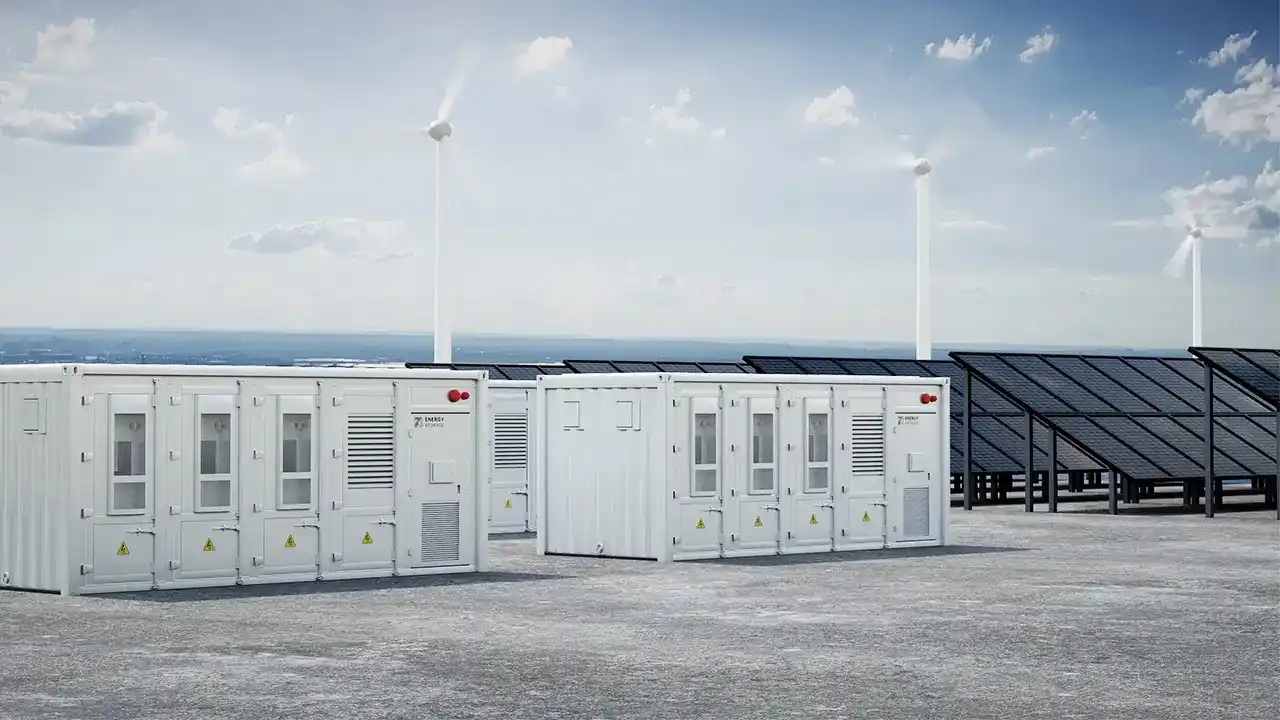


PVB does not recommend treating BESS as a generic battery add-on. For data centers, the system should be designed around uptime requirements, critical load priority, electrical architecture, monitoring visibility, safety documentation, and long-term service needs.
Related PVB Guides
FAQ: Data Center UPS and BESS Integration
Can BESS replace a data center UPS?
In most data center projects, BESS should not be treated as a simple UPS replacement. A UPS provides immediate ride-through and power conditioning for critical IT loads, while BESS can provide longer-duration support, backup reserve, and energy flexibility around the UPS architecture.
What is the difference between UPS battery backup and BESS backup power?
UPS battery backup is usually designed for immediate load protection during short interruptions or transfer events. BESS backup power is typically designed for larger energy capacity, longer support duration, and site-level coordination with UPS, generators, EMS, and selected load groups.
Why is battery monitoring important for UPS and BESS integration?
Battery monitoring helps operators confirm whether UPS and BESS systems are ready to support critical loads. It should track UPS status, battery strings, BESS SoC, SoH, temperature, PCS status, alarms, reserve thresholds, and event history.
What data should a data center battery monitoring solution collect?
Useful data includes UPS load percentage, bypass status, battery voltage, estimated runtime, BESS SoC, SoH, rack temperature, PCS power, EMS mode, cooling status, fire signals, breaker status, generator status, and time-stamped event logs.
How should BESS coordinate with a data center generator?
BESS can support short events, reduce unnecessary generator starts, or help bridge generator start and transfer sequences. The exact logic should be tested with UPS, switchgear, generator controller, EMS, and protection settings.
Can BESS support data center cooling loads?
Yes, if the system is sized and connected for that purpose. BESS can support selected cooling controls, pumps, or auxiliary systems, but the design must define which loads are critical and how long they need support.
What is the biggest risk in UPS + BESS integration?
The biggest risk is unclear control priority. UPS, BESS, generator, EMS, switchgear, and building management systems must follow a defined sequence so energy optimization does not compromise backup readiness.
Should BESS be used for peak shaving in data centers?
BESS can support peak shaving where tariffs and load profiles justify it, but data centers should protect a minimum backup reserve. Energy-saving dispatch should never drain the battery below the level required for resilience.
What should operators test before commissioning data center BESS?
Operators should test UPS ride-through, BESS dispatch, reserve lockout, generator handoff, communication failure mode, alarm mapping, monitoring data accuracy, and emergency operation sequence.
How does PVB support data center UPS and BESS projects?
PVB supports data center UPS and BESS projects with C&I energy storage systems, EMS configuration, PCS integration, liquid cooling, battery monitoring data, project documentation, and application-based design support.