This 2026 update of the 2025 Germany Energy Storage Market Guide keeps the original focus on policies, BESS selection, companies and industry trends. Germany remains one of Europe’s largest battery storage markets, but the market is not one single number. Home batteries make up most installed energy capacity, while large grid batteries are growing quickly and commercial and industrial systems remain a smaller but important segment.
For a buyer in 2026, the biggest questions are practical: Can the project obtain a grid connection? Which VDE rule applies at the connection voltage? What will the battery actually earn or save? Who will maintain it in Germany?
There is no universal German battery grant, fixed payback period or single approval time that applies to every project. Funding, network charges, connection studies and technical requirements depend on the site, system design, network operator and business model.
The 2025 Germany Energy Storage Market Guide has been updated for 2026 with the latest available information on policies, BESS selection, leading market participants and industry trends. It explains what changed, which claims buyers should verify and how to select a BESS without relying on headline numbers alone. Germany’s storage market is growing, but a good project still begins with site data, a realistic revenue model and early contact with the local distribution system operator.
The EU’s revised Renewable Energy Directive sets a binding target of at least 42.5% renewable energy in gross final energy consumption by 2030, with an ambition to reach 45%. More wind and solar increase the need for flexibility, but this does not mean every battery project is automatically profitable or easy to connect.
Germany had roughly 24 GWh of registered stationary battery storage by the end of 2025. Home storage remained the largest segment.
The connection queue is crowded. Grid capacity and the local operator’s requirements can decide whether a project moves forward.
2026 brings an updated low-voltage rule and preparation for the EU battery passport that becomes mandatory for covered batteries in 2027.
Storage statistics can look very different because some sources report power in GW, while others report energy in GWh. They may also use different size categories or data cut-off dates. This guide states the unit, segment and source date wherever possible. The live Marktstammdatenregister and RWTH Aachen Battery Charts should be checked for the newest figure.
1. 2025–2026 Germany Energy Storage Policies: What Changed?
The 2026 update is not simply “more capacity.” Several changes affect how projects are designed, approved and purchased.
| 2026 development | What it means in plain English | What a buyer should do |
|---|---|---|
| Germany entered 2026 with about 24 GWh of stationary battery storage | The market is large, but home batteries still account for most installed energy | Do not use the total market number as proof that C&I or grid-scale projects have the same economics |
| VDE-AR-N 4105:2026-03 took effect | Germany updated the technical connection rule for low-voltage generation and storage | Confirm the current version and the local network operator’s additional connection rules before ordering equipment |
| Battery passport preparation became more urgent | Covered industrial batteries above 2 kWh will need an electronic battery passport from February 18, 2027 | Ask suppliers how battery identity, carbon-footprint, performance and supply-chain data will be provided |
| New KfW financing options were introduced | Eligible companies may finance renewable generation and storage, but a loan is not the same as a grant | Check eligibility, interest, security and state-aid rules with KfW, the financing bank and a tax adviser |
| Grid connection reform remained a major policy topic | Germany is trying to improve connection processes and steer large storage toward useful grid locations | Distinguish enacted law from proposals and confirm the current position before making an investment decision |
Buyers should spend less time looking for a nationwide “subsidy percentage” and more time checking the local grid connection, the tariff and revenue model, the applicable technical rule, and whether the supplier can support the project through 2027 compliance changes.
2. Germany Energy Storage Market Size: 2025 Results and Current Position
Germany’s storage market is often described with one large headline number. That can be misleading. A useful market picture separates home batteries, commercial and industrial batteries, and large grid-connected batteries.
Home battery storage is still the largest segment
RWTH Aachen University divides the battery market into home storage up to 30 kWh, industrial storage from 30 kWh to 1,000 kWh and large-scale storage from 1,000 kWh upward. Its Battery Charts show that home storage remains the largest part of Germany’s installed battery energy capacity.
An official German energy-transition summary reported that by the end of 2024, home storage provided about 15.8 GWh, large storage about 2.8 GWh and commercial storage about 775 MWh. Preliminary industry data indicate that Germany added around 6.5 GWh of stationary battery capacity during 2025, bringing the total to roughly 24 GWh by year-end.
Large battery projects are growing, but the queue is much larger than the operating fleet
According to the Bundesnetzagentur, large battery storage systems above 999 kW had around 2.4 GW of gross power and 3.2 GWh of usable energy on October 15, 2025. Projects recorded as planned in the Marktstammdatenregister represented about 5.0 GW and 10.4 GWh.
Planned does not mean built. Germany’s four transmission system operators had received around 650 connection requests totaling 226 GW by the end of 2024. That enormous figure shows investor interest, but it also shows why a grid connection should be checked before land, equipment or revenue assumptions are treated as final.
3. Germany Battery Storage Subsidies and Financing: What Is Actually Available?
Germany does not have one permanent nationwide subsidy that pays every buyer a fixed amount per kWh of battery capacity. Support changes by program, location, project type, company size and date. Some programs are loans, some are grants, and some reduce a specific cost only when detailed conditions are met.
KfW financing for renewable energy and storage
KfW’s Renewable Energy Standard program 270 can finance renewable energy installations, networks and storage. In June 2026, KfW also announced Renewable Energies Plus program 570, offering financing of up to €150 million per project for eligible companies investing in renewable generation and storage outside EEG-style remuneration. Financing conditions and eligibility must be checked for the individual project.
Grid-fee treatment can matter, but it is not automatic
Section 118 of Germany’s Energy Industry Act contains grid-fee exemptions for the electricity used to charge certain qualifying new storage facilities. The rules include commissioning dates, operating conditions and legal definitions. A project developer should obtain project-specific legal, tax and tariff advice instead of adding a blanket grid-fee exemption to every financial model.
Regional programs may exist
States, municipalities and utilities may offer time-limited programs for solar-plus-storage, charging infrastructure or business decarbonization. A program available in one city may not exist in another, and funds may close before an equipment order is placed.
A marketing page that promises a fixed national battery subsidy, a fixed tax reduction or a guaranteed payback period should be checked against the official program page. Record the program name, eligible applicant, opening date, budget, application deadline and whether approval is required before ordering.
4. Grid Connection and Registration in Germany
Grid connection is one of the biggest practical risks for a German BESS project. The responsible company is usually the local distribution system operator for a commercial site, not automatically a national transmission system operator. The correct process depends on the connection voltage, power, operating mode and location.
Register the installation
Grid-connected battery storage must be registered in Germany’s Marktstammdatenregister. Registration does not replace the network operator’s connection application, technical assessment or commissioning process.
Start with the local network operator
Section 17 of the Energy Industry Act requires appropriate, non-discriminatory and transparent connection conditions. It also allows flexible connection agreements that can set static or dynamic limits on how much power a storage system imports from or exports to the grid. In practice, a flexible connection may help some projects move forward, but it can also limit revenue if the battery cannot charge or discharge when expected.
Use the correct technical connection rule
- Low-voltage projects: VDE-AR-N 4105:2026-03 applies to generation and storage connected to low-voltage networks. The local network operator’s Technical Connection Rules also apply.
- Medium-voltage projects: VDE-AR-N 4110 is normally relevant. Certification requirements vary by project size and configuration.
- Larger or higher-voltage projects: additional transmission or high-voltage requirements may apply, and the project should be discussed with the responsible network operator at an early stage.
There is no safe universal statement that every battery below a certain kWh value will be approved within one or two weeks. The network operator may need a grid study, protection concept, plant certificate, controller settings, communication interface and proof of equipment compliance.
- What import and export power can the site connection support?
- Can the battery export to the grid, or must it operate with zero export?
- Which VDE rule and local Technical Connection Rules apply?
- Is a plant certificate or unit certificate required?
- Which protection, metering, control and communication functions are required?
- Can the operator curtail or dynamically limit the battery?
- What documents are needed, and what is the expected review process?
5. Standards and Compliance for a German BESS
There is no single certificate called “Germany BESS approval” that replaces all other checks. Compliance normally combines EU product rules, battery safety documentation, grid-connection requirements, fire and building requirements, and the local network operator’s technical conditions.
| Area | What to verify | Why it matters |
|---|---|---|
| EU product compliance | Applicable EU declarations, CE marking and the standards used for the complete delivered system | A certificate for one battery cell or module does not prove that the complete BESS is compliant |
| Battery safety | Cell, module and system test evidence; thermal propagation approach; detection, ventilation and fire-response design | The site owner needs to understand how a fault is detected, contained and handled |
| Grid connection | Current VDE connection rule, unit or plant certificates, protection settings and local operator requirements | The BESS cannot earn or save money if it cannot be commissioned as designed |
| EU Battery Regulation | Performance, durability, carbon-footprint and supply-chain data that apply to the battery category and date | The obligations are being phased in, so procurement documents should cover future data delivery |
| Battery passport | Supplier plan for the electronic record required from February 18, 2027 for covered industrial batteries above 2 kWh | A 2026 purchase may remain in service long after the passport requirement begins |
| Site approval | Building, fire, environmental, noise, access and emergency-response requirements | These depend on the site and cannot be proven by a product brochure alone |
The EU Battery Regulation already requires performance and durability information for relevant rechargeable industrial batteries. The battery passport requirement begins on February 18, 2027 for covered industrial batteries above 2 kWh. Germany and the European Commission spent 2026 preparing practical implementation, so suppliers should be ready to provide structured product and lifecycle data.
Ask for evidence for the complete system being delivered: battery, PCS, BMS, EMS, protection, enclosure and communication. Then ask who is responsible if those parts work separately but fail to operate together at the German site.
6. Core Application Scenarios: German BESS Selection & Demand Characteristics
The correct battery is selected from the job it must perform, not from a market trend or a standard package size.
Commercial and industrial energy storage
A factory, warehouse, supermarket or logistics center may use a BESS for peak shaving, solar self-consumption, grid-capacity support, backup of selected equipment or a combination of these jobs. The buyer should begin with at least 12 months of 15-minute load data, solar generation data, tariff details and a list of essential loads.
Liquid cooling may be useful for high-energy-density systems, frequent cycling or tighter temperature control. Air cooling may be suitable for some smaller systems and operating profiles. The choice should come from the climate, enclosure, cycling, noise target, maintenance plan and supplier’s thermal data—not from the building type alone.
Residential Battery Storage Germany: Solar Plus Storage
A home battery is normally selected around usable battery capacity, inverter power, PV size, household consumption pattern, backup requirement and compatibility with the existing solar system. “Plug and play” should never be interpreted as permission to ignore German electrical installation and registration rules. The homeowner should follow the manufacturer, electrician and network operator requirements.
Large and grid-scale battery storage
A large project may combine wholesale trading, balancing services, congestion management or co-location with renewable generation. Its value depends on location, grid access, market rules, optimizer performance, degradation and the limits in the connection agreement. A strong market forecast cannot compensate for a weak connection point or an unrealistic dispatch model.
Backup power and data centers
A grid-connected BESS is not automatically an uninterruptible power supply. Backup operation needs the correct PCS function, switching, protection, controls, black-start or grid-forming capability where required, and a clearly defined list of loads. Data centers also need to coordinate the battery with UPS systems, generators and availability requirements.
7. How to Calculate BESS Economics Without Promising a Fixed ROI
German electricity prices are high by European standards, but no single daytime and nighttime price applies to every business. Eurostat reported an average of €22.64 per 100 kWh for German non-household customers in the 500–2,000 MWh annual-use band in the second half of 2025. An individual site’s contract, demand-related charges, taxes, network fees and hedging can be very different.
For households, Destatis reported an average electricity price of 40.55 cents per kWh in the second half of 2025. That figure helps explain interest in solar self-consumption, but household battery savings still depend on PV surplus, evening consumption, efficiency, usable capacity and the alternative export value.
Model each value stream separately
- Peak shaving: use the actual tariff and 15-minute peaks. Confirm how the billing peak is calculated.
- Solar self-consumption: use measured PV surplus, not total PV production.
- Energy price shifting: calculate the real buy-price difference after efficiency losses, taxes, network charges and operating limits.
- Grid services: use the current product rules, qualification requirements, expected availability and optimizer fees.
- Backup: estimate the financial loss from an outage and the probability and length of outages. Do not count an avoided loss as guaranteed annual cash income.
Run three cases
A bankable model should show a conservative case, a central case and an upside case. Stress-test electricity-price spreads, market revenue, battery degradation, downtime, grid restrictions and replacement costs. If the project only works in the upside case, the risk should be visible before the order is signed.
For a practical sizing workflow, see PVB’s 15-minute load data guide for sizing a C&I battery storage system.
8. Leading Energy Storage Companies in Germany: Roles & Buyer Checks
A “top company” list becomes outdated quickly and can confuse global sales with installed German projects. The companies below are examples of different roles in the German energy storage value chain, not a market-share ranking or a complete supplier list.
Examples of German energy storage market participants
| Company | Verified market role | What a buyer should understand |
|---|---|---|
| RWE | Owner and operator of large battery storage projects, including systems at Neurath and Hamm | An asset owner or project developer has a different role from the company supplying the battery equipment |
| SMA Solar Technology | German provider of inverters, energy management and storage solutions for residential, commercial and larger applications | Check the exact battery, inverter and EMS compatibility instead of relying on the brand name alone |
| BASF Stationary Energy Storage | Markets long-duration sodium-sulfur NAS batteries developed with NGK | Long-duration sodium-sulfur storage has a different operating profile from lithium-ion BESS and should be evaluated for the intended use |
| Fluence | Large-scale BESS technology, services and optimization provider involved in German projects | For grid-scale projects, compare the integrator’s plant controls, market software, guarantees and German project support |
| CATL | Battery and energy storage technology manufacturer that introduced a sodium-ion BESS in Munich in 2026 | A product announcement is not the same as a German project reference; verify delivery timing, certificates and local service |
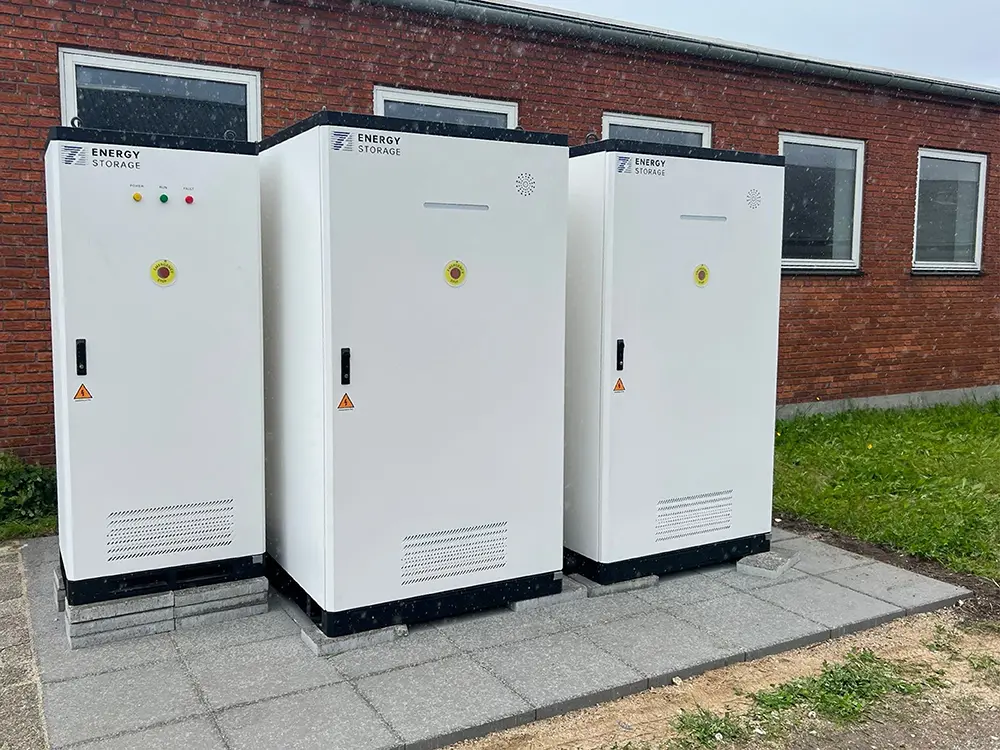
| PVB | Supplier of modular C&I battery cabinets and larger containerized energy storage systems | Match the proposed PVB configuration to the site’s load data, connection requirements and service plan |
Buyers may also encounter names such as Uniper, Tesla Energy and BYD, together with many other German and international battery, inverter, optimizer and integration companies. Inclusion in an industry list is not an endorsement or proof of market share. Brand visibility does not prove that a product has the required documentation, can obtain the proposed grid connection or has the right local service coverage.
How to compare suppliers for a real German project
A buyer gets more value from checking whether a supplier can deliver, commission and support the exact system at the exact site.
| Supplier check | Evidence to request |
|---|---|
| German grid readiness | Applicable unit or plant certificates, protection information, power-quality data and experience with the relevant network voltage |
| Safety | Test reports, hazard analysis, thermal-event response, emergency shutdown, fire concept support and first-responder information |
| Performance | Usable energy, power at site temperature, round-trip efficiency boundaries, auxiliary consumption and warranted availability |
| Warranty | Capacity or energy-throughput guarantee, exclusions, operating window, response time, remedies and who pays labor and transport |
| Local service | Named service organization, remote monitoring, spare-parts location, escalation path and expected on-site response |
| EMS and cybersecurity | Control functions, data ownership, remote-access security, software updates, API availability and optimizer integration |
| 2027 readiness | Battery Regulation compliance plan and battery passport data responsibility |
| References | Comparable projects that a buyer can verify, preferably using the same voltage, climate, duty cycle and business model |
Do not assume that one TÜV or VDE document covers the complete project. Check the exact product model, document scope, issue date, issuing organization and whether the local network operator accepts it for the proposed configuration.
9. Where PVB Fits in a German C&I Storage Project
PVB supplies modular C&I battery storage cabinets and larger containerized systems. The practical starting point is not choosing the largest product; it is matching power, usable energy, cooling, control functions and connection requirements to the site.
- Commercial and industrial energy storage solutions for factories, logistics sites, retail buildings and other business users
- 100 kW / 241 kWh air-cooled cabinet for suitable smaller C&I applications
- 241 kWh liquid-cooled cabinet for modular C&I deployment
- 422 kWh liquid-cooled system for higher-energy modular installations
- VoyagerPower containerized BESS and PowerMaster liquid-cooled systems for larger projects
For a local project example, see PVB’s 1 MWh German logistics battery storage project. A project reference is useful when its design conditions are comparable; it should not replace a new grid and load study for another site.
Provide the site postcode, network operator, connection voltage and limit, 12 months of 15-minute import and export data, PV data, tariff, required battery jobs, essential backup loads, installation area, expected commissioning date and any documents already received from the network operator.
10. 2025–2030 Germany Energy Storage Market Outlook & Industry Trends
Germany is likely to continue adding battery storage across all three segments, with especially strong interest in large grid-connected projects. Bundesnetzagentur’s approved grid-development scenarios assume a much larger future large-storage fleet, with 2037 and 2045 values ranging from 41.1 GW to 94.1 GW depending on the scenario.
These are planning scenarios, not guaranteed installations. Four trends are more useful for buyers than one forecast number:
- Connection quality will matter as much as battery cost. Projects at grid-supportive locations may have an advantage over projects selected only because land is available.
- Flexible connections will become more important. Dynamic import and export limits may unlock projects, but the revenue model must include those limits.
- Mixed operating models will develop. Germany is working on clearer treatment for storage that charges from both renewable generation and the grid. Confirm the final rules before relying on EEG-related value.
- Traceability will become a purchasing requirement. EU Battery Regulation and battery passport duties will make product, carbon-footprint and lifecycle data more important.
Germany’s statutory target is climate neutrality by 2045. Storage can support that transition, but the best project is still one that solves a measurable site or grid problem under realistic technical and financial assumptions.
11. Practical Pain Points & Solutions: BESS Buying Checklist
- Define the battery’s job in one sentence before choosing its size.
- Collect 12 months of 15-minute load, PV and export data.
- Contact the local network operator before placing a non-refundable equipment order.
- Confirm the connection voltage, import and export limits, and applicable VDE rule.
- Separate financing, grants, tax treatment and grid-fee treatment in the business case.
- Model conservative, central and upside revenue cases.
- Check usable energy and delivered power at the actual site temperature.
- Ask for complete-system compliance evidence, not only a cell or module certificate.
- Check the warranty’s operating limits, exclusions, remedies and local service responsibility.
- Include auxiliary energy, efficiency losses, degradation, downtime and replacement costs.
- Confirm the supplier’s EU Battery Regulation and 2027 battery passport plan.
- Agree on commissioning tests and the data that will prove the system meets the contract.
- BESS
- Battery energy storage system: the battery plus the equipment needed to convert, control, protect and monitor its power.
- kW / MW
- Power: how much electricity the system can supply or absorb at one moment.
- kWh / MWh
- Energy: how much electricity the system can store and therefore how long it may run.
- DSO
- Distribution system operator: usually the local network company responsible for the connection of a C&I site.
- PCS
- Power conversion system: converts power between the battery’s DC electricity and the site’s AC electricity.
- BMS
- Battery management system: monitors and protects the battery cells and modules.
- EMS
- Energy management system: decides when and how the BESS charges or discharges.
- MaStR
- Marktstammdatenregister: Germany’s official market master data register for energy installations.
12. FAQ: Germany Energy Storage Market and BESS Selection
How large was Germany’s battery storage market at the start of 2026?
Preliminary market data indicate roughly 24 GWh of registered stationary battery storage by the end of 2025. The total changes continuously as new systems are registered, and home storage accounts for the largest share.
Is commercial and industrial storage Germany’s largest segment?
No. Home battery storage is the largest segment by installed energy. C&I storage is strategically important, but it should not be described as more than 60% of the total German market.
Is there a nationwide German battery subsidy per kWh in 2026?
There is no single nationwide per-kWh grant that applies to every battery. KfW financing and regional programs may support eligible projects, but the current program rules must be checked before an order is placed.
How long does a German BESS grid connection take?
There is no universal approval period. Timing depends on network capacity, voltage, project power, operating mode, documentation and the responsible network operator. Large connection queues make early grid work essential.
Which VDE standard applies to a battery storage system?
It depends mainly on the connection voltage and system configuration. VDE-AR-N 4105:2026-03 applies to low-voltage generation and storage; VDE-AR-N 4110 is normally relevant at medium voltage. The local operator’s Technical Connection Rules also apply.
Does every German BESS need a battery passport in 2026?
The battery passport becomes mandatory on February 18, 2027 for covered industrial batteries above 2 kWh and certain other battery categories. A system purchased in 2026 should already have a clear supplier plan for the required data.
Can a German business expect a 15%–20% annual return from a BESS?
No fixed return can be promised. Returns depend on the site’s tariff, load pattern, PV surplus, market access, grid restrictions, battery degradation, financing and service costs. Use measured site data and multiple financial scenarios.
Is a grid-connected BESS automatically a backup power system?
No. Backup operation requires suitable power electronics, switching, protection, controls and a defined list of essential loads. These functions must be designed and tested as part of the project.
Should a German C&I project choose air cooling or liquid cooling?
Neither is always better. Compare power density, climate, cycling, temperature uniformity, noise, energy use, maintenance and the supplier’s validated thermal performance for the actual project.
What information should a buyer send PVB?
Send the site location, connection voltage and limit, 12 months of 15-minute load data, PV and export data, tariff, battery use cases, backup loads, available space, target date and any network-operator requirements.
Market data, electricity prices, funding programs and connection rules change over time. This article is a practical buyer’s guide, not legal, tax, investment or grid-connection advice. Confirm current requirements with the responsible authority, network operator and qualified advisers before making a project decision.
13. References and Official Sources
- European Commission, Renewable Energy Directive—targets and rules (accessed August 25, 2026).
- Federal Ministry for Economic Affairs and Energy, The battery market is developing rapidly (accessed August 25, 2026).
- RWTH Aachen University, Battery Charts: Battery storage in Germany (accessed August 25, 2026).
- German Solar Association, Battery storage capacity increased fivefold within five years (accessed August 25, 2026).
- Bundesnetzagentur, Electricity storage systems (accessed August 25, 2026).
- Bundesnetzagentur, Marktstammdatenregister (accessed August 25, 2026).
- Federal Ministry of Justice, Energy Industry Act (EnWG), Section 17 (accessed August 25, 2026).
- Federal Ministry of Justice, Energy Industry Act (EnWG), Section 118 (accessed August 25, 2026).
- VDE FNN, VDE-AR-N 4105 for low-voltage generation and storage (accessed August 25, 2026).
- VDE FNN, VDE-AR-N 4110 for medium-voltage systems (accessed August 25, 2026).
- KfW, Renewable Energy Standard program 270 (accessed August 25, 2026).
- KfW, Renewable Energies Plus program 570 (accessed August 25, 2026).
- European Commission, Digital product passport for batteries (accessed August 25, 2026).
- EUR-Lex, Regulation (EU) 2023/1542 concerning batteries and waste batteries (accessed August 25, 2026).
- Destatis, Average gas and electricity prices (accessed August 25, 2026).
- Eurostat, Electricity prices for non-household consumers in the second half of 2025 (accessed August 25, 2026).
- German Federal Government, Climate Change Act: climate neutrality by 2045 (accessed August 25, 2026).
- European Commission, Guidance to support preparations for the digital battery passport (accessed August 25, 2026).
- RWE, Battery storage system in North Rhine-Westphalia (accessed August 25, 2026).
- SMA Solar Technology, Solar battery solutions (accessed August 25, 2026).
- BASF, BASF and NGK introduce improved NAS sodium-sulfur batteries (accessed August 25, 2026).
- Fluence, VERBUND and Fluence launch large-scale battery storage projects in Germany (accessed August 25, 2026).
- CATL, CATL introduces sodium-ion BESS in Munich (accessed August 25, 2026).