Choosing between a battery storage container and a battery storage cabinet is one of the earliest design decisions in a commercial and industrial energy storage project. The two formats can use similar battery cells, BMS, PCS, EMS, fire protection, and cooling technologies, but they are not used in the same way. The right choice depends on capacity, site footprint, installation environment, expansion plan, safety requirements, maintenance access, and total project cost.
This guide compares battery storage containers and battery storage cabinets from a practical C&I buyer perspective. It explains what each format is, when to use it, how the cost structure differs, and what engineering checks should be completed before choosing a system.
In this article, “battery storage container” refers to a containerized battery energy storage system, often used for larger outdoor C&I, utility-adjacent, microgrid, and renewable integration projects. It does not refer to a basic storage box for transporting individual batteries.
Quick Answer: Container vs Cabinet
A battery storage container is usually the better choice for larger energy storage projects that require higher capacity, outdoor installation, integrated thermal management, fire protection, easier logistics, and future scalability. A battery storage cabinet is usually better for smaller or medium C&I projects that need compact installation, flexible indoor or semi-outdoor placement, modular expansion, and closer integration with building loads.
| Selection Point | Battery Storage Container | Battery Storage Cabinet |
|---|---|---|
| Best fit | Large C&I sites, microgrids, renewable energy projects, EV charging hubs, utility-adjacent systems | Factories, commercial buildings, warehouses, telecom rooms, smaller C&I peak shaving projects |
| Typical installation | Outdoor pad-mounted installation with site clearance and lifting plan | Indoor, outdoor, or semi-outdoor installation depending on enclosure rating and ventilation design |
| Scalability | Strong for MWh-level expansion through additional containers | Strong for step-by-step modular expansion at smaller increments |
| Maintenance access | Service aisles, container doors, dedicated equipment zones | Front or rear cabinet access, often easier for compact site layouts |
| Project complexity | Higher civil, logistics, fire separation, and site planning requirements | Lower civil complexity, but requires careful room layout, ventilation, and electrical coordination |
| Buyer decision | Choose when capacity, outdoor deployment, and expansion matter most | Choose when space efficiency, modularity, and building integration matter most |
What Is a Battery Storage Container?
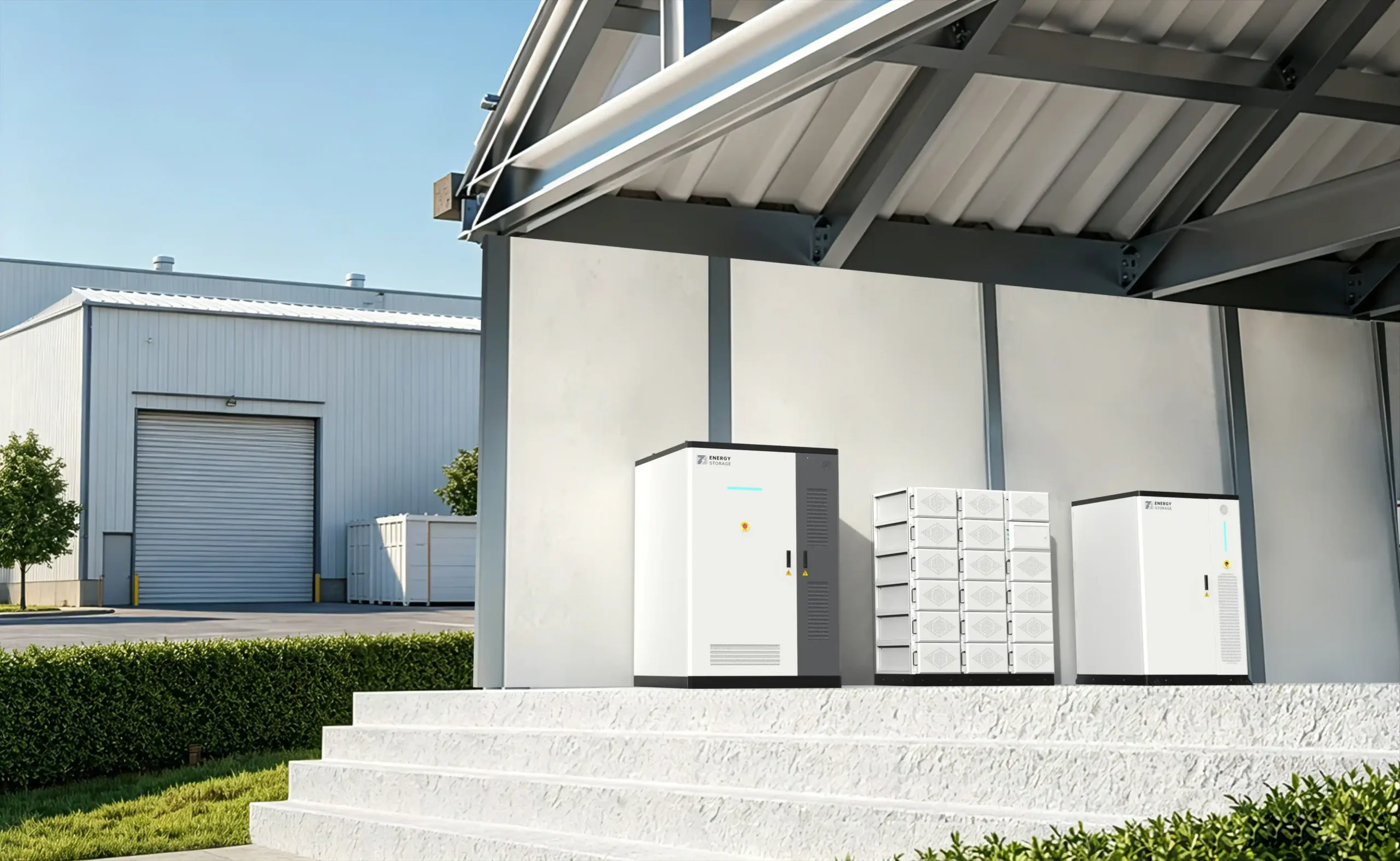
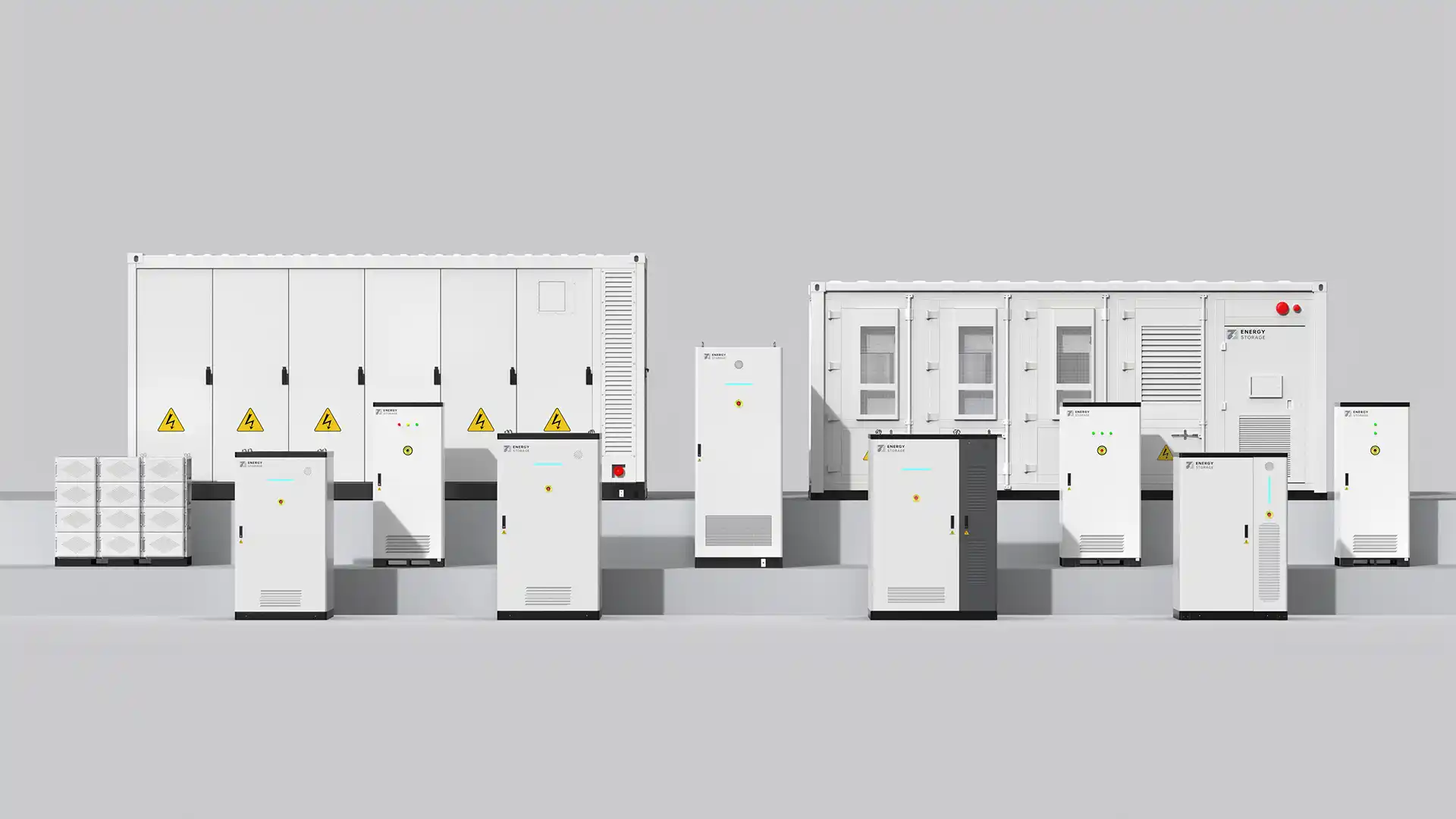
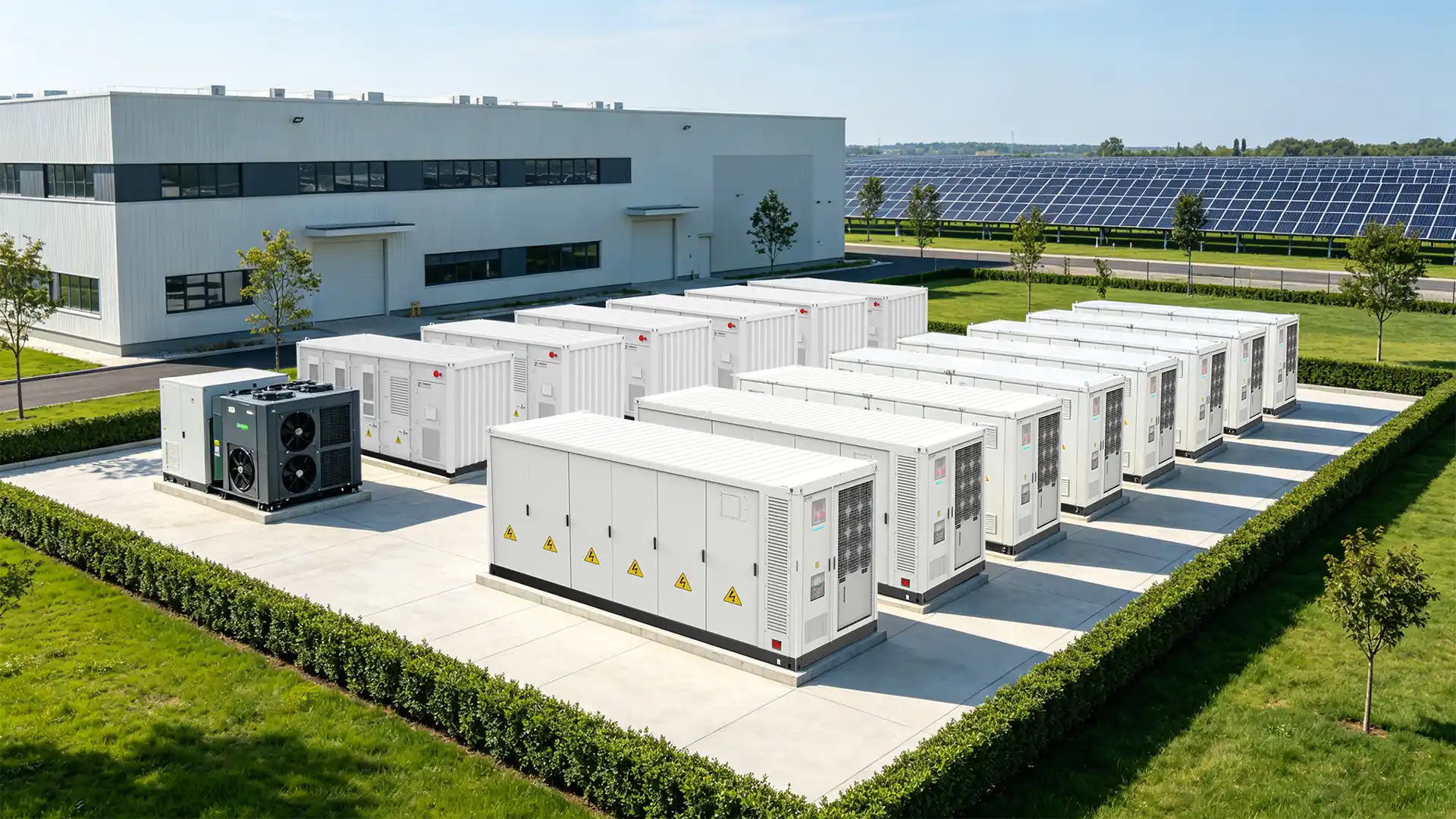
A battery storage container is a containerized BESS that integrates battery racks, battery management system, thermal management, fire detection and suppression interfaces, electrical distribution, monitoring, and auxiliary systems inside a container enclosure. Depending on the project design, the PCS, transformer, switchgear, or EMS may be integrated into the same container or arranged as separate outdoor equipment.
Containerized energy storage is common in projects that require larger capacity and a clear outdoor installation boundary. The container format gives the project team a defined enclosure, repeatable layout, controlled internal environment, and a logistics-friendly system package.
Typical Advantages of a Battery Storage Container
- Suitable for larger kWh or MWh-scale projects.
- Provides a controlled enclosure for battery racks and auxiliary systems.
- Can simplify transport, lifting, and site delivery compared with many separate cabinets.
- Supports outdoor installation with defined fire separation and maintenance clearance planning.
- Works well for solar-plus-storage, wind-plus-storage, microgrid, EV charging, and industrial backup applications.
Typical Limitations of a Battery Storage Container
- Requires enough outdoor space for foundation, lifting, access, and safety clearance.
- May need more civil work, drainage planning, and site permitting than cabinet systems.
- Can be oversized for smaller commercial sites with limited battery demand.
- Expansion is efficient at large increments, but less flexible for very small capacity additions.
What Is a Battery Storage Cabinet?
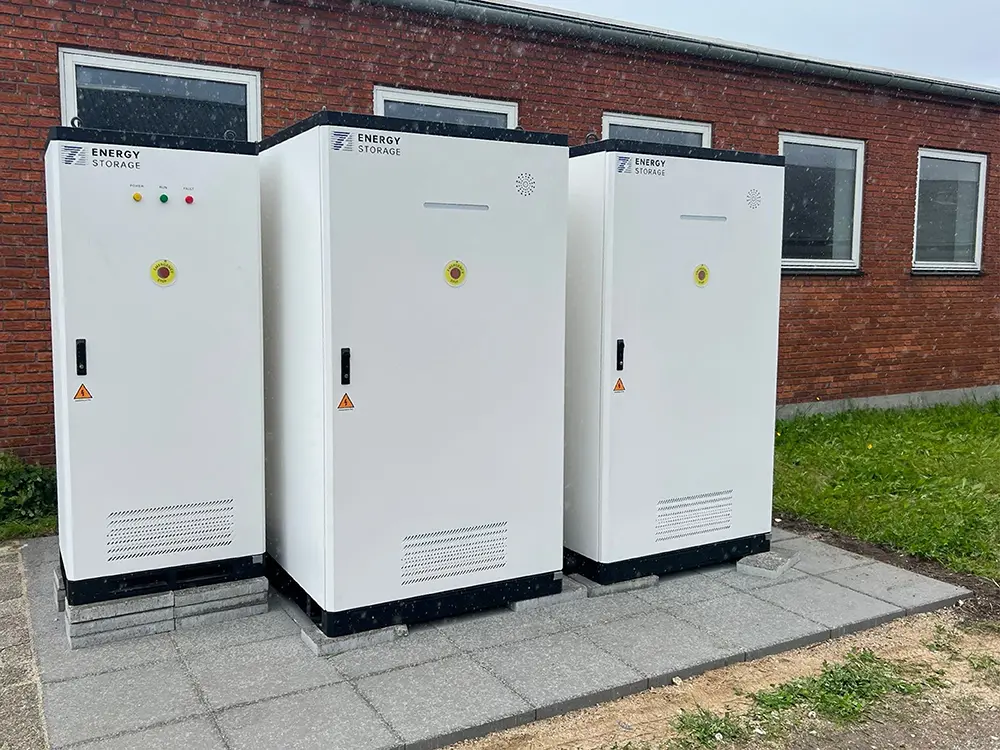
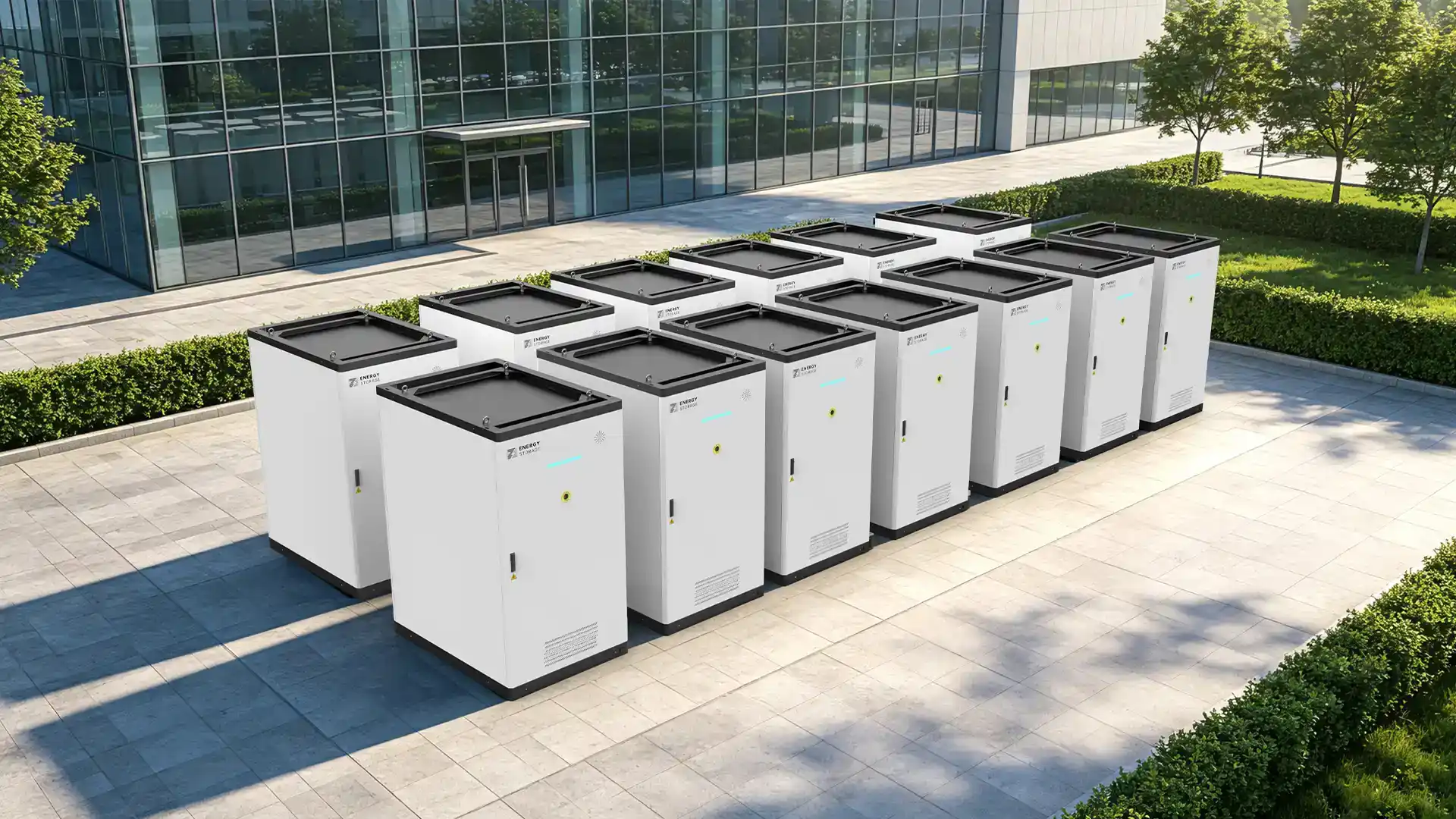
A battery storage cabinet is a compact enclosure that houses battery modules, battery racks, BMS, protection devices, and often thermal management components. Some cabinet systems are designed as all-in-one units with integrated PCS and EMS functions, while others are battery-only cabinets connected to external PCS and site control equipment.
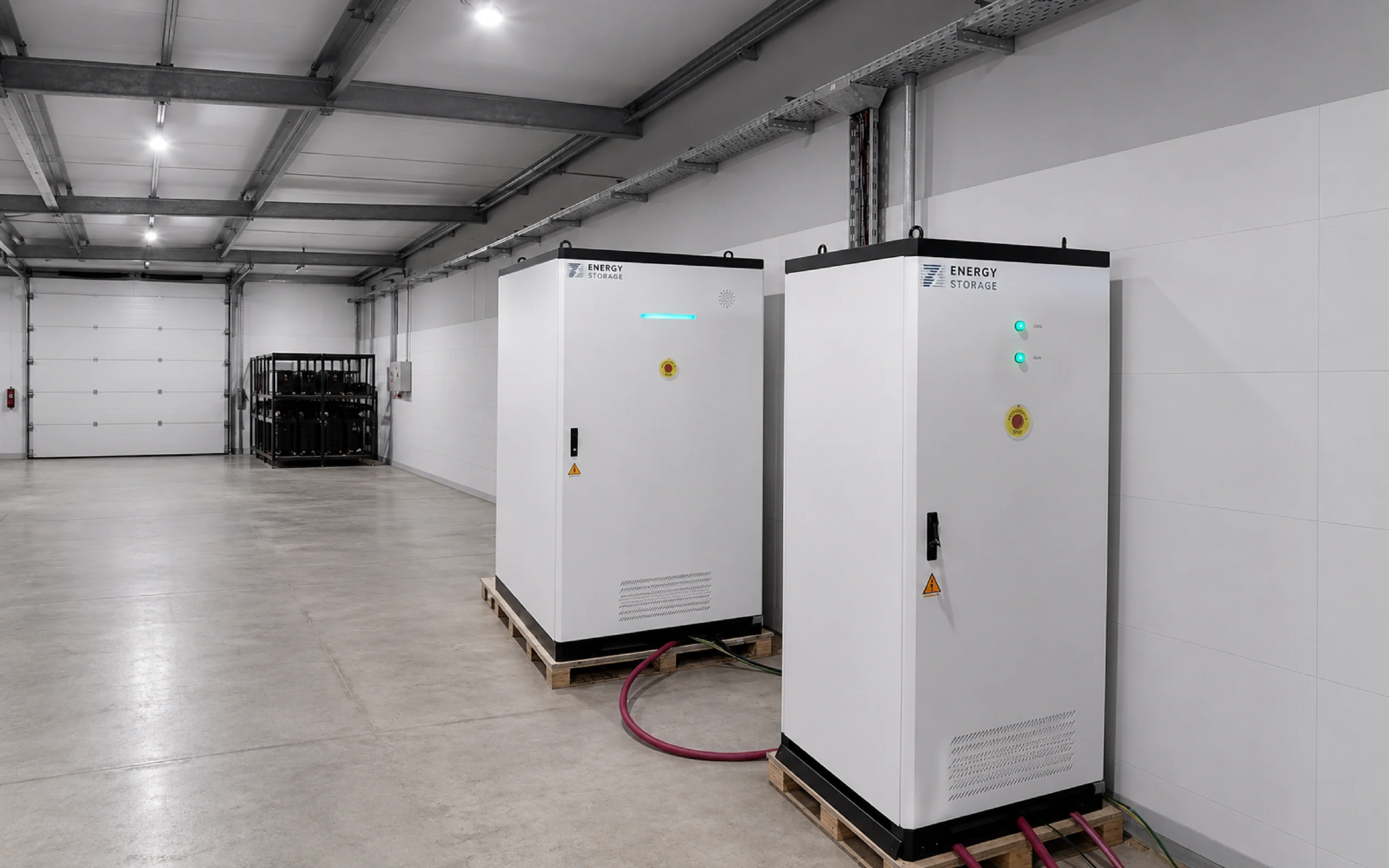
Cabinet systems are common in factories, commercial buildings, warehouses, campuses, telecommunications facilities, and smaller industrial sites where the buyer wants modular battery capacity without deploying a full containerized system.
Typical Advantages of a Battery Storage Cabinet
- Compact footprint for indoor, outdoor, or semi-outdoor project layouts.
- Modular capacity expansion through additional cabinets.
- Good fit for smaller peak shaving, backup, solar self-consumption, and load management applications.
- Can be easier to place near existing electrical infrastructure.
- Often simpler to stage, install, and maintain in constrained C&I sites.
Typical Limitations of a Battery Storage Cabinet
- Large projects may require many cabinets, increasing cabling, layout, and coordination complexity.
- Indoor installation requires careful ventilation, access, fire safety, and code review.
- Expansion can become limited by room size, floor loading, electrical capacity, or thermal conditions.
- Different cabinet configurations may require more detailed integration with PCS, EMS, and building systems.
Key Differences in C&I Project Design
The best format is usually determined by the system boundary. A container often works as a larger energy asset placed outside the building. A cabinet often works as a modular electrical asset placed closer to the load or within a defined technical area. The table below summarizes the design differences that matter most.
| Design Factor | Containerized BESS | Battery Cabinet BESS |
|---|---|---|
| Capacity range | Better for higher-capacity systems and MWh-level projects | Better for lower to mid-size C&I systems and phased growth |
| Footprint | Requires outdoor area and service clearance | Uses compact cabinet footprint but may need multiple units |
| Installation | Needs foundation, lifting, transport route, and outdoor electrical works | Often easier to place in existing rooms or near distribution equipment |
| Thermal management | Usually designed as a controlled container environment | Depends on cabinet cooling method and room or outdoor conditions |
| Fire safety planning | Focus on outdoor separation, detection, suppression interface, emergency access | Focus on enclosure rating, ventilation, room design, detection, and clearance |
| Maintenance | Requires clear access around container doors and service aisles | Requires front or rear access and enough working space around cabinets |
| Expansion | Efficient by adding another container or container block | Efficient by adding cabinets until room, electrical, or cooling limits are reached |
| Cost behavior | Often more efficient at larger scale, but higher site preparation cost | Often more flexible at smaller scale, but many cabinets can increase integration cost |
For buyers still defining system size, PVB’s C&I Battery Storage Sizing Guide explains how 15-minute load data, peak demand, PV output, and operating targets affect capacity and power rating.
When to Choose a Battery Storage Container
A battery storage container is usually the stronger choice when the project is large enough to justify a dedicated outdoor energy storage asset. It is especially suitable when the site needs higher capacity, predictable integration, and a repeatable installation model.
1. MWh-Level C&I Energy Storage
Large factories, logistics parks, industrial campuses, and mixed-use energy projects may require storage capacity that is too large for a small cabinet layout. A containerized system can consolidate the battery area and simplify the overall site boundary.
2. Solar-Plus-Storage and Renewable Integration
For renewable projects, a containerized BESS can help shift solar generation, reduce curtailment, improve self-consumption, support time-of-use operation, and provide a more predictable interface between PV, PCS, EMS, and site load. PVB’s Solar Battery Storage Guide explains the broader solar storage use case.
3. EV Charging Hubs and High-Power Loads
EV charging stations, fleet depots, and industrial sites with high-power charging demand may use containerized storage to reduce grid peak demand, buffer fast charging load, and manage power availability. In these projects, the BESS is often part of a wider electrical architecture rather than a small building-level battery.
4. Microgrids and Off-Grid Sites
Remote industrial facilities, islands, mining sites, and weak-grid locations may need energy storage combined with PV, diesel generators, or multiple power sources. A containerized system can provide a defined energy block for microgrid control and long-duration site support.
When to Choose a Battery Storage Cabinet
A battery storage cabinet is usually the better choice when the project needs compact installation, modular capacity, and closer integration with existing building electrical infrastructure. It is often easier to match to smaller C&I applications where a full container would be oversized.
1. Commercial Buildings and Smaller Factories
For offices, shopping centers, schools, hotels, warehouses, and smaller factories, cabinet systems can be used for peak shaving, backup support, solar self-consumption, and energy cost management without requiring a large outdoor container area.
2. Step-by-Step Expansion
Some buyers do not want to install the full final storage capacity on day one. A cabinet-based design can allow phased capacity expansion if the electrical design, room layout, cooling capacity, and EMS strategy are planned from the beginning.
3. Sites with Limited Outdoor Space
In dense urban or industrial environments, outdoor space may be limited or expensive. A cabinet system may fit better if the site has a suitable technical room, equipment area, or protected outdoor location that meets safety and access requirements.
4. Building-Level Backup and Load Management
When the BESS is mainly supporting selected loads, building operations, or local peak reduction, cabinets can provide a practical balance between capacity, footprint, and integration complexity.
Application Mapping: Which Format Fits Better?
The following mapping is not a fixed rule, but it helps buyers start the selection process before detailed engineering begins.
| Application | Usually Better Format | Reason |
|---|---|---|
| Large factory peak shaving | Container or multiple cabinets | Depends on capacity, available outdoor space, and load profile |
| Commercial building backup | Cabinet | Often needs compact installation near building electrical systems |
| Solar farm energy shifting | Container | Higher capacity and outdoor deployment are usually required |
| EV charging hub | Container | High-power charging load often benefits from larger integrated storage |
| Warehouse solar self-consumption | Cabinet or container | Choose based on PV size, demand peak, and expansion target |
| Microgrid or weak-grid site | Container | Needs larger capacity, outdoor equipment layout, and system-level control |
| Phased C&I expansion | Cabinet | Modular cabinet increments can match staged investment plans |
Safety and Compliance Considerations
Safety should be evaluated before the format is selected, not after equipment has already been ordered. Battery storage containers and cabinets can both be safe when designed, tested, installed, commissioned, and maintained correctly. The question is not whether one format is always safer. The question is whether the project design fits the site risk profile and local requirements.
Important safety checks include cell chemistry, module design, BMS protection, thermal management, fire detection, ventilation, emergency shutdown, isolation, access clearance, cable routing, system labeling, installation environment, and local code review. Standards and test methods such as NFPA 855 and UL 9540A are commonly referenced in energy storage safety discussions, while final requirements depend on the jurisdiction and project type.
For long-term operation, safety is also connected to maintenance. After installation, operators should track alarms, temperature deviation, SoH, communication status, PCS trips, cooling performance, and maintenance records. PVB’s BESS Operation and Maintenance Guide covers this operating phase in more detail.
Cost: Which Option Is Cheaper?
There is no universal answer. A cabinet system can be cheaper for a small C&I project because it avoids the civil work, lifting, and outdoor infrastructure associated with a containerized project. But for larger projects, a containerized BESS may become more cost-effective because it consolidates equipment, simplifies layout, and scales more efficiently.
Buyers should compare total installed cost instead of only battery price. The cost model should include battery capacity, PCS, EMS, cooling, fire safety, switchgear, metering, communications, enclosure, transport, foundation, lifting, cabling, installation labor, commissioning, monitoring, maintenance, and potential future expansion.
| Cost Item | Why It Matters |
|---|---|
| Battery capacity and usable energy | Nominal capacity is not the same as usable capacity after SoC limits and operating strategy |
| PCS and power rating | Determines how fast the system can charge and discharge for peak shaving or backup |
| Civil and installation work | Containers may require more site preparation; cabinets may require room upgrades |
| Thermal and safety systems | Cooling, detection, ventilation, and shutdown design affect both cost and risk |
| Expansion plan | A lower first-phase cost may become expensive if future expansion was not planned |
| O&M and monitoring | Remote monitoring, spare parts, and service access affect lifetime operating cost |
For a deeper cost framework, see PVB’s C&I BESS Total Installed Cost Guide.
Engineering Checklist Before Choosing
Before deciding between a battery storage container and a battery storage cabinet, buyers should prepare the following project information. This helps the supplier recommend a system based on engineering requirements rather than only product appearance.
- 15-minute or hourly load profile for at least 12 months if available.
- Peak demand charges, tariff structure, and time-of-use price windows.
- Target application: peak shaving, backup, solar self-consumption, arbitrage, microgrid, EV charging, or resilience.
- Required discharge duration and backup runtime.
- Existing PV system size or planned renewable capacity.
- Available indoor and outdoor installation space.
- Grid interconnection limit and transformer capacity.
- Environmental conditions including temperature, humidity, dust, altitude, and corrosion risk.
- Fire safety requirements, access routes, emergency response needs, and insurer expectations.
- Future expansion plan and expected load growth.
Once these inputs are clear, the selection becomes more practical. The project team can compare cabinet and container options by usable energy, power rating, physical layout, safety design, installation effort, maintenance access, and total cost of ownership.
How PVB Supports C&I Energy Storage Selection
PVB supports commercial and industrial buyers with project-oriented energy storage system design, including battery cabinets, containerized solutions, PCS integration, BMS and EMS coordination, thermal management, safety planning, and application-based sizing. The goal is not simply to sell a cabinet or a container. The goal is to match the system format to the site, load profile, operating strategy, and long-term business case.
For early-stage buyers, PVB usually recommends starting with load data, target application, available space, grid capacity, and expansion expectations. From there, the project can be evaluated as a cabinet system, containerized system, or hybrid architecture.


Related PVB guides:
- What Is BESS? A Practical Guide to Battery Energy Storage Systems
- BESS Components Guide: BMS vs PCS vs EMS
- How to Size a C&I Battery Storage System
- BESS Operation and Maintenance Guide
FAQ: Battery Storage Container vs Battery Storage Cabinet
What is the difference between a battery storage container and a battery storage cabinet?
A battery storage container is a larger containerized BESS usually designed for outdoor installation and higher-capacity projects. A battery storage cabinet is a more compact modular enclosure often used for smaller C&I systems, building-level applications, and phased expansion.
Is a battery storage container better than a cabinet?
Not always. A container is usually better for larger outdoor projects, MWh-level storage, renewable integration, microgrids, and EV charging hubs. A cabinet is often better for compact sites, commercial buildings, smaller factories, and modular growth.
When should a C&I site choose an energy storage cabinet?
A C&I site should consider an energy storage cabinet when it needs compact placement, moderate capacity, indoor or semi-outdoor installation, simple modular expansion, and close integration with existing building electrical infrastructure.
When should a project use a containerized BESS?
A project should consider a containerized BESS when it requires larger capacity, outdoor installation, a dedicated equipment area, clear maintenance access, renewable energy integration, EV charging load support, or future expansion at MWh scale.
Are battery storage containers more expensive?
Containers often have higher site preparation, logistics, and installation requirements, but they can become more cost-effective at larger scale. Cabinets may be more economical for smaller projects, although many cabinets can increase integration and cabling complexity.
What safety standards should a battery storage system consider?
Commonly referenced safety resources include NFPA 855 for stationary energy storage installation and UL 9540A for thermal runaway fire propagation testing. Final requirements depend on local codes, product certification, project location, insurer requirements, and authority review.
Can battery cabinets and containers be combined in one project?
Yes. Some projects can use a hybrid architecture, such as cabinet-based storage for building-level backup and containerized storage for larger site-level peak shaving or renewable integration. The EMS, protection design, and electrical coordination must be planned carefully.
Sources and Further Reading
- U.S. Department of Energy – Energy Storage. Available at: https://www.energy.gov/oe/energy-storage (Accessed: 11 June 2026)
- NFPA – NFPA 855, Standard for the Installation of Stationary Energy Storage Systems. Available at: https://www.nfpa.org/codes-and-standards/nfpa-855-standard-development/855 (Accessed: 11 June 2026)
- UL Solutions – UL 9540A Test Method. Available at: https://www.ul.com/services/ul-9540a-test-method (Accessed: 11 June 2026)
- PVB – BESS Components Guide: BMS vs PCS vs EMS. Available at: https://www.pvb.com/blog/bess-components-guide-bms-vs-pcs-vs-ems/ (Accessed: 11 June 2026)
- PVB – How to Size a C&I Battery Storage System. Available at: https://www.pvb.com/blog/how-to-size-a-ci-battery-storage-system-in-2026-15-minute-load-data-guide/ (Accessed: 11 June 2026)