Data centers are becoming one of the most demanding electricity users in the global energy system. AI workloads, cloud services, financial platforms, telecom networks, and enterprise applications all depend on facilities that must operate continuously while handling higher rack densities and more volatile power requirements. For owners and operators, power is no longer only a utility bill. It is a core design constraint, a reliability risk, and an investment decision.
Traditional data center power architecture has usually depended on grid supply, uninterruptible power supply (UPS) systems, batteries for short ride-through, and diesel generators for extended backup. That model still matters, but it is no longer enough for every site. Electricity prices are changing quickly. Grid connection timelines are getting longer in many regions. Renewable power contracts are becoming more common. At the same time, regulators, customers, insurers, and investors are asking more questions about resilience, emissions, and energy strategy.
This is where a data center battery energy storage system becomes a strategic part of modern power architecture. A modern battery energy storage system (BESS) can support backup power, integrate with UPS systems, reduce peak demand, increase solar self-consumption, provide power quality support, and help large facilities manage electricity cost exposure. For data centers, the question is no longer simply whether batteries can provide backup power. The better question is how to design BESS as part of a complete electrical architecture that protects uptime while improving energy economics.
This guide explains how battery energy storage systems work in data center applications, how they differ from UPS systems and generators, how to think about sizing, what technical components matter, and how operators can evaluate BESS for backup runtime, peak shaving, and long-term energy resilience in 2026.
Table of Contents
- What Is a Data Center Battery Energy Storage System?
- Why Data Centers Need BESS in 2026
- UPS vs BESS vs Diesel Generator
- Core Applications of BESS in Data Centers
- How BESS Integrates with Data Center UPS Systems
- How to Size a Data Center Battery Energy Storage System
- Technology Architecture: Battery, PCS, BMS, EMS, and Thermal Management
- Cost and ROI Considerations
- Safety, Fire Protection, and Bankability
- Supplier Selection Checklist
- FAQ
What Is a Data Center Battery Energy Storage System?
A data center battery energy storage system is a battery-based power system designed to store electricity and discharge it when needed to support critical loads, reduce energy costs, or improve the flexibility of the facility’s electrical infrastructure. In a data center environment, BESS is typically connected behind the meter and coordinated with switchgear, UPS systems, power conversion equipment, building management systems, and energy management software.
Unlike a small battery pack used only for short UPS ride-through, a BESS is usually designed as a larger system with measurable power capacity in kilowatts or megawatts and energy capacity in kilowatt-hours or megawatt-hours. It can operate for minutes or hours depending on the application. It can also be controlled dynamically based on grid conditions, tariff signals, renewable generation, load profiles, and backup requirements.
For data centers, BESS may be deployed in several formats:
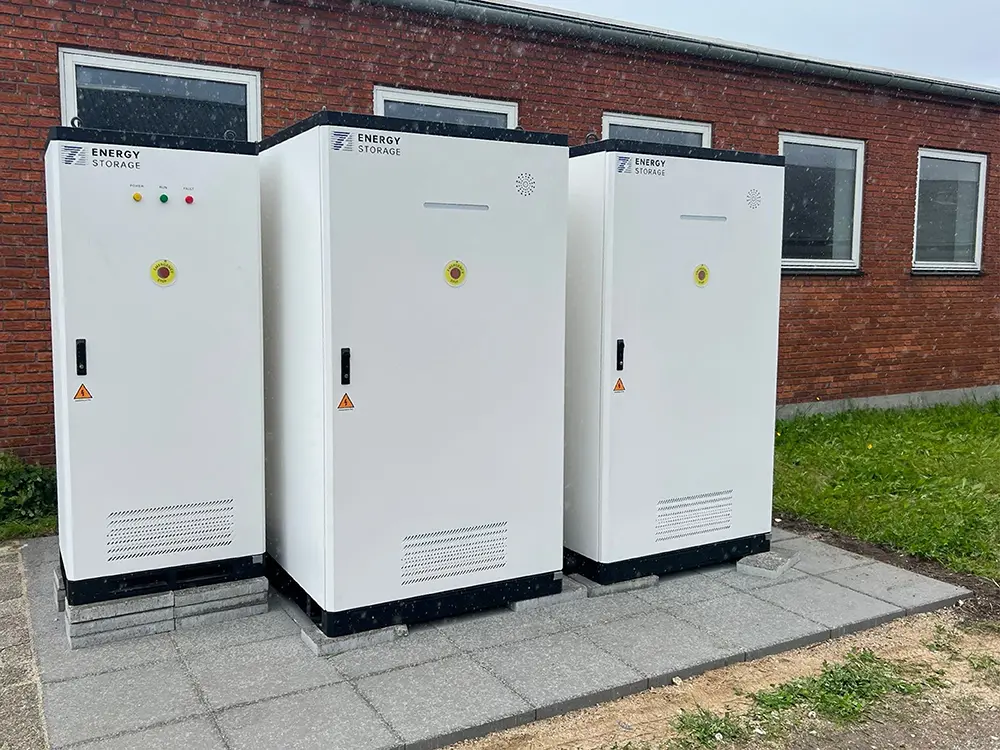
- Cabinet-based systems for modular commercial and industrial energy storage applications.
- Containerized systems for larger sites that require higher capacity and outdoor deployment.
- Integrated solar-plus-storage systems where BESS stores onsite PV generation.
- UPS-integrated battery systems that support critical IT loads and bridge short interruptions.
- Hybrid backup architectures where BESS works with generators, grid supply, and energy management systems.
The goal is not always to replace the existing UPS or generator. In many projects, the most practical design is a layered architecture: UPS for immediate ride-through, BESS for longer-duration support and energy optimization, and generators or grid supply for extended operation. When designed properly, the layers complement each other instead of competing.
For a broader explanation of C&I energy storage design, see PVB’s Commercial & Industrial Energy Storage Buyer Guide.
Why Data Centers Need BESS in 2026
Data center energy strategy has changed quickly. According to the International Energy Agency, data centers accounted for around 1.5% of global electricity consumption in 2024, equal to about 415 TWh. The IEA also expects data center electricity demand to rise sharply toward 2030 as AI and digital services expand. This growth is putting pressure on grid connection queues, local distribution networks, power procurement, and facility design.
At the same time, data centers cannot treat power interruptions as a normal business risk. Even brief outages can affect customers, financial transactions, industrial systems, security services, and cloud workloads. Uptime expectations are high, and power architecture is one of the most important factors in meeting those expectations.
Battery energy storage is gaining attention because it addresses several problems at once.
1. Grid Constraints and Connection Delays
In many markets, the limiting factor for new data center capacity is not land or building construction. It is grid availability. Large electrical loads may require substation upgrades, transmission reinforcement, or long utility approval processes. BESS cannot create unlimited grid capacity, but it can help reduce peak draw, smooth load changes, and make onsite energy resources more useful.
2. Higher and More Variable Power Demand
AI and high-performance computing workloads can create denser and more dynamic power profiles than traditional enterprise IT. A facility with more rapid load swings may benefit from a system that can respond quickly and support power quality. BESS can discharge quickly, charge strategically, and help reduce stress on upstream electrical infrastructure.
3. Electricity Cost Exposure
Data centers consume large amounts of electricity continuously. In markets with demand charges, time-of-use tariffs, capacity charges, or volatile wholesale-linked pricing, a poorly managed load profile can become expensive. BESS can reduce demand peaks, shift consumption away from high-cost periods, and support more predictable energy budgeting.
4. Backup Power and Operational Continuity
UPS systems protect against short interruptions, but data center operators increasingly evaluate longer-duration battery systems to improve resilience. BESS can extend runtime, reduce generator starts, provide backup for selected non-IT loads, and improve site-level energy flexibility during grid events.
5. Renewable Energy and Sustainability Goals
Many data center customers want lower-carbon digital infrastructure. Solar, wind, power purchase agreements, and onsite renewable generation can support this goal, but renewable energy is variable. BESS helps store renewable energy when available and discharge it when needed, improving the match between clean generation and data center load.
PVB has a dedicated solution page for this application: Battery Energy Storage for Data Center.
UPS vs BESS vs Diesel Generator
One common mistake is to compare UPS, BESS, and diesel generators as if they perform the same job. In a data center, they usually serve different roles in the power chain.
| System | Primary Role | Typical Duration | Best Use Case |
|---|---|---|---|
| UPS | Instant ride-through and power conditioning | Seconds to minutes | Protecting critical IT loads from short grid interruptions |
| BESS | Stored energy for backup, peak shaving, and energy management | Minutes to hours | Extending resilience and reducing electricity costs |
| Diesel Generator | Long-duration backup power | Hours to days, depending on fuel supply | Extended grid outages and emergency operation |
A UPS is designed to respond instantly when the grid fails or power quality drops. It protects servers from interruption during the transfer period before another power source takes over. In many traditional designs, the UPS battery only needs to support the load long enough for generators to start and stabilize.
A BESS can perform a broader role. It may provide backup energy, but it can also charge during low-cost periods, discharge during peak-price windows, absorb solar generation, support power quality, and participate in demand response programs where allowed. This makes it both a resilience asset and an energy management asset.
A diesel generator remains useful for long outages because fuel can store large amounts of energy. However, generators have disadvantages: emissions, noise, maintenance, fuel logistics, testing requirements, permitting complexity, and slow response compared with batteries. BESS can reduce generator runtime, support smoother transitions, and help operators depend less on generators for short events.
In a modern data center design, the strongest architecture may combine all three:
- UPS for immediate protection.
- BESS for extended ride-through, cost optimization, and load flexibility.
- Generators for long-duration emergency backup.
This layered approach helps operators improve resilience while also using the battery system during normal operation, instead of letting backup assets sit idle most of the year.
Core Applications of BESS in Data Centers
Backup Power for Critical Loads
The most obvious application is backup power. BESS can support critical loads during grid disturbances, outages, or planned switching events. Depending on system size, it may support the entire facility, selected IT loads, cooling systems, networking equipment, security systems, or control infrastructure.
For data centers, backup design should be based on load priority. Not every load has the same value during an outage. Servers, network equipment, control systems, and safety equipment may be prioritized, while some non-critical auxiliary loads may be reduced or delayed. A well-designed EMS can help execute this logic automatically.
Peak Shaving
Many commercial and industrial electricity tariffs include demand charges based on the highest power draw during a billing interval. Data centers can create high peaks because they operate continuously and may experience workload surges. BESS can discharge during peak periods to reduce the facility’s grid import, lowering demand charges and improving power contract utilization.
Peak shaving is especially attractive when the site has predictable daily or weekly load patterns. The battery does not need to discharge for many hours every day. In some cases, it only needs to reduce short peaks that drive a large part of the monthly bill.
Load Shifting and Energy Arbitrage
In markets with time-of-use tariffs, BESS can charge during low-price periods and discharge during high-price periods. For data centers with high energy consumption, even small differences in electricity price can become meaningful over time. The value depends on tariff structure, battery cycling strategy, round-trip efficiency, degradation assumptions, and operational limits.
PVB has also discussed energy cost optimization in How European Businesses Reduce Energy Costs with Intelligent BESS Scheduling.
Solar Self-Consumption
Some data centers install onsite solar or sign renewable electricity contracts. Onsite solar generation may not always match the facility’s load curve, especially when generation is strongest at midday. BESS can store surplus solar generation and discharge later, increasing renewable self-consumption and reducing grid imports during expensive periods.
Power Quality and Fast Response
Battery systems can respond quickly to changes in power conditions. When properly integrated with PCS and EMS controls, BESS can help support voltage stability, frequency response, and short-term power smoothing. This is increasingly relevant as data centers connect to grids with higher renewable penetration and more dynamic load profiles.
Generator Runtime Reduction
Generators may still be required for long outages, but BESS can reduce unnecessary generator starts during short events. If the grid disturbance lasts only a few minutes, a battery system may carry the load without starting diesel generation. This can reduce fuel use, emissions, maintenance, and noise while preserving generator availability for longer emergencies.
How BESS Integrates with Data Center UPS Systems
UPS integration is the most important design topic for data center BESS. A battery system that is not coordinated with UPS logic, switchgear, protection settings, and load priorities can create operational risk. The goal is to build an electrical sequence where every device knows when to respond and how to hand off power safely.
Architecture 1: BESS Behind the UPS
In this design, BESS may support the DC bus or downstream UPS-related architecture depending on the equipment configuration. It is closely tied to critical loads and can provide backup energy with fast response. This design requires careful compatibility checks with the UPS manufacturer, battery voltage range, protection strategy, and control interface.
Architecture 2: BESS Upstream of the UPS
Here, the BESS connects to the AC distribution system upstream of UPS-protected loads. The UPS remains the immediate ride-through device, while BESS supports the upstream power supply, reduces grid imports, or provides longer-duration backup. This design can be easier to use for peak shaving and energy management because the BESS interacts with site-level loads.
Architecture 3: Site-Level Microgrid
Larger data centers may use a microgrid architecture that combines grid supply, BESS, generators, solar PV, and energy management software. The EMS coordinates charging, discharging, generator dispatch, PV utilization, and load priorities. This architecture is more complex but can deliver stronger resilience and energy cost control.
Key Integration Questions
- Which loads must be supported instantly by UPS?
- Which loads can be supported by BESS after a short transfer?
- What is the acceptable transfer time for each load group?
- How long should BESS support critical loads before generators take over?
- Can BESS discharge for energy savings without reducing emergency backup reserve?
- How will state of charge be managed before forecasted grid risk or severe weather?
- Who owns control priority: UPS, EMS, building management system, or microgrid controller?
The last point is critical. A BESS that is used for cost savings must always preserve enough reserve for resilience if backup is part of the business case. The EMS should include reserve thresholds, operating modes, alarms, and lockouts that prevent economic dispatch from compromising uptime.
For more detail on system components, see BESS Components Guide: BMS vs PCS vs EMS.
How to Size a Data Center Battery Energy Storage System
BESS sizing for data centers should start with operational goals, not product capacity. A 500 kWh system, a 2 MWh system, and a 10 MWh system can all be correct in different projects. The right size depends on which problem the system is solving.
Step 1: Define the Primary Use Case
The first step is to define whether the project is mainly for backup, peak shaving, renewable integration, power quality, or a combination of these. Multi-use systems are common, but each use case places different requirements on power rating, energy capacity, response time, cycling frequency, and control strategy.
- Backup power requires enough kWh to support critical loads for the target runtime.
- Peak shaving requires enough kW to reduce demand peaks and enough kWh to sustain discharge during billing intervals.
- Solar self-consumption depends on PV generation profile and the facility load curve.
- Power quality support depends more on response capability and PCS design.
Step 2: Separate Critical and Non-Critical Loads
A data center may have IT load, cooling load, lighting, security systems, fire systems, office areas, charging infrastructure, and auxiliary equipment. Not all loads need the same backup duration. Sizing the battery for the entire site may be unnecessary or too expensive. A better approach is to classify loads by priority.
| Load Type | Priority | BESS Design Implication |
|---|---|---|
| IT servers and networking | Very high | Requires UPS support and reliable backup path |
| Cooling systems | High | May require staged support to prevent thermal risk |
| Security and control systems | High | Must remain online during emergency operation |
| Office and non-critical loads | Lower | Can often be curtailed during outage mode |
In real data center BESS projects, the system should not be sized only by total site load. PVB recommends separating IT load, cooling load, safety systems, and non-critical auxiliary loads before defining kW capacity, kWh capacity, backup reserve, and EMS operating modes. This helps avoid oversizing the battery while protecting the loads that matter most during grid events.
Step 3: Calculate Power Capacity in kW or MW
Power capacity defines how much load the BESS can support at one time. If a critical load is 1 MW, the battery system and PCS must be able to deliver enough power to support that load with appropriate margins. Operators should consider peak demand, startup currents, cooling load changes, redundancy requirements, and future expansion.
PVB’s guide kW vs kWh Explained for C&I BESS provides a practical explanation of this distinction.
Step 4: Calculate Energy Capacity in kWh or MWh
Energy capacity determines how long the system can support the load. The basic formula is simple:
Required battery energy = supported load x backup duration
For example, if a facility wants to support 1 MW of critical load for 30 minutes, the theoretical energy requirement is 500 kWh. In practice, the design must account for usable depth of discharge, efficiency losses, battery aging, reserve margin, ambient temperature, and operating strategy. The installed capacity may need to be higher than the simple calculation.
Step 5: Use 15-Minute Load Data
For peak shaving and demand charge reduction, monthly energy bills are not enough. Operators should review 15-minute or shorter interval load data to identify real peaks. A site may have a high monthly demand charge caused by only a few short peaks. In that case, a smaller BESS may produce strong savings if it is dispatched accurately.
For a step-by-step sizing method, see How to Size a C&I Battery Storage System in 2026.
Step 6: Preserve Backup Reserve
If the same battery is used for both energy savings and backup, the EMS must maintain a minimum state of charge. For example, a site may allow the battery to discharge for peak shaving but keep 40% or 50% of capacity reserved for emergency operation. The right reserve depends on uptime requirements, generator availability, grid reliability, and risk tolerance.
Technology Architecture: Battery, PCS, BMS, EMS, and Thermal Management
A data center BESS is not just a battery cabinet. It is an integrated system that includes cells, battery modules, racks, power conversion, control software, protection systems, thermal management, fire safety, communication interfaces, and monitoring tools.
Battery Chemistry: Why LFP Is Common for C&I BESS
Lithium iron phosphate (LFP) batteries are widely used in commercial and industrial energy storage because they offer strong cycle life, good thermal stability, and a practical cost-performance balance. For data centers, safety and predictable degradation are especially important. LFP chemistry is often preferred for stationary energy storage projects where long service life and stable operation matter more than maximum energy density.
Power Conversion System (PCS)
The PCS converts DC battery power into AC power for facility use and converts AC power back into DC when charging the battery. For data center applications, PCS performance matters because it affects response time, efficiency, power quality, grid interaction, and compatibility with the site’s electrical architecture.
Battery Management System (BMS)
The BMS monitors battery voltage, current, temperature, state of charge, state of health, and protection conditions. It helps prevent overcharge, overdischarge, overheating, and abnormal operation. For data centers, BMS reliability is critical because battery failure can create both uptime and safety risk.
Energy Management System (EMS)
The EMS decides when the battery charges, discharges, reserves capacity, supports loads, or responds to price signals. In a data center, the EMS must be conservative and transparent. Energy savings should not override uptime requirements. A good EMS should support operating modes such as backup reserve, peak shaving, PV self-consumption, scheduled dispatch, emergency operation, and maintenance mode.
Thermal Management: Air Cooling vs Liquid Cooling
Thermal design is especially important for data centers because battery performance and safety depend on temperature control. Air cooling systems can be practical for moderate power density and simpler deployments. Liquid cooling systems can provide more precise temperature control for higher-density energy storage applications and may improve consistency across battery modules.
For large data center BESS projects, liquid cooling is often worth evaluating because it can support higher power density and more stable thermal conditions. However, the best choice depends on site climate, installation environment, maintenance capability, cycling strategy, and project budget.
PVB offers liquid-cooling energy storage solutions such as the 125kW/261kWh Liquid Cooling Energy Storage System and other commercial and industrial energy storage systems.
Cost and ROI Considerations
The cost of a data center BESS depends on battery capacity, power rating, PCS configuration, thermal management, fire protection, installation work, grid connection, communication integration, commissioning, and long-term service requirements. A low battery price alone does not guarantee a low project cost. The total installed cost is what matters.
Main Cost Drivers
- Battery capacity in kWh or MWh.
- PCS power rating in kW or MW.
- Cabinet or container configuration.
- Air cooling or liquid cooling design.
- Fire detection and suppression system.
- Switchgear, transformers, cables, and protection equipment.
- EMS integration with UPS, PCS, SCADA, or building management systems.
- Engineering, installation, testing, and commissioning.
- Maintenance, monitoring, warranties, and battery augmentation planning.
For broader BESS cost logic, see How Much Does a C&I BESS Really Cost in 2026?.
ROI Source 1: Demand Charge Reduction
If the data center operates in a tariff structure with demand charges, BESS can reduce monthly peak demand. The value depends on the demand charge rate, the size and frequency of peaks, and the accuracy of dispatch control.
ROI Source 2: Time-of-Use Optimization
Where electricity prices vary by time of day, BESS can shift energy consumption. The system charges during lower-cost periods and discharges during higher-cost periods. This requires careful control because frequent cycling affects battery life.
ROI Source 3: Avoided Outage Cost
For data centers, the value of uptime can be much higher than direct energy savings. A battery system that reduces outage risk or improves transition stability may deliver value through avoided service disruption, SLA penalties, customer impact, and operational losses.
ROI Source 4: Generator Fuel and Maintenance Reduction
If BESS reduces generator starts and short-duration runtime, the operator may save fuel, maintenance effort, and testing-related costs. It may also reduce noise and local emissions during brief grid disturbances.
ROI Source 5: Faster Energy Infrastructure Deployment
In constrained regions, BESS may help a site operate more flexibly while waiting for grid upgrades or while managing a limited connection capacity. This value is project-specific but can be important when time-to-power affects business growth.
Safety, Fire Protection, and Bankability
Safety is central to any data center BESS project. A data center is a mission-critical facility, and energy storage must be designed with conservative protection, clear monitoring, and reliable emergency response logic.
Battery Safety
Battery safety starts with cell selection, module design, BMS protection, thermal management, and manufacturing quality. Operators should evaluate the supplier’s testing process, certifications, quality control, and field experience.
Fire Detection and Suppression
Energy storage systems should include fire detection, alarm logic, ventilation or exhaust design where required, and suppression systems suitable for the installation environment. Local codes, insurer requirements, and project-specific risk assessments should guide the final design.
Electrical Protection
Protection design should include disconnects, breakers, fuses, grounding, insulation monitoring where required, short-circuit protection, surge protection, and coordination with site switchgear. For data centers, protection settings must be coordinated with UPS, generators, and critical distribution paths.
Cybersecurity and Control Access
Because the EMS may connect to monitoring platforms, building systems, or remote service portals, cybersecurity cannot be ignored. Access control, network segmentation, logging, firmware management, and data ownership should be reviewed before deployment.
Insurance and Bankability
For large data center projects, insurers and financiers may ask for documentation on system safety, operating procedures, supplier track record, warranty terms, and emergency response plans. PVB has covered related issues in BESS Insurability & Fire Safety in Europe.
How to Choose a Data Center BESS Supplier
Selecting a data center BESS supplier is not the same as buying a standard battery product. The supplier should understand mission-critical power, C&I energy storage, system integration, safety documentation, and long-term service.
Technical Checklist
- Can the supplier provide both battery system and PCS integration support?
- Does the system support the required power rating and backup duration?
- Is the battery chemistry appropriate for stationary C&I storage?
- Does the system include BMS, EMS, thermal management, and fire safety design?
- Can the EMS preserve backup reserve while performing peak shaving?
- Can the system communicate with UPS, building management systems, or SCADA?
- Is the thermal design suitable for the site climate and operating profile?
- Are certification documents, test reports, and warranty terms available?
- Can the supplier support installation, commissioning, and after-sales service?
Commercial Checklist
- Is the proposal based on total installed cost, not only battery price?
- Are degradation assumptions and usable capacity clearly stated?
- Does the ROI model include demand charges, energy prices, backup value, and cycling limits?
- Are maintenance responsibilities and response times defined?
- Does the warranty match the intended operating mode?
- Can the system be expanded if data center load grows?
PVB provides commercial and industrial energy storage solutions for applications including data centers, factories, logistics parks, commercial buildings, EV charging stations, and solar-plus-storage projects. Learn more about PVB’s Commercial and Industrial Energy Storage Solution.
Recommended Data Center BESS Design Logic
A practical data center BESS project should follow a structured design process:
- Collect load data: Use interval data, critical load lists, UPS load records, and cooling load profiles.
- Define operating modes: Backup, peak shaving, solar self-consumption, emergency reserve, and maintenance mode.
- Set backup reserve: Decide how much state of charge must be protected for uptime.
- Model economics: Compare demand charge savings, energy arbitrage, generator reduction, and outage risk reduction.
- Confirm integration: Coordinate UPS, PCS, EMS, switchgear, protection, and communication protocols.
- Review safety: Confirm thermal management, fire protection, installation spacing, and emergency response procedures.
- Plan lifecycle management: Monitor state of health, degradation, warranty conditions, maintenance, and future expansion.
This process helps avoid a common mistake: buying battery capacity before understanding the site’s real power problem. A data center BESS should be engineered around uptime requirements, tariff exposure, site constraints, and future growth.
Data Center BESS Pre-Design Checklist
- 15-minute or shorter interval load profile.
- UPS topology and supported critical load path.
- Generator start sequence and transfer logic.
- Critical, semi-critical, and non-critical load list.
- Target backup runtime for each load group.
- Demand charge, time-of-use, or capacity tariff structure.
- Available indoor or outdoor installation space.
- Battery room, cabinet, or container thermal conditions.
- Fire detection, suppression, spacing, and local code requirements.
- EMS communication protocol with UPS, PCS, SCADA, or building management systems.
- Future IT load growth and expansion plan.
Final system design should be verified by qualified electrical engineers, the project owner, local code authorities, and relevant utility or insurance stakeholders before implementation. This article is intended as a technical planning guide, not a substitute for project-specific engineering design.
FAQ: Data Center Battery Energy Storage Systems
Can BESS replace a data center UPS?
In most projects, BESS does not simply replace the UPS. A UPS provides instant ride-through and power conditioning for critical IT loads. BESS can support longer-duration backup, peak shaving, renewable integration, and site-level energy management. The best design often uses UPS and BESS together.
Can BESS replace diesel generators?
BESS can reduce generator starts and support short-to-medium duration backup, but diesel generators may still be required for extended outages. The decision depends on backup duration, load size, fuel strategy, grid reliability, permitting, and uptime requirements.
How long can a data center run on battery energy storage?
Runtime depends on battery energy capacity and supported load. A 1 MWh battery can theoretically support a 1 MW load for about one hour before considering efficiency losses, reserve margin, usable depth of discharge, and battery aging. Real project sizing should include these factors.
Is LFP battery chemistry suitable for data center BESS?
LFP is widely used in stationary commercial and industrial energy storage because it offers strong cycle life, good thermal stability, and practical cost-performance characteristics. It is often a strong option for data center BESS, but the final design should consider system certification, safety design, and supplier quality.
What is the difference between kW and kWh in data center BESS?
kW measures power, or how much load the battery can support at a moment. kWh measures energy, or how long the battery can support that load. Data center projects must size both correctly.
Can BESS reduce data center electricity bills?
Yes, in the right tariff environment. BESS can reduce demand charges, shift energy use away from high-price periods, increase solar self-consumption, and reduce generator runtime. The financial result depends on local tariffs, load profile, cycling strategy, and system cost.
What data is needed before sizing a data center BESS?
Useful data includes 15-minute or shorter interval load data, critical load lists, UPS load records, generator runtime history, electricity tariffs, demand charges, PV generation data if applicable, site electrical drawings, and expansion plans.
What should operators check before choosing a BESS supplier?
Operators should check battery chemistry, PCS compatibility, BMS and EMS functions, thermal management, fire protection, communication interfaces, certifications, warranty terms, service capability, and experience with C&I or mission-critical power projects.
Conclusion
Data center power strategy is entering a new stage. Higher computing demand, AI growth, grid constraints, electricity price pressure, and sustainability goals are changing how operators think about resilience. UPS systems and generators remain important, but they are no longer the only tools available.
A well-designed data center battery energy storage system can provide backup support, reduce peak demand, improve renewable energy use, support power quality, and give operators more control over energy costs. The key is to design BESS as part of a complete electrical architecture, not as an isolated battery product.
For data centers evaluating energy storage in 2026, the most important questions are clear: What loads must be protected? How much runtime is required? How should BESS coordinate with UPS and generators? Can the system reduce electricity costs without sacrificing backup reserve? Is the supplier capable of supporting safety, integration, and long-term operation?
PVB provides integrated commercial and industrial energy storage solutions for data center backup power, peak shaving, renewable integration, and intelligent energy management. Explore PVB’s Battery Energy Storage for Data Center solution or contact the PVB team to discuss a project-specific BESS design.