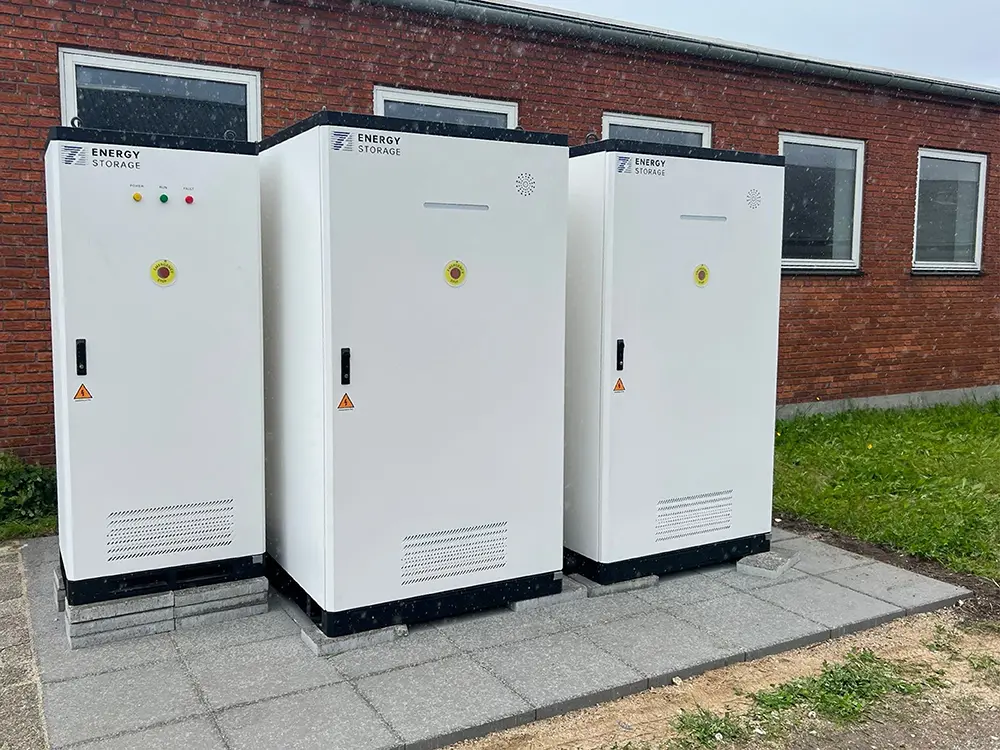
A battery energy storage system is not a short-term equipment purchase. For most C&I projects, it is a 10-year-plus energy asset that needs to keep working through daily cycling, changing tariffs, grid constraints, temperature swings, software updates, and maintenance events.
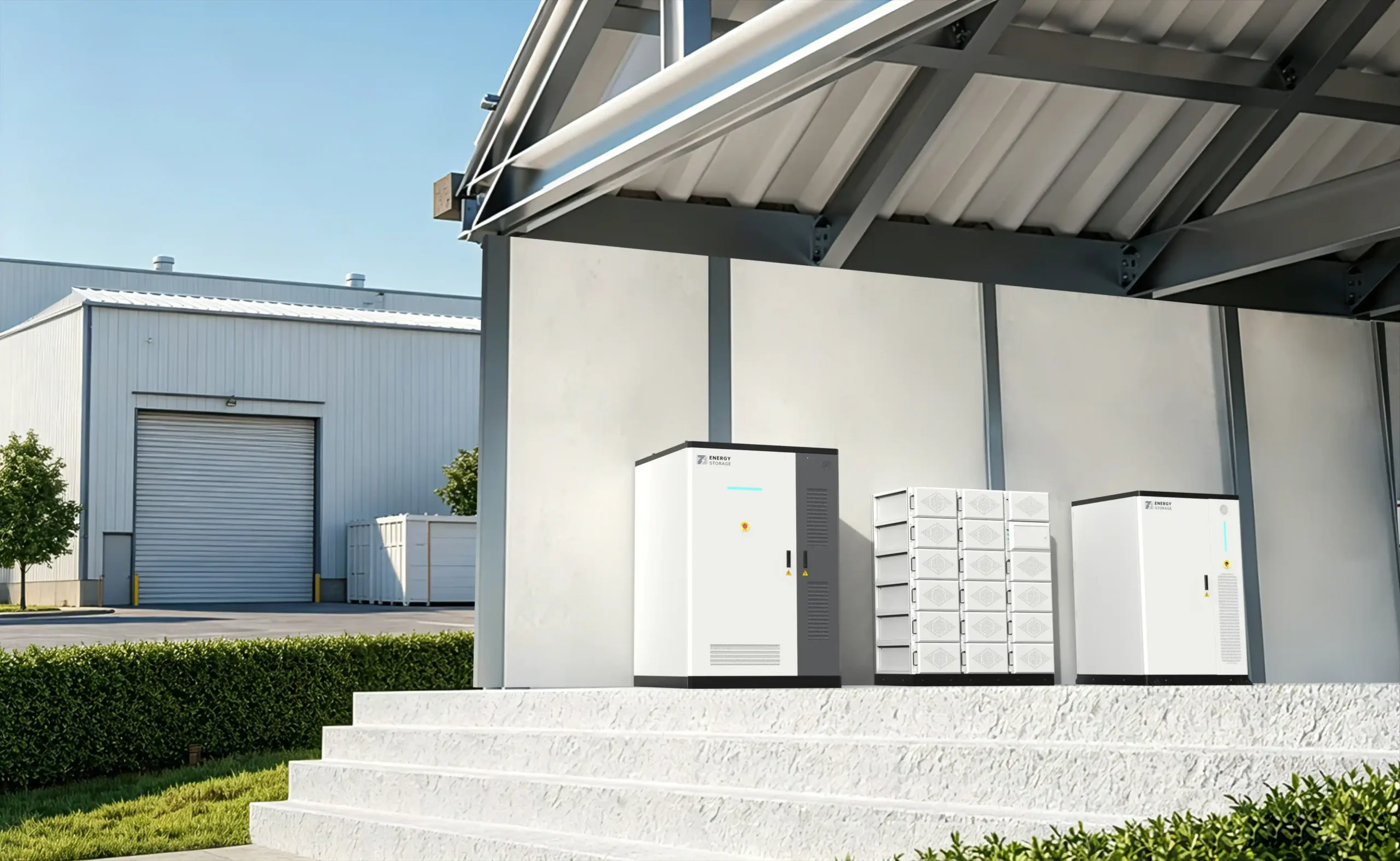
That is why the warranty matters. But in BESS procurement, “warranty” can mean several different things. One supplier may talk about product warranty. Another may emphasize battery cell cycle life. A third may mention system availability or performance warranty. These terms sound similar, but they protect the buyer in very different ways.
As more C&I projects rely on daily cycling, tariff optimization, solar self-consumption, and backup reserve, warranty language is becoming more commercially important, not less.
For C&I buyers, the real question is not only “How many years is the warranty?” The better question is: What exactly is guaranteed, under what operating conditions, and what data will prove whether the system has met or failed that guarantee?
This guide explains the key BESS warranty and performance warranty terms that C&I buyers should review before buying a battery energy storage system.
Why BESS Warranty Is Not Just a Document
Many buyers treat warranty review as a late-stage legal step. That is risky.
A BESS warranty is closely connected to system design. Battery capacity, PCS rating, EMS strategy, operating temperature, charge and discharge rate, depth of discharge, cycle frequency, installation environment, and maintenance quality can all affect whether the warranty remains valid.
For example, a battery system may have a 10-year warranty, but only if it operates within approved temperature limits, follows defined cycling conditions, uses the supplier’s monitoring platform, and receives required maintenance.
A serious BESS warranty review should answer:
- What equipment is covered?
- What performance is guaranteed?
- What operating limits apply?
- What maintenance is required?
- What data is needed for a claim?
- What events can void the warranty?
- Who is responsible for troubleshooting?
- What remedy does the buyer actually receive?
Product Warranty vs Performance Warranty vs Availability Guarantee
The first thing C&I buyers should understand is that BESS warranty is not one single promise. It usually includes several layers.
| Guarantee Type | What It Covers | Key Metrics | Common Risk Factor |
|---|---|---|---|
| Product Warranty | Hardware defects, workmanship issues, material failures, or component faults. | Years of coverage, covered components, repair or replacement terms. | Improper installation, physical damage, unauthorized repair. |
| Performance Warranty | Battery degradation, capacity retention, round-trip efficiency in some contracts, and sometimes covered energy throughput. | Remaining capacity %, throughput in MWh, RTE assumptions, cycle conditions, EOL threshold. | Over-cycling, extreme temperatures, unsupported EMS settings. |
| Availability Guarantee | System uptime and operational readiness for the intended service. | Annual uptime %, response time, allowed downtime, service exclusions. | PCS, HVAC, communication, auxiliary system, or EMS issues. |
Cells, modules, racks, BMS data, usable capacity, degradation, temperature, and state of health.
PCS, switchgear, transformer, protection devices, AC/DC conversion, and grid interface.
EMS dispatch, monitoring, alarms, O&M records, firmware, data logs, and warranty evidence.
Product warranty protects against equipment defects. Performance warranty protects long-term battery value. Availability guarantee protects operational reliability. For C&I projects, all three layers should be reviewed together.
In practice, buyers should confirm whether an availability guarantee applies only to the battery block or to the wider system including PCS, HVAC, controls, communication, and auxiliary equipment.
What Does Usable Capacity Mean in a BESS Warranty?
One of the most important warranty terms is usable capacity. Nameplate capacity and usable capacity are not always the same.
Nameplate capacity refers to the total rated battery capacity. Usable capacity refers to the portion of that capacity the system can safely and practically use within defined operating limits.
A BESS may reserve part of its capacity to protect battery health, maintain safety margins, support backup reserve, or avoid extreme state-of-charge operation.
Buyers should also distinguish DC battery nameplate capacity from AC usable energy at the point of connection. The energy actually delivered to the site can be lower after PCS conversion losses, auxiliary loads, cabling losses, transformer losses, and operating reserve settings are considered.
For buyers, the warranty should clarify:
- Is the capacity guarantee based on nameplate capacity or usable capacity?
- What state-of-charge window is assumed?
- What depth of discharge is allowed?
- What temperature range applies?
- How is usable capacity tested?
- Is the tested value measured at the DC battery side or as AC usable energy at the point of connection?
- Are PCS losses, auxiliary loads, and round-trip efficiency assumptions included?
- Who performs the test?
- How often can capacity testing be requested?
- What happens if usable capacity falls below the guaranteed level?
This is not just a technical detail. It affects ROI. If the financial model assumes one amount of usable energy but the warranty defines another, the buyer may misunderstand the real long-term value of the system.
Battery Degradation: Cycle Life vs Calendar Life
All battery energy storage systems degrade. A bankable warranty does not deny degradation. It defines its boundaries. For C&I buyers, it is important to distinguish two aging vectors: cycle life and calendar life.
1. Cycle Life: Operational Aging
Cycle life represents degradation driven by active charging and discharging. A BESS deployed for daily peak shaving faces a different wear profile than one dedicated mainly to emergency backup.
Important cycle-related factors include:
- Number of cycles per day
- Depth of discharge
- Charge and discharge rate
- Average state of charge
- Operating temperature
- Rest time between cycles
- EMS dispatch strategy
2. Calendar Life: Time-Based Aging
Calendar life refers to battery aging over time, even when the system is not cycling heavily. Temperature, average state of charge, and storage conditions can all affect calendar aging.
This matters for backup power systems or low-cycle applications where the battery may sit at a high state of charge for long periods. A BESS used for backup may not cycle often, but it still needs thermal management, monitoring, and periodic testing to remain reliable.
What Can Void a BESS Warranty?
A BESS warranty is only valid if the system is installed, operated, and maintained within approved conditions.
Common warranty risk areas include:
- Operation outside approved temperature range
- Excessive charge or discharge rate
- Cycling beyond agreed limits
- Unauthorized EMS settings
- Unauthorized firmware or software changes
- Operation outside approved state-of-charge reserve settings
- Poor ventilation or blocked cooling paths
- Failure to maintain HVAC or liquid cooling systems
- Improper installation or grounding
- Use of non-approved spare parts
- Lack of required maintenance records
- Failure to respond to alarms
- Unauthorized repair attempts
- Communication loss without corrective action
For C&I buyers, this means the warranty is not only a supplier responsibility. It is also an operational discipline.
Why EMS, BMS, and O&M Data Matter for Warranty Claims
A BESS warranty is easier to defend when the system has clear operating data. This is where EMS, BMS, and O&M records become important.
The BMS records battery-level data such as cell voltage, module temperature, current, state of charge, state of health, alarm history, and protection events.
The EMS records system-level behavior such as charge and discharge schedules, peak shaving events, PV self-consumption, export limitation behavior, backup reserve settings, and grid charging behavior.
O&M records show whether the system has been maintained properly.
Together, these records help answer warranty questions:
- Was the system operated within the approved temperature range?
- Did the battery exceed cycling or throughput limits?
- Were alarms handled on time?
- Was the EMS dispatch strategy consistent with warranty conditions?
- Was required maintenance completed?
- Did the issue come from a product defect, site condition, or operating behavior?
Without data, warranty claims can become slow and difficult. With clean data, the discussion becomes much more objective.
Capacity Testing, RTE, and Third-Party Verification
A warranty is easier to enforce when the testing method is defined before the project starts. C&I buyers should ask whether capacity testing will be performed by the supplier, EPC, service provider, or an independent third party, and whether testing can be witnessed by the buyer or lender.
The testing protocol should clarify the test boundary, state-of-charge window, ambient conditions, charge and discharge power, rest period, data source, and whether the result is measured as DC battery capacity or AC usable energy at the point of connection.
Round-trip efficiency (RTE) may also appear in performance discussions. RTE measures how much energy is returned after charging and discharging, after relevant system losses are considered. If RTE is part of the commercial model, buyers should confirm whether the warranty or performance test includes PCS losses, auxiliary consumption, HVAC or liquid cooling loads, transformer losses, and metering location.
Independent verification is not required for every project, but it can be valuable for financed projects, large C&I systems, microgrids, and assets where performance revenue depends on measured output.
Key BESS Warranty Terms C&I Buyers Should Review
| Warranty Term | What Buyers Should Check |
|---|---|
| Warranty period | Battery modules, PCS, EMS, HVAC, auxiliary systems, and enclosure components may have different coverage periods. |
| Capacity retention | Check how much usable capacity is guaranteed after a defined period or throughput level. |
| Throughput limit | Some warranties limit total covered energy throughput. Heavy cycling may shorten effective coverage. |
| Temperature range | Confirm approved ambient and battery operating temperature ranges. |
| C-rate and power limits | High-power applications may need stronger validation of charge and discharge limits. |
| Depth of discharge | Financial modeling should match the DoD assumptions in the warranty. |
| Maintenance requirements | Confirm inspection intervals, software updates, coolant checks, HVAC service, and documentation requirements. |
| Monitoring requirements | Some warranties require continuous monitoring and timely alarm response. |
| Remedy | Clarify whether the supplier provides repair, replacement, capacity augmentation, service credit, or another remedy. |
| LTSA relationship | Confirm whether warranty coverage depends on a long-term service agreement, remote monitoring plan, or approved O&M provider. |
For projects in hot, humid, dusty, coastal, or high-altitude environments, the cooling system should be reviewed together with warranty terms. HVAC or liquid cooling performance can directly affect temperature compliance, auxiliary consumption, and long-term battery degradation.
Red Flags in BESS Warranty Proposals
Some warranty proposals look strong at first but become less convincing after review.
C&I buyers should be cautious if they see:
- Long warranty period with vague operating conditions
- Capacity guarantee without a clear test method
- Cycle life number without DoD, C-rate, or EOL assumptions
- No clear definition of usable capacity
- No stated temperature conditions
- No explanation of throughput limits
- No clear remedy if performance falls short
- Warranty depends on data, but monitoring scope is unclear
- Maintenance requirements are not defined
- No independent third-party testing or witness mechanism for large projects
- Exclusions are broader than the coverage
- PCS, EMS, HVAC, and battery warranties are not aligned
- Supplier cannot explain how claims are handled
A good BESS supplier should be able to explain warranty logic in plain language. If the warranty can only be understood after several legal interpretations, the buyer should slow down.
How Warranty Affects BESS ROI
Warranty is not just about risk protection. It also affects the financial model.
For C&I buyers, BESS ROI depends on long-term performance. If usable capacity declines faster than expected, peak shaving value, solar shifting value, backup runtime, or tariff arbitrage value may also decline.
Warranty affects ROI through:
- Usable capacity over time
- System availability
- Maintenance cost
- Replacement risk
- Performance confidence
- Financing and insurance review
- Long-term operating assumptions
A project that looks profitable in year one may underperform if degradation, downtime, or maintenance cost is underestimated. This is why CFOs, facility managers, and engineering teams should review warranty terms together.
This is why ROI models should not assume full year-one usable capacity across the entire project life without checking warranty-aligned degradation assumptions.
For financed projects, lenders and insurers may also look for bankable warranty terms, transparent operating data, clear remedy language, and evidence that the supplier can support the asset through the warranty period or an LTSA.
Warranty Priorities for Different C&I BESS Use Cases
| Application | Warranty Priorities |
|---|---|
| Peak shaving | Cycle life, throughput limits, EMS control, usable capacity, PCS reliability. |
| Solar self-consumption | Capacity retention, round-trip efficiency, operating temperature, PV dispatch assumptions. |
| Backup power | Calendar life, availability, backup reserve settings, periodic testing, outage response. |
| EV charging support | C-rate limits, PCS rating, thermal management, EMS response speed, high-power discharge conditions. |
| Microgrids | Communication reliability, generator coordination, PV integration, service responsibility, black-start requirements if applicable. |
Questions to Ask Before Signing a BESS Warranty
- What is covered by the product warranty?
- What is covered by the performance warranty?
- Is usable capacity or nameplate capacity guaranteed?
- What capacity retention is guaranteed after 5, 10, or more years?
- What cycling conditions are assumed?
- Is there a throughput limit?
- What temperature range is required?
- What maintenance is required to keep the warranty valid?
- What monitoring data is required for warranty claims?
- Who reviews alarms and operating abnormalities?
- What happens if capacity falls below the guarantee?
- Are PCS, EMS, HVAC, and battery warranties aligned?
- Can the warranty support financing or insurance review?
- What exclusions should the buyer pay attention to?
- How are warranty claims processed?
Quick Glossary for BESS Warranty Terms
How PVB Supports Long-Term BESS Performance
At PVB, we do not treat warranty as a separate document at the end of procurement. We engineer systems to respect the warranty from the project design stage.
For C&I buyers, PVB can support project planning around:
- Precision sizing: Matching usable capacity and PCS rating to actual load profiles to reduce over-cycling.
- Thermal management: Using appropriate air or liquid cooling architecture to keep batteries within the intended operating window.
- Smart EMS dispatch: Programming control strategies that optimize peak shaving, PV self-consumption, backup reserve, and battery state of health.
- BMS protection logic: Monitoring voltage, current, temperature, SoC, SoH, alarms, and protection events.
- O&M data readiness: Supporting the operating records that help verify performance and simplify warranty discussions.


For factories, warehouses, commercial buildings, logistics parks, data centers, and solar-plus-storage projects, a bankable BESS warranty is easier to maintain when system design, EMS logic, thermal control, and O&M records are aligned from the start.
Conclusion
A BESS warranty is more than a number of years on a proposal.
For C&I buyers, it is a technical and financial risk framework. It defines what is covered, what performance is expected, how the system must be operated, what data must be recorded, and what happens if the system fails to meet agreed conditions.
The most important warranty questions are not only legal questions. They are engineering questions.
What is the usable capacity? How fast will the battery degrade? How many cycles are covered? What temperature range applies? What does the EMS record? What maintenance is required? What remedy does the buyer receive?
For C&I buyers, warranty review is not paperwork. It is part of choosing a bankable energy storage asset.
FAQ: BESS Warranty and Performance Guarantees
What is a BESS warranty?
A BESS warranty is a supplier commitment that defines coverage for equipment defects, battery performance, capacity retention, availability, or other agreed conditions. The exact scope depends on the contract and operating limits.
What is the difference between product warranty and performance warranty?
A product warranty usually covers defects or equipment failure. A performance warranty usually covers battery capacity retention or energy throughput over time under defined operating conditions.
What does usable capacity mean in a BESS warranty?
Usable capacity is the amount of battery energy that can be safely and practically used within defined operating limits. It may be lower than nameplate capacity because the system reserves energy for battery protection, safety margins, or backup requirements.
Can battery degradation void a warranty?
Normal degradation does not usually void a warranty, but operation outside approved limits can affect warranty coverage. Excessive cycling, high temperature, unauthorized settings, or poor maintenance may create warranty risk.
Why does EMS data matter for warranty claims?
EMS data shows how the system was operated, including charge and discharge behavior, peak shaving events, PV self-consumption, export control, and backup reserve settings. This data can help verify whether the system operated within warranty conditions.
Should usable capacity be measured on the DC side or AC side?
Buyers should confirm the warranty boundary. DC battery capacity and AC usable energy at the point of connection can differ because of PCS losses, auxiliary consumption, cabling, transformers, cooling loads, and reserve settings.
Does a longer warranty always mean a better BESS?
No. A longer warranty is only valuable if the coverage, operating conditions, performance warranty, and remedy are clear. A shorter but better-defined warranty may be more useful than a long warranty with broad exclusions.
What can void a BESS warranty?
Operation outside approved temperature, cycling, power, maintenance, software, or installation conditions can create warranty risk. Unauthorized modifications, missed maintenance, ignored alarms, or incomplete operating data can also affect claims.
Who is responsible for maintaining BESS warranty validity?
Responsibility may be shared between the supplier, EPC, service provider, and site owner. The contract should clearly define who monitors alarms, performs maintenance, records data, updates software, and handles warranty claims.
External References
The following references are included for safety, system, and market context. UL 1973, UL 9540, and NFPA 855 should not be read as direct performance warranty standards; project-specific warranty, capacity, RTE, and availability terms must be confirmed in the supplier contract.
- UL 1973 – Batteries for Use in Stationary and Motive Auxiliary Power Applications. Available at: https://www.shopulstandards.com/ProductDetail.aspx?productId=UL1973 (Accessed: 22 June 2026)
- UL 9540 – Energy Storage Systems and Equipment. Available at: https://www.shopulstandards.com/ProductDetail.aspx?productId=UL9540 (Accessed: 22 June 2026)
- NFPA 855 – Standard for the Installation of Stationary Energy Storage Systems. Available at: https://www.nfpa.org/codes-and-standards/nfpa-855-standard-development/855 (Accessed: 22 June 2026)
- IEA – Batteries and Secure Energy Transitions. Available at: https://www.iea.org/reports/batteries-and-secure-energy-transitions (Accessed: 22 June 2026)