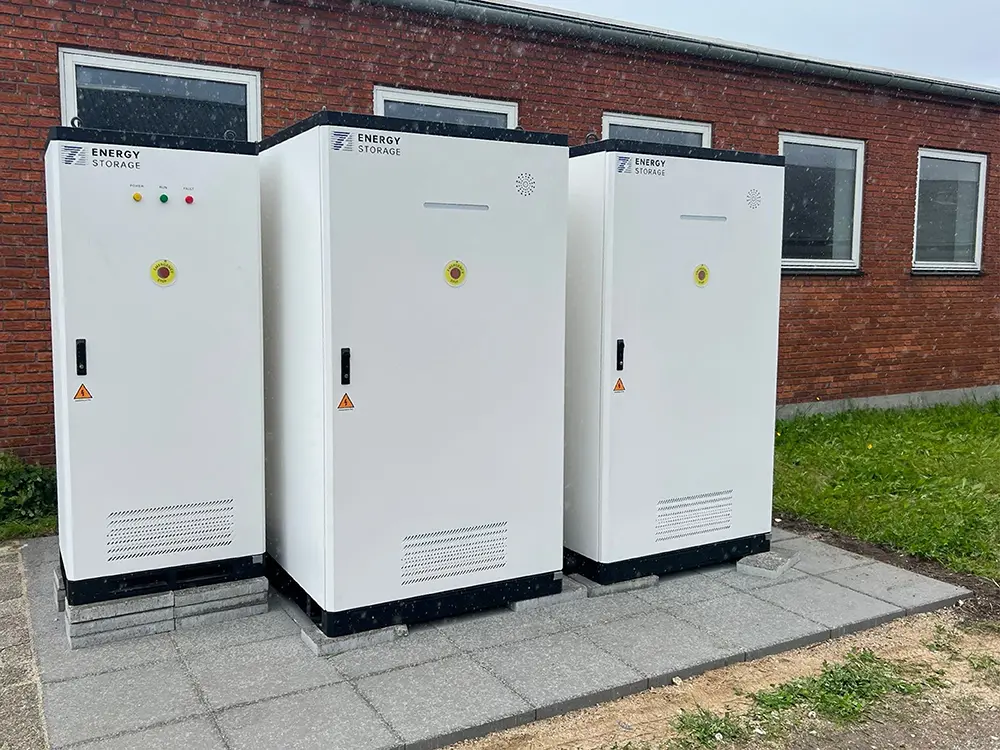
For commercial and industrial energy storage projects, battery capacity and price are only part of the decision. A C&I battery energy storage system also needs to be safe, bankable, transportable, installable, insurable, and acceptable to local authorities, EPC teams, lenders, facility owners, and insurers.

This is why BESS safety standards and certification documents matter.
A low-price battery system may look attractive at the proposal stage, but if the system lacks the right compliance documents, the project can face delays in permitting, grid connection, insurance review, fire safety approval, transport, or final acceptance. For C&I buyers, certification is not paperwork after the deal. It is part of the technical and commercial risk review before purchase.
This guide explains the most important BESS safety standards and certification documents C&I buyers should understand, including UL 9540, UL 1973, UL 9540A, IEC 62619, NFPA 855, CE, Regulation (EU) 2023/1542, and UN38.3.
Why BESS Safety Standards Matter for C&I Projects
A C&I battery energy storage system is not just a battery cabinet or container. It is an integrated power asset that may include battery cells, modules, racks, BMS, PCS, EMS, HVAC or liquid cooling, fire detection, fire suppression, switchgear, protection devices, communication systems, and site-level controls.
Safety review therefore needs to cover several layers:
- Battery cell and module safety
- Battery management and protection logic
- PCS and electrical conversion safety
- Thermal management and fire risk control
- Enclosure design and environmental protection
- Transport safety
- Installation and spacing requirements
- Documentation for local authorities and insurers
UL 9540 vs UL 1973 vs UL 9540A: Key Differences
C&I buyers often confuse UL 9540, UL 1973, and UL 9540A. They are related, but they do not mean the same thing.
| Standard / Test | Scope | Is It a Certification? | What It Helps Solve |
|---|---|---|---|
| UL 9540 | Full energy storage system | Yes, system-level safety certification may apply | ESS safety evaluation for system integration, project approval, AHJ review, and insurance discussion. |
| UL 1973 | Battery cells, modules, battery packs, or battery systems | Yes, battery-level safety certification may apply | Battery assembly safety, including electrical and physical safety risks. |
| UL 9540A | Thermal runaway fire propagation test method | No. It is a test method/report, not a simple pass/fail certificate | Fire propagation data for AHJ review, fire safety planning, spacing discussions, and NFPA 855-related evaluation. |
The most important point is scope. A battery certified to UL 1973 does not automatically mean the full energy storage system is certified to UL 9540. A UL 9540A report also does not replace UL 9540 certification. Each document answers a different question.
UL 9540: Safety Standard for Energy Storage Systems and Equipment
UL 9540 is one of the most recognized safety standards for energy storage systems. It focuses on the safety of the integrated energy storage system, not only the battery cells.
For C&I buyers, UL 9540 is important because it helps evaluate whether the battery system, power conversion equipment, controls, protection devices, and other system components are assessed as an integrated ESS.
UL 9540 is especially relevant for projects in North America, where AHJs, fire officials, insurers, and project stakeholders may ask whether the energy storage system has been evaluated under recognized ESS safety standards.
System-level evaluation may also depend on certified subsystems such as batteries, PCS or inverters, controls, protection devices, and fire safety interfaces. Buyers should also confirm whether the evaluation covers control and protection functions, including BMS/EMS logic, software-controlled safety functions, overcharge protection, abnormal operation response, and communication-related safety behavior.
Buyers should confirm:
- Whether the complete ESS is certified, not only the battery module
- Which system configuration the certification covers
- Whether the PCS, BMS, EMS, fire safety system, and enclosure are included
- Whether control and protection functions are included in the system-level evaluation
- Whether the certificate applies to the exact model being proposed
- Whether the certificate is valid for the installation type and market
Important note: UL 9540 should not be treated as a performance warranty. It is a safety standard, not a guarantee of capacity retention, system uptime, cycle life, or financial return.
UL 1973: Battery Safety for Stationary and Motive Auxiliary Applications
UL 1973 applies to batteries used in stationary applications and certain motive auxiliary applications. In the context of BESS, it is often used to evaluate battery-level safety.
For C&I buyers, UL 1973 is useful because it helps show that the battery component has been assessed for key safety risks. However, it should not be confused with complete system certification.
A battery may have UL 1973 certification, but that does not automatically mean the full energy storage system is certified under UL 9540.
Buyers should check:
- Whether UL 1973 applies to the battery cell, module, rack, or battery system
- Whether the certified battery configuration matches the proposed project
- Whether the certification remains valid after integration with PCS, EMS, cooling, and enclosure systems
- Whether the supplier can provide current certificate documents and test scope
Important note: UL 1973 does not replace project-level engineering review, installation approval, fire safety assessment, or performance warranty review.
UL 9540A: Thermal Runaway Fire Propagation Testing
UL 9540A is often mentioned together with UL 9540, but they are not the same thing.
UL 9540A is a test method used to evaluate thermal runaway fire propagation characteristics of battery energy storage systems. It helps provide data for fire safety evaluation, installation spacing, fire protection design, and AHJ review.
For C&I buyers, UL 9540A data can be important when the project involves indoor installation, containerized systems, large battery blocks, or sites where fire safety approval is a major concern.
For larger or higher-energy systems, AHJs may request more detailed UL 9540A data at cell, module, unit, or installation levels to support NFPA 855-related review and project-specific hazard analysis.
Buyers should ask not only whether UL 9540A testing exists, but also which level of testing is available and whether the reported configuration matches the project’s actual cell, module, rack, cabinet, container, and fire safety design.
Buyers should understand:
- UL 9540A is a test method, not a simple product certificate
- Test results may depend on cell chemistry, module design, rack layout, enclosure, and system configuration
- Test data should match the actual system being installed
- AHJs may request cell-level, module-level, unit-level, or installation-level data depending on system size, location, and local code interpretation
- UL 9540A data may support fire safety and spacing discussions, but it does not automatically guarantee project approval
IEC 62619: Safety Requirements for Industrial Lithium Batteries
IEC 62619 is an important international safety standard for secondary lithium cells and batteries used in industrial applications. It is often relevant for stationary energy storage systems, telecom backup power, industrial battery systems, and other non-consumer lithium battery applications.
For C&I energy storage buyers, IEC 62619 can help support battery safety review outside the North American UL framework, especially in international markets. It can apply to cells and batteries used in industrial applications, but buyers should confirm whether the test scope covers cells, modules, packs, or the complete battery system.
Buyers should confirm:
- Whether IEC 62619 applies to the battery cells, modules, packs, or battery system
- Whether the certificate covers the exact model and configuration
- Whether the test report is issued by a recognized laboratory
- Whether local project stakeholders accept IEC 62619 for the intended market
- Whether other standards are still required for system-level approval
IEC 62619 can support battery safety review, but it does not by itself resolve full ESS system approval, PCS safety, fire review, grid connection, installation approval, or insurer acceptance. It should be reviewed together with local electrical rules, fire safety requirements, grid connection requirements, PCS safety requirements, and installation codes.
NFPA 855: Installation Safety for Stationary Energy Storage Systems
NFPA 855 is a key standard for the installation of stationary energy storage systems. It is especially relevant in North America and is often referenced in discussions around spacing, fire safety, ventilation, hazard mitigation, and installation requirements.
For C&I buyers, NFPA 855 matters because even a well-designed battery system still needs to be installed correctly.
NFPA 855 is more about installation safety than product performance. It helps project teams think about questions such as:
- Where can the ESS be installed?
- What spacing or separation may be required?
- What fire detection or suppression measures may be needed?
- What documentation may be required for AHJ review?
- How should emergency response planning be considered?
- Are there limits based on location, capacity, or battery chemistry?
For large cabinet or containerized C&I systems, buyers should also confirm how the AHJ interprets unit capacity limits, indoor versus outdoor installation rules, rooftop restrictions, separation distances, and fire safety documentation requirements.
Buyers should not assume that buying a certified BESS automatically guarantees project approval. Site layout, local code interpretation, fire authority review, and installation design still matter.
Local adoption and interpretation matter. Even when NFPA 855 is referenced, the edition used, AHJ expectations, system capacity, installation location, UL 9540A data, and site layout can affect final approval.
CE Marking and EU Battery Regulation: European Market Compliance
For European markets, CE marking is an important compliance requirement. CE marking indicates that a product is declared to conform with applicable EU requirements, depending on product type and applicable directives or regulations.
CE marking is generally a conformity marking tied to the manufacturer’s declaration, applicable EU requirements, and technical documentation. It should not be understood as a universal substitute for third-party system certification, project approval, grid connection approval, or fire safety review.
For BESS projects, CE-related compliance may involve several areas, depending on system design and market requirements. These may include:
- Low Voltage Directive-related electrical safety requirements
- EMC requirements for electromagnetic compatibility
- RoHS-related restricted substance requirements where applicable
- Machinery-related requirements in some designs involving moving parts, pumps, fans, or integrated mechanical systems
- Product documentation, risk assessment, and Declaration of Conformity
For European projects, buyers should also review Regulation (EU) 2023/1542, the EU Battery Regulation. It is now a core compliance framework for batteries placed on the EU market, with phased requirements for sustainability, safety, labelling, due diligence, carbon footprint information, and battery passport readiness depending on battery type, capacity, timing, and market role.
C&I buyers should ask:
- Which EU directives, regulations, and harmonized standards apply to the product?
- Is there a Declaration of Conformity?
- Does the CE documentation cover the complete ESS or only individual components?
- Are EMC and electrical safety requirements addressed?
- Are installation manuals, risk assessments, and technical files available?
- What EU Battery Regulation requirements apply to the selected battery type and project timing?
- Does the documentation match the exact model and configuration being purchased?
CE marking and EU Battery Regulation documentation should not be treated as substitutes for all local permitting, grid connection, fire safety, or insurance requirements. They are important parts of the European compliance package.
UN38.3: Lithium Battery Transport Safety
UN38.3 is related to the transport of lithium batteries. It is critical for shipping battery cells, modules, and battery systems across borders or by different transport modes.
For C&I buyers, UN38.3 matters because delays in battery transport can affect the entire project schedule.
UN38.3 testing typically relates to transport safety conditions such as altitude simulation, thermal testing, vibration, shock, external short circuit, impact or crush, overcharge, and forced discharge, depending on the battery type and configuration.
Buyers should confirm:
- Whether the battery cells or modules have UN38.3 test documentation
- Whether the shipping configuration matches the tested configuration
- Whether MSDS/SDS and transport documents are available
- Whether packaging and labeling comply with transport requirements
- Whether the supplier has experience shipping batteries to the target country
UN38.3 does not mean the BESS is approved for installation or operation. It supports transport compliance, not full system safety approval.
Regional Differences in BESS Compliance Review
Different markets tend to focus on different compliance frameworks. The exact requirements still depend on project location, system configuration, grid connection rules, fire authority review, and customer requirements.
| Market / Region | Common Review Focus |
|---|---|
| North America | UL 9540, UL 1973, UL 9540A data, NFPA 855, NEC requirements, AHJ review, insurer review. |
| Europe | CE marking, IEC/EN standards, Regulation (EU) 2023/1542, local grid codes, fire safety rules, Declaration of Conformity. |
| International Projects | IEC 62619, UN38.3, local electrical and fire requirements, EPC requirements, owner requirements, insurer requirements. |
European projects may also require country-specific grid connection compliance, such as local grid codes, utility approval procedures, and national implementation requirements.
This regional view should not replace project-specific compliance review. It is a starting point for buyer questions.
Common Certification Mistakes in BESS Procurement
C&I buyers should be careful with vague certification claims. Common mistakes include:
- Treating battery cell certification as full ESS certification
- Accepting certificates that do not match the quoted model
- Ignoring the difference between UL 1973 and UL 9540
- Treating UL 9540A as a simple product certificate
- Assuming CE marking replaces all local project approval
- Forgetting UN38.3 transport documentation until shipment
- Ignoring installation standards such as NFPA 855
- Overlooking PCS, EMS, HVAC, enclosure, and fire safety integration
- Accepting expired or incomplete certification documents
- Using documents that do not reflect the latest product version
- Not checking whether certification applies to the actual project configuration
- Failing to confirm whether certificates cover cabinet, container, indoor, outdoor, or site-specific versions
- Ignoring phased EU Battery Regulation requirements for European projects
A serious supplier should be able to explain what each certificate covers and what it does not cover.
C&I BESS Certification Document Checklist
Before purchasing a BESS, C&I buyers should request a project-specific compliance package.
| Check | Document |
|---|---|
| [ ] | Product datasheet |
| [ ] | Battery cell or module safety certificates |
| [ ] | ESS system-level certification documents, if applicable |
| [ ] | IEC 62619 certificate or report, if applicable |
| [ ] | UL 1973 certificate or report, if applicable |
| [ ] | UL 9540 certificate, if applicable for the market |
| [ ] | UL 9540A test report or summary, if required for fire review |
| [ ] | CE Declaration of Conformity for European projects |
| [ ] | EU Battery Regulation (EU) 2023/1542 compliance documentation for European projects, including applicable sustainability, labelling, carbon footprint, due diligence, and battery passport readiness requirements |
| [ ] | UN38.3 test summary for battery transport |
| [ ] | MSDS/SDS |
| [ ] | Installation manual |
| [ ] | O&M manual |
| [ ] | Fire safety documentation |
| [ ] | Electrical single-line diagram |
| [ ] | BMS/EMS safety logic description |
| [ ] | Warranty terms |
| [ ] | Long-term service or maintenance plan |
| [ ] | Confirmation that documents match the exact model and configuration |
The most important point is scope. Buyers should not only collect certificates. They should check whether each certificate matches the selected model, configuration, capacity, PCS pairing, enclosure type, and target market.
How Certification Affects Insurance, Financing, and Project Approval
BESS certification can affect more than technical acceptance. It may also affect insurance review, financing due diligence, EPC responsibility, warranty claims, and long-term project bankability.
Insurers may want to know whether the system has recognized safety documentation. Lenders may ask whether the supplier can provide a credible compliance package. EPCs may need certificates for permitting and local authority review. Facility owners may need documentation for internal risk management.
For C&I buyers, poor documentation can create hidden costs:
- Slower permitting
- Additional engineering review
- Fire safety redesign
- Shipping delays
- Insurance questions
- Higher EPC risk allowance
- Project approval delays
- Warranty disputes after installation
A compliant BESS is not only safer. It is easier to evaluate, approve, insure, finance, and operate.
How PVB Supports C&I BESS Safety and Compliance Review
PVB supports C&I energy storage projects with system design, battery integration, thermal management, BMS protection, EMS control, and project documentation support.
For commercial and industrial buyers, PVB can support compliance review around practical project risks:
- Certification scope matching: Helping buyers check whether documents apply to the selected cabinet, container, battery configuration, PCS pairing, and destination market.
- System-level integration: Supporting integrated BESS design instead of treating battery modules, PCS, cooling, EMS, and fire safety as unrelated components.
- Thermal management: Using appropriate air or liquid cooling architecture to help batteries operate within intended safety and performance limits.
- BMS and EMS coordination: Monitoring voltage, current, temperature, SoC, SoH, alarms, and protection events to support safer operation.
- Transport documentation support: Helping buyers prepare model-specific shipping and battery documentation where applicable.
- Project documentation support: Supporting EPC, owner, insurer, and authority review with relevant product and system documents.


For formal project approval, buyers should request the latest model-specific certificates and test documents from PVB based on the exact product, configuration, destination market, installation method, and project requirements.
This is the safest way to evaluate compliance: not by relying on general claims, but by matching documents to the actual project.
Important Note on Standards and Local Requirements
Standards, code editions, product certification scopes, EU regulatory obligations, and local interpretations may change over time. Buyers should confirm the latest applicable requirements with the supplier, EPC, local AHJ, grid operator, insurer, and qualified compliance professionals before project approval.
This article is intended as a practical buyer guide, not a substitute for legal, engineering, fire safety, or certification advice.
Conclusion
BESS safety standards and certifications are not just technical paperwork. They shape whether a C&I energy storage project can be shipped, installed, approved, insured, financed, and operated safely.
UL 1973 helps buyers understand battery-level safety. UL 9540 focuses on energy storage system safety. UL 9540A provides thermal runaway fire propagation test data. IEC 62619 supports industrial lithium battery safety review. NFPA 855 guides stationary ESS installation safety. CE marking and Regulation (EU) 2023/1542 support European market compliance. UN38.3 supports lithium battery transport.
For C&I buyers, the key is not to ask whether a supplier has “certifications” in general. The key is to ask whether the right documents apply to the exact system being purchased.
A safer BESS project begins with clear scope, correct documentation, responsible system design, and a supplier that can explain compliance in practical project language.
FAQ: BESS Safety Standards and Certification
What is the most important BESS safety standard?
There is no single standard that covers everything. UL 9540 is important for ESS system safety, UL 1973 is important for battery safety, IEC 62619 is important for industrial lithium battery safety, NFPA 855 is important for installation safety, and UN38.3 is important for transport.
Is UL 1973 the same as UL 9540?
No. UL 1973 focuses on battery safety. UL 9540 focuses on energy storage system safety. A battery may have UL 1973 certification, but that does not automatically mean the complete ESS is certified under UL 9540.
What is UL 9540A used for?
UL 9540A is a test method used to evaluate thermal runaway fire propagation behavior. It is often used to support fire safety assessment, AHJ review, spacing decisions, NFPA 855-related evaluation, and installation planning.
Does CE marking mean a BESS can be installed anywhere in Europe?
No. CE marking supports EU market compliance, but local installation rules, grid connection requirements, fire safety review, project-specific approvals, and EU Battery Regulation obligations may still apply.
Why is UN38.3 important for BESS projects?
UN38.3 is important for lithium battery transport. Without proper UN38.3 documentation, battery shipment can be delayed or blocked.
What should C&I buyers ask suppliers before purchasing a BESS?
Buyers should request model-specific certification documents, test reports, declarations of conformity, transport documents, installation manuals, O&M manuals, fire safety documentation, warranty terms, and confirmation that the documents match the exact system configuration.
Can certification replace warranty review?
No. Certification supports safety and compliance review. Warranty review covers product coverage, performance warranty, usable capacity, degradation, remedies, exclusions, and operating conditions. Both are important.
Does PVB provide compliance documentation?
For formal projects, buyers should request the latest model-specific compliance documents from PVB based on the selected product, system configuration, destination market, and project requirements. This ensures the documentation matches the actual project rather than a general product family.
Sources and Further Reading
- UL 9540 – Energy Storage Systems and Equipment. Available at: https://www.shopulstandards.com/ProductDetail.aspx?productId=UL9540 (Accessed: 22 June 2026)
- UL 1973 – Batteries for Use in Stationary and Motive Auxiliary Power Applications. Available at: https://www.shopulstandards.com/ProductDetail.aspx?productId=UL1973 (Accessed: 22 June 2026)
- NFPA 855 – Standard for the Installation of Stationary Energy Storage Systems. Available at: https://www.nfpa.org/codes-and-standards/nfpa-855-standard-development/855 (Accessed: 22 June 2026)
- European Commission – CE Marking. Available at: https://single-market-economy.ec.europa.eu/single-market/ce-marking_en (Accessed: 22 June 2026)
- European Commission – Batteries Regulation. Available at: https://environment.ec.europa.eu/topics/waste-and-recycling/batteries_en (Accessed: 22 June 2026)
- Regulation (EU) 2023/1542 – Batteries and Waste Batteries. Available at: https://eur-lex.europa.eu/eli/reg/2023/1542/oj (Accessed: 22 June 2026)
- IEC 62619 – Secondary lithium cells and batteries for industrial applications. Available at: https://webstore.iec.ch/en/publication/33693 (Accessed: 22 June 2026)
- UNECE – Manual of Tests and Criteria. Available at: https://unece.org/transport/dangerous-goods/manual-tests-and-criteria (Accessed: 22 June 2026)